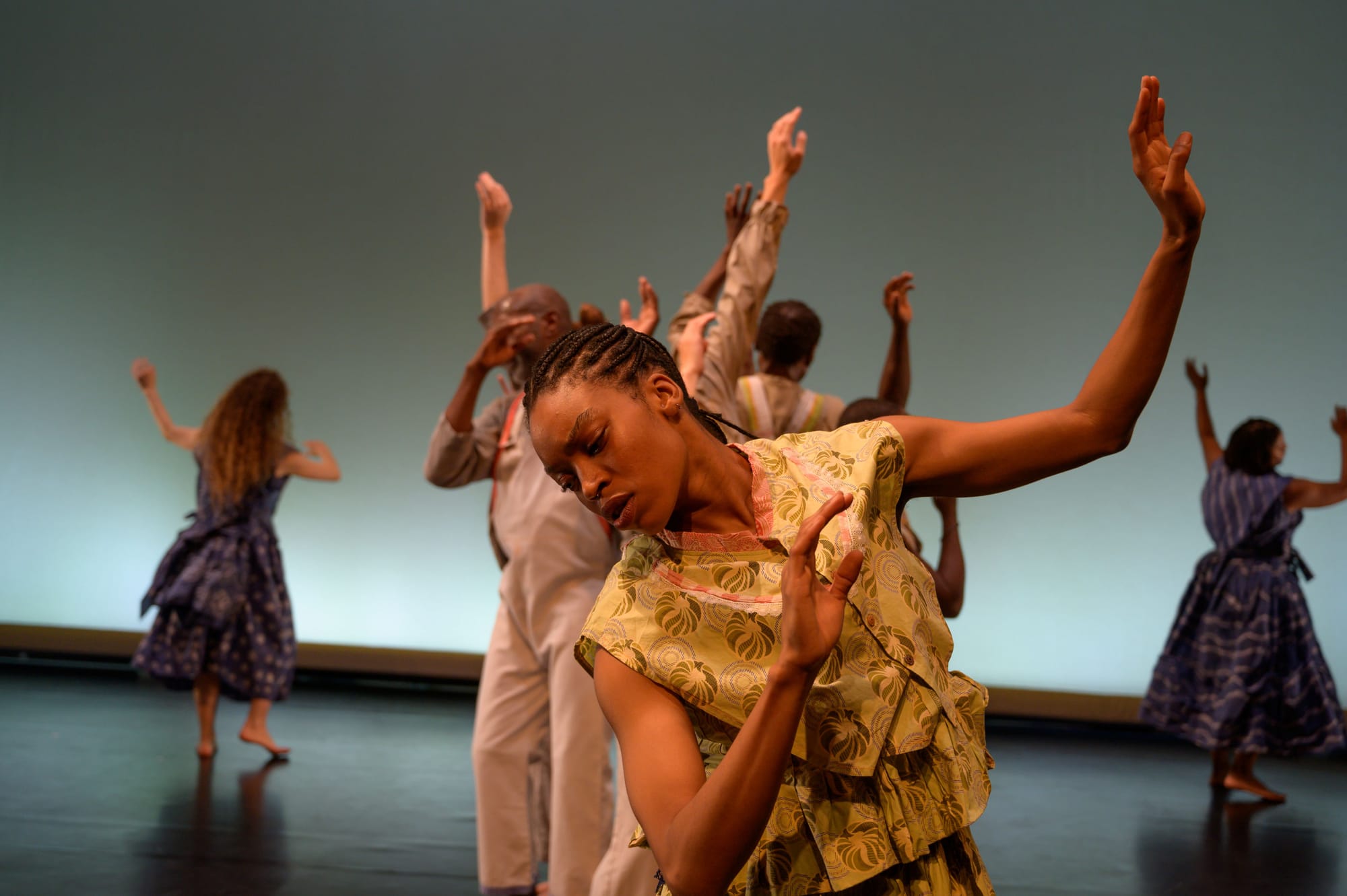
PHILADELPHIA — Imagine walking down a dirt pathway towards a bright, clean building in rural upstate New York. The windows are shutterless, neatly spaced rectangles; the roof is softly arched; and the walls are rattling with the screams, shouts, and stomps of dozens of people inside.
You’ve arrived at the Second Meetinghouse of Mount Lebanon, the beating heart of a tiny, celibate, egalitarian, pacifist Christian sect: the United Society of Believers in Christ’s Second Appearing, better known as the Shakers, named for the distinctive ecstatic dances that accompanied joyful song during worship. A society of revolutionaries, when they burst onto the scene of 18th-century America, they were considered profoundly threatening. Today, they are best remembered for crafting stylish chairs. But they sought nothing less than to build heaven on earth.
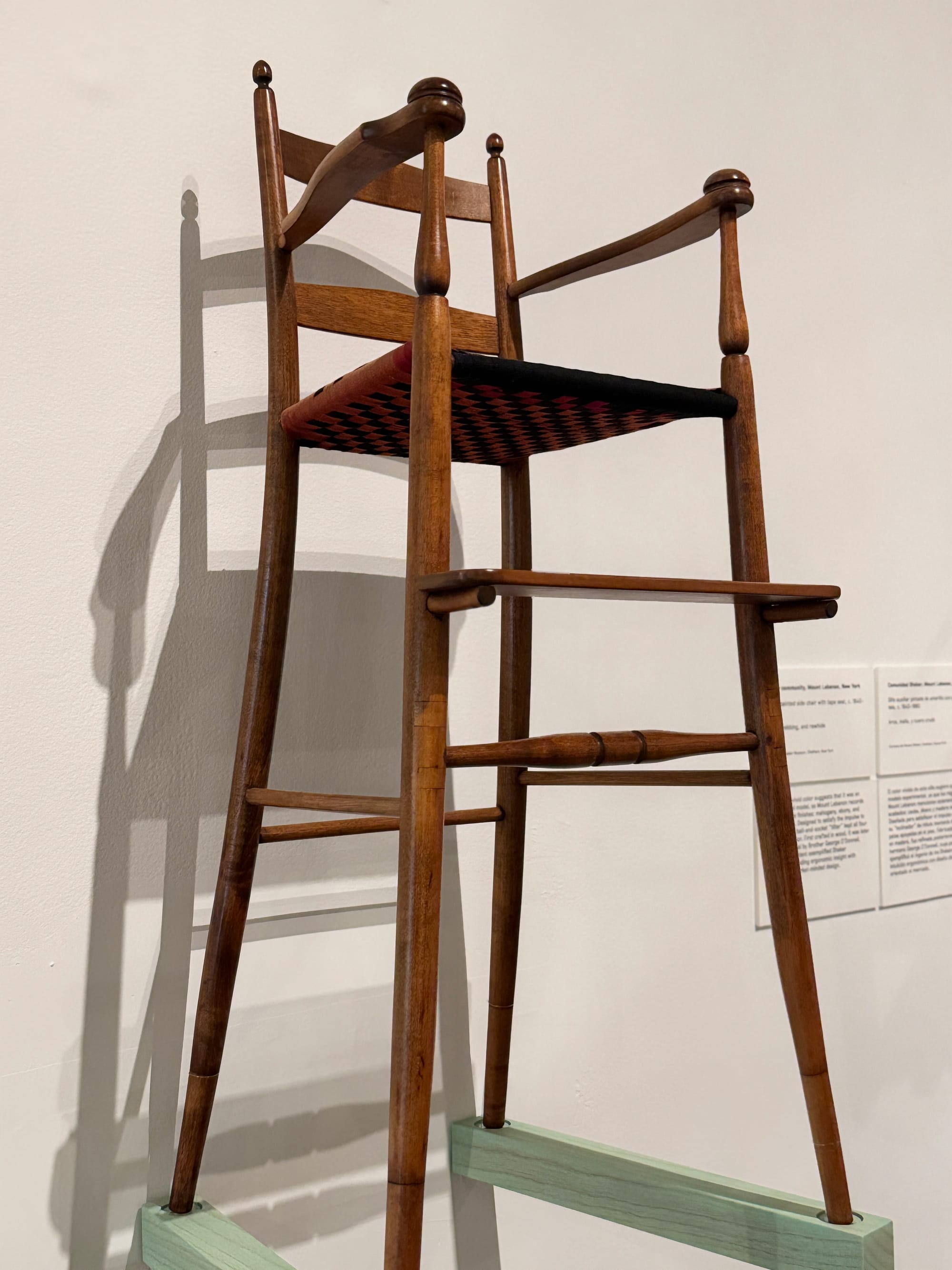
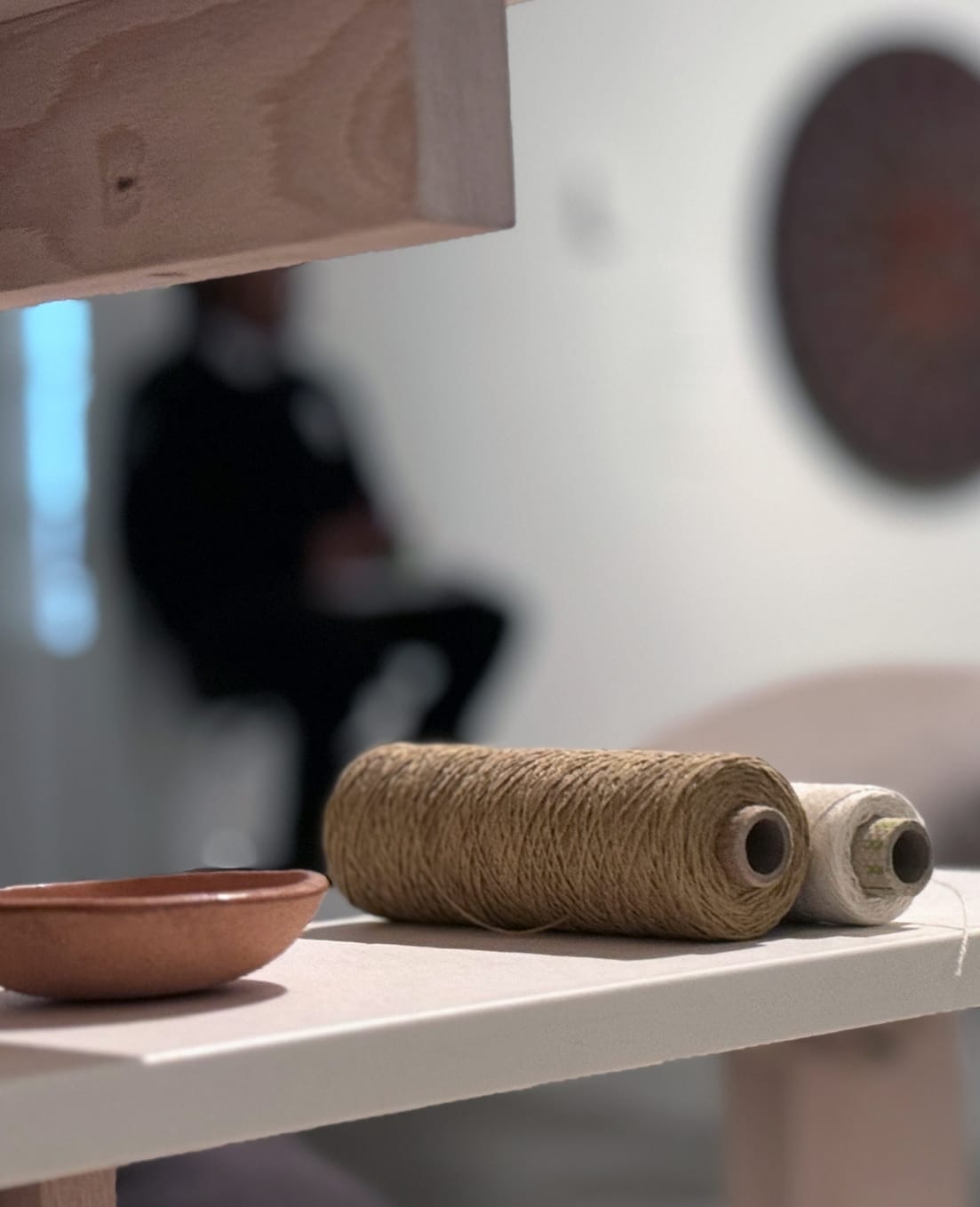
Left: Shaker community, Mount Lebanon, New York High chair with tape seat (c. 1880–83), birch and webbing; right: installation view of The Shakers: A World in the Making
The Shakers: A World in the Making, a traveling exhibition that debuted at Vitra Design Museum and is currently on display at the Institute of Contemporary Art Philadelphia, includes beautiful historic objects from Shaker design history, as well as works of contemporary art inspired by Shakers’ aesthetics and values. A collaboration with the Shaker Museum currently under construction in Chatham, New York, one might assume the exhibition was timed to coincide with The Testament of Ann Lee, the 2025 quasi-musical film about the founding of the Shakers. But apparently, the two projects are unrelated.
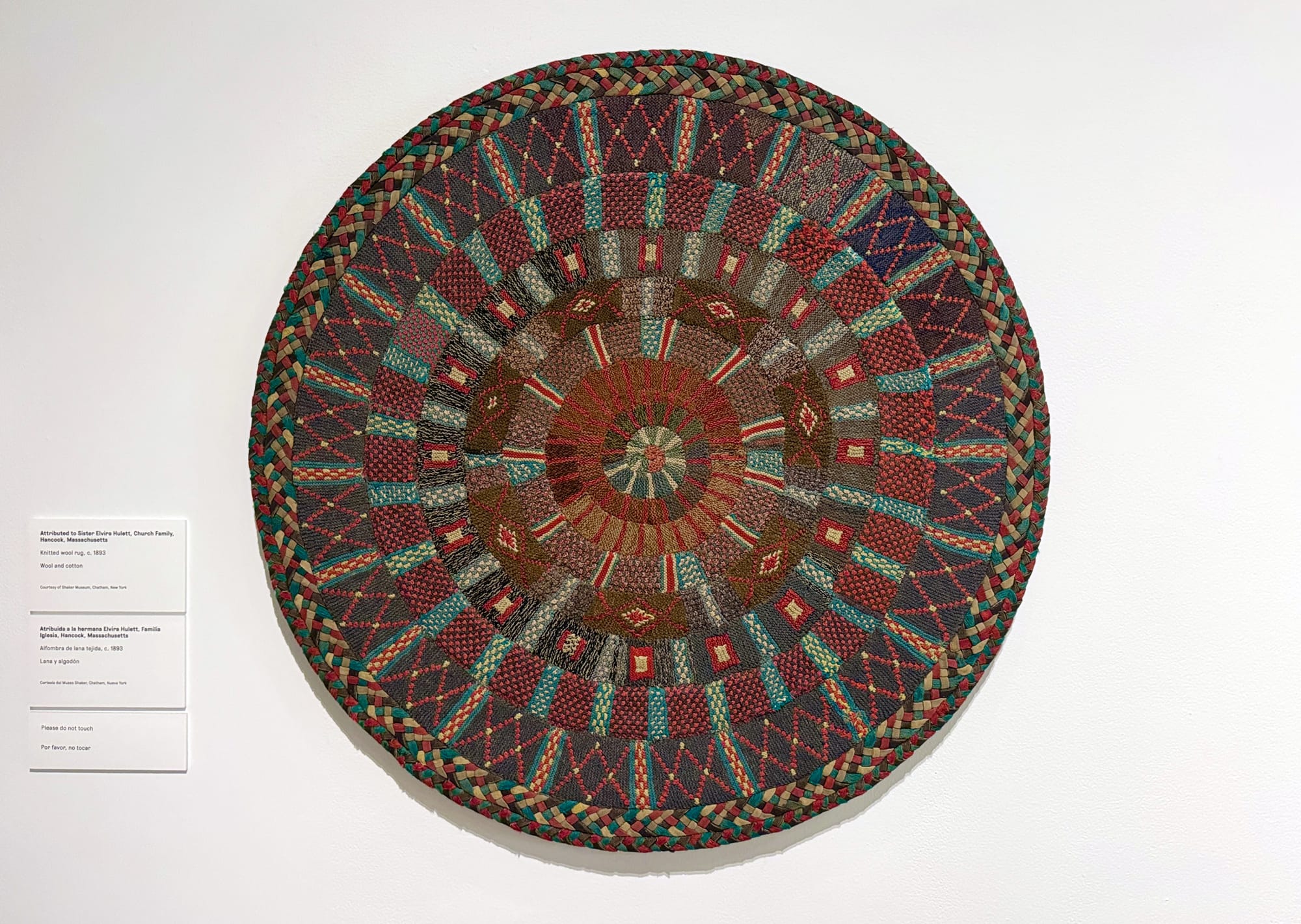
Which sets up the question: Why an exhibition about the Shakers at all? And why now? Despite its many striking examples of Shaker art and craft, the show gives no clear direction. For the most part, it retells the standard story of a once 6,000-strong sect, with only three remaining members, that somehow happened upon both ideals of modern design and gender equality (of a sort) long before much of the rest of society caught up. And yet, the very objects on the exhibition floor present a number of problems: How are we meant to square the characterization of Shakers as strict minimalists with rugs and drawings positively bursting with color and ornament? And how do we reconcile the Shakers’ commitment to radical equality with their well-moneyed commercial ventures?
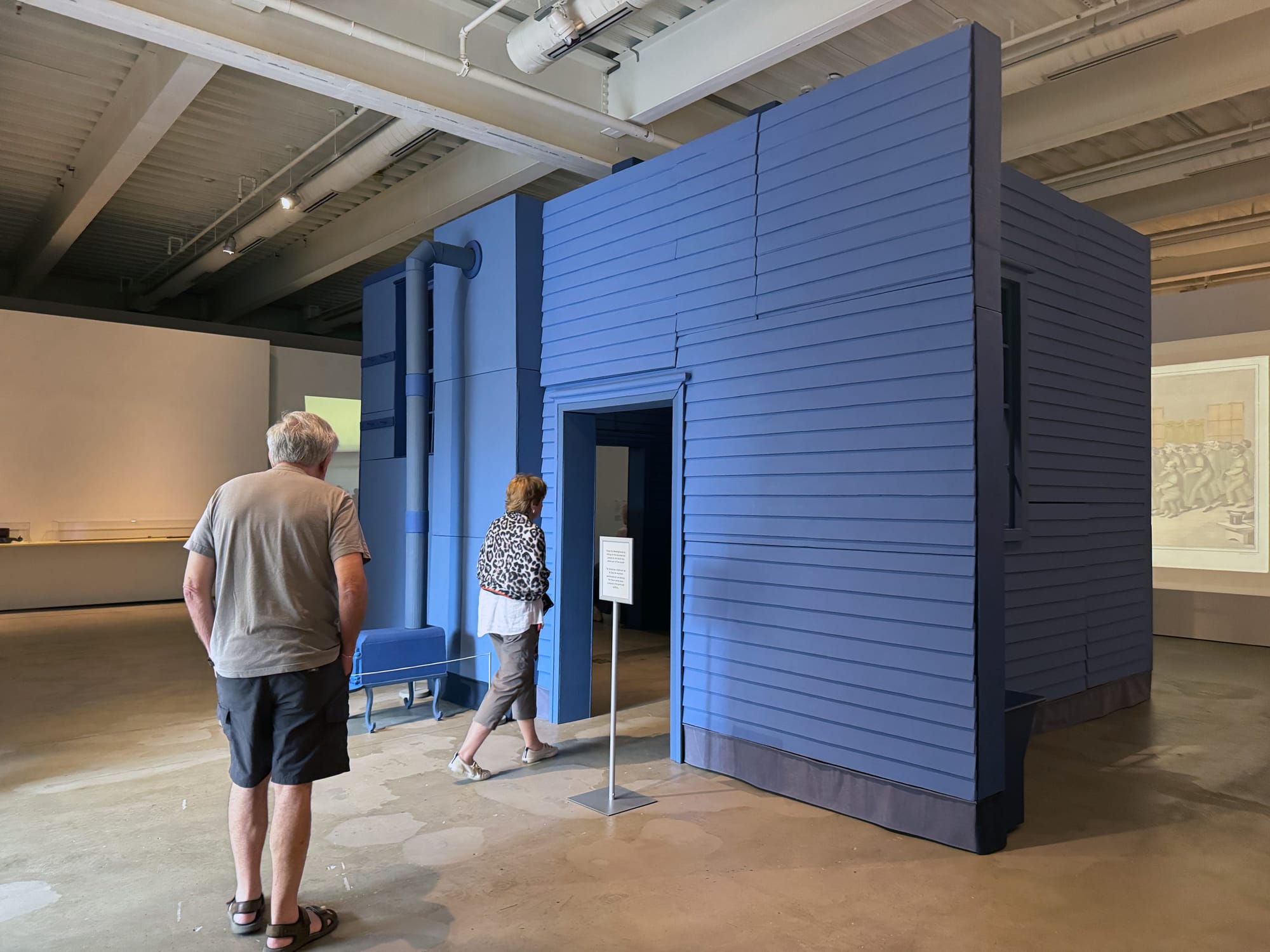
The paradoxes inherent to a liberatory yet rigid society like the Shakers don’t need to be solved. But they are made more confusing by leaving out the complexity of something we all understand: their humanity. This is not helped by the cold, rather austere tone taken on by the exhibition design. It hardly reflects the vivacious warmth of the Shakers, whose culture is indeed simple, but historically also included intensely passionate foot-stomping music, dance, and worship. Instead, visitors are greeted by a massive blue structure, a contemporary piece by Amie Cunat (2025) meant to invoke the imagery of a Shaker meetinghouse, minus any sense of a tender embrace. Hand-crafted wheelchairs, adult cradles for the sick and elderly, and a boot with an extra-tall sole — designed for a Shaker Sister with unequally long legs — demonstrate both the Shakers’ talent in craft and innovation alongside their commitment to caring for the disabled members of their community; yet these items’ placement, isolated from one another against stark white walls, evokes a feeling of clinical distance.
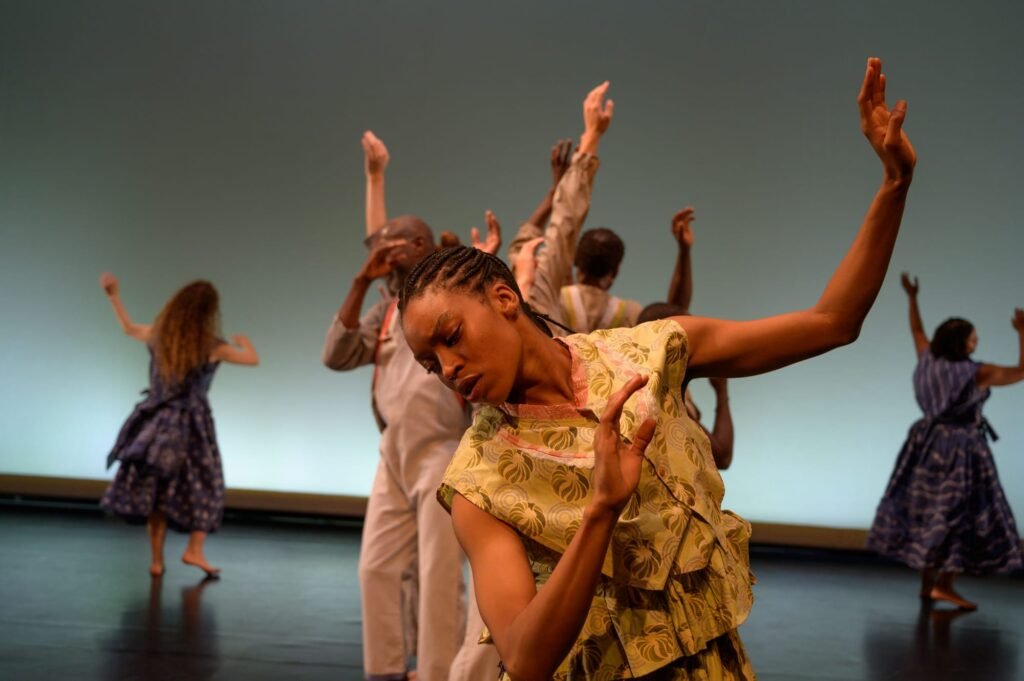
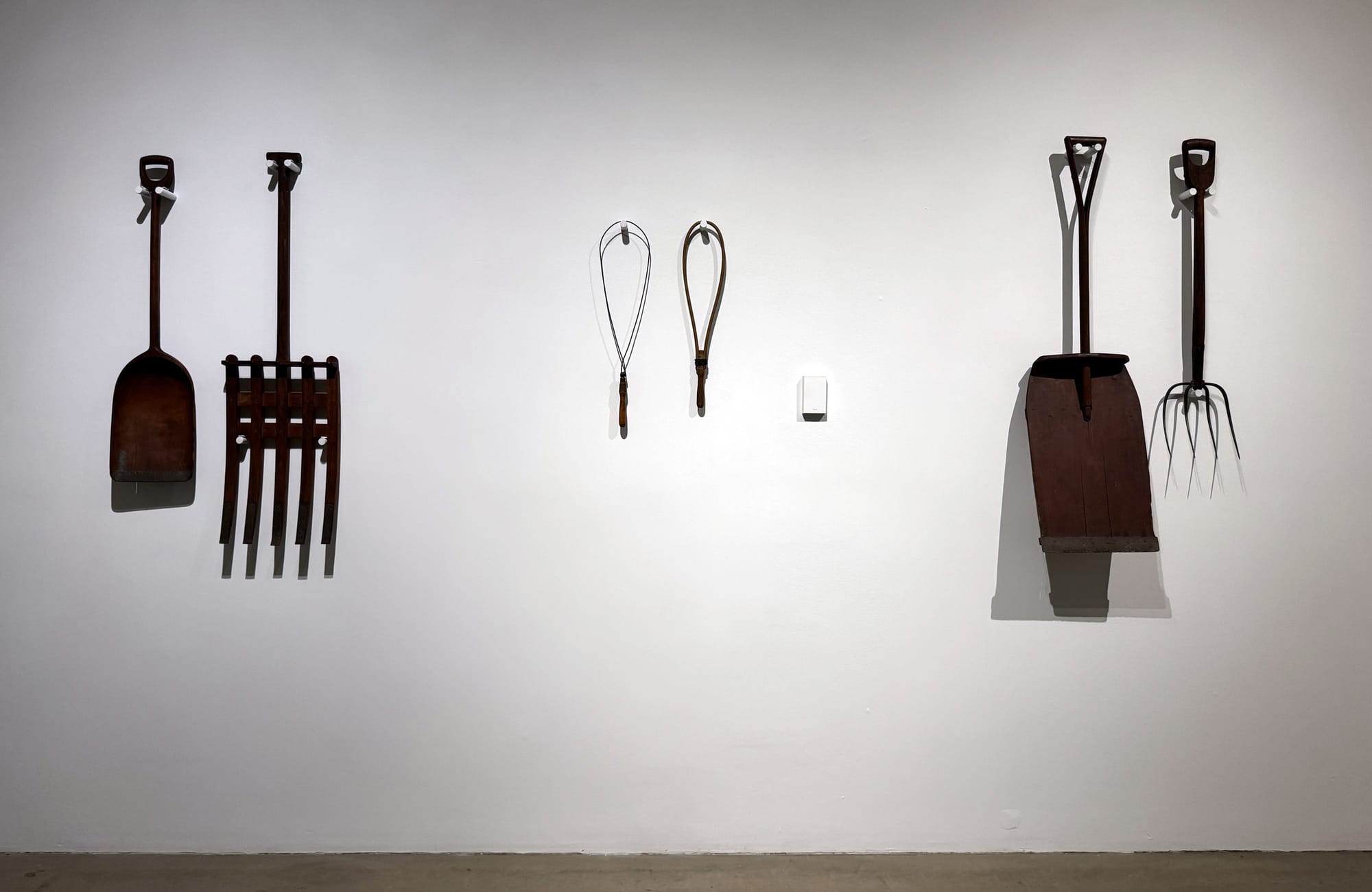
On the first floor, this harsh environment is softened by the soulful choral musical score in a filmed dance performance by Reggie Wilson commemorating the Black Shaker community that once resided in the City of Brotherly Love. This inclusion of music — one of the many faithful reenactments of Shaker worship — would have greatly helped frame the display on the second floor. There, amid wooden chairs, canes, baskets, rakes, and brooms, are several reproductions of densely patterned “gift drawings,” visionary artworks created solely by Shaker women as expressions of messages sent from the divine. If “every aspect of Shaker design is intentional and without unnecessary ornament,” as one of the wall texts claims, then how are we meant to interpret these items — or the kaleidoscopic patterns of a wool rug knitted by Sister Elvira Hulett in the 1890s?
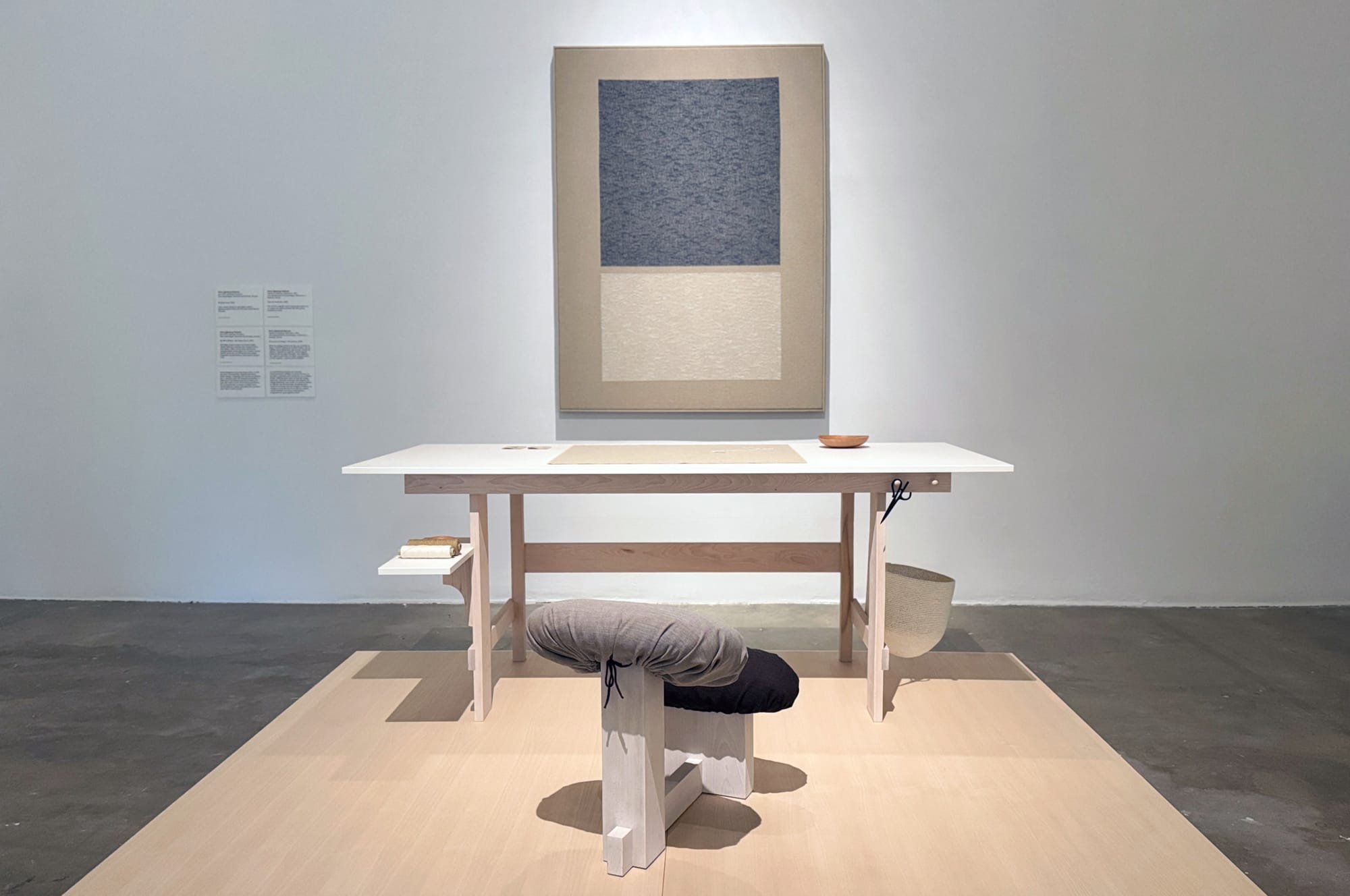
Instead of exploring this conundrum, the show takes refuge in the oft-overemphasized connection between Shaker craft and minimalist modern design. The wall text for a contemporary piece titled “My Work Station / My Prayer Room” (2025) by artist and furniture designer Chris Liljenberg Halstrøm, describes the “simplicity-qualities shared” by Danish and Shaker designers. It is undoubtedly beautiful. Yet, far from appearing similar, it feels like it comes from another universe than the Shaker pieces that surround it, which may be simple, but contain none of the mechanical sleekness that pervades so much of modern design.
What separates simplicity, whether ornamented or not, from minimalism? Is modern innovation possible without industrial inhumanity? These questions, which could have been explored with the precious objects on display here, aren’t only interesting, but critical: In an age of AI and robotic warfare, the pacifist Shakers have a great deal to teach us.
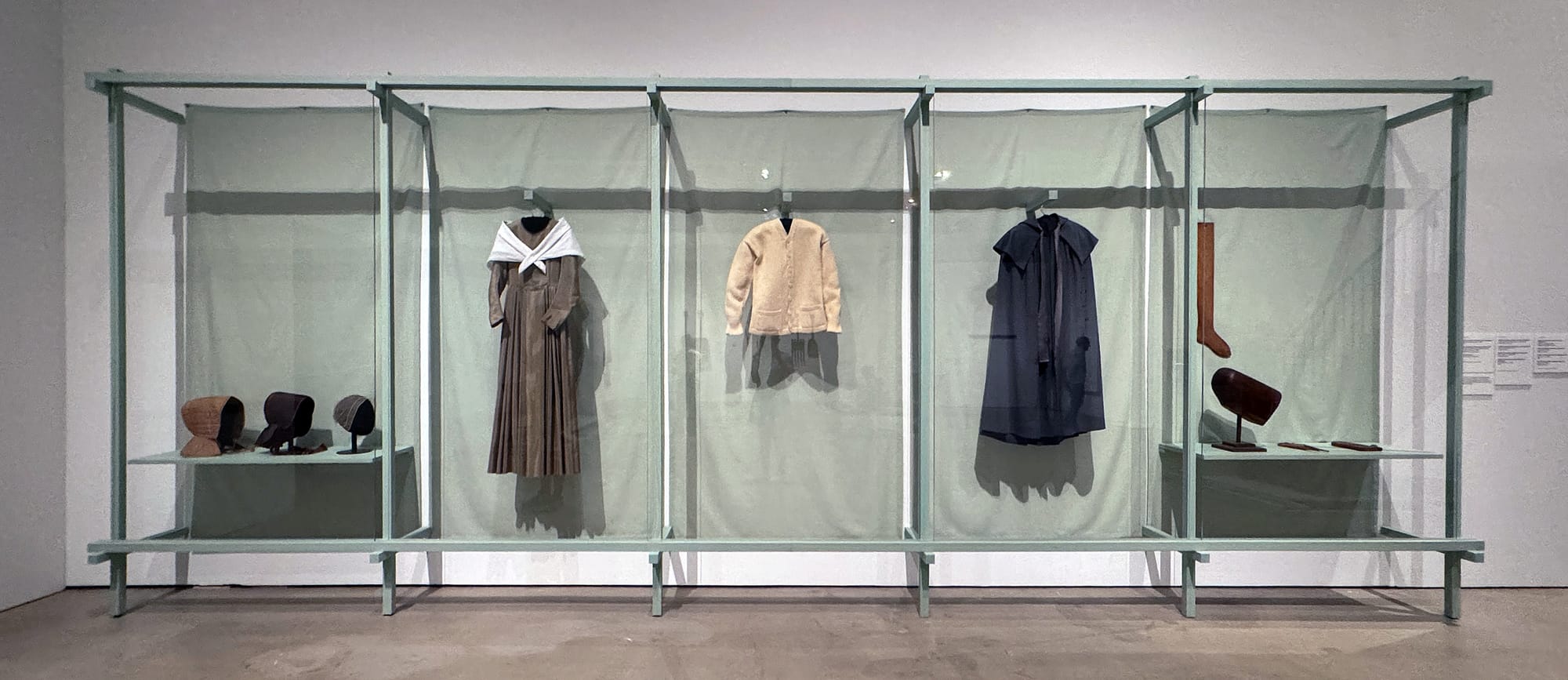
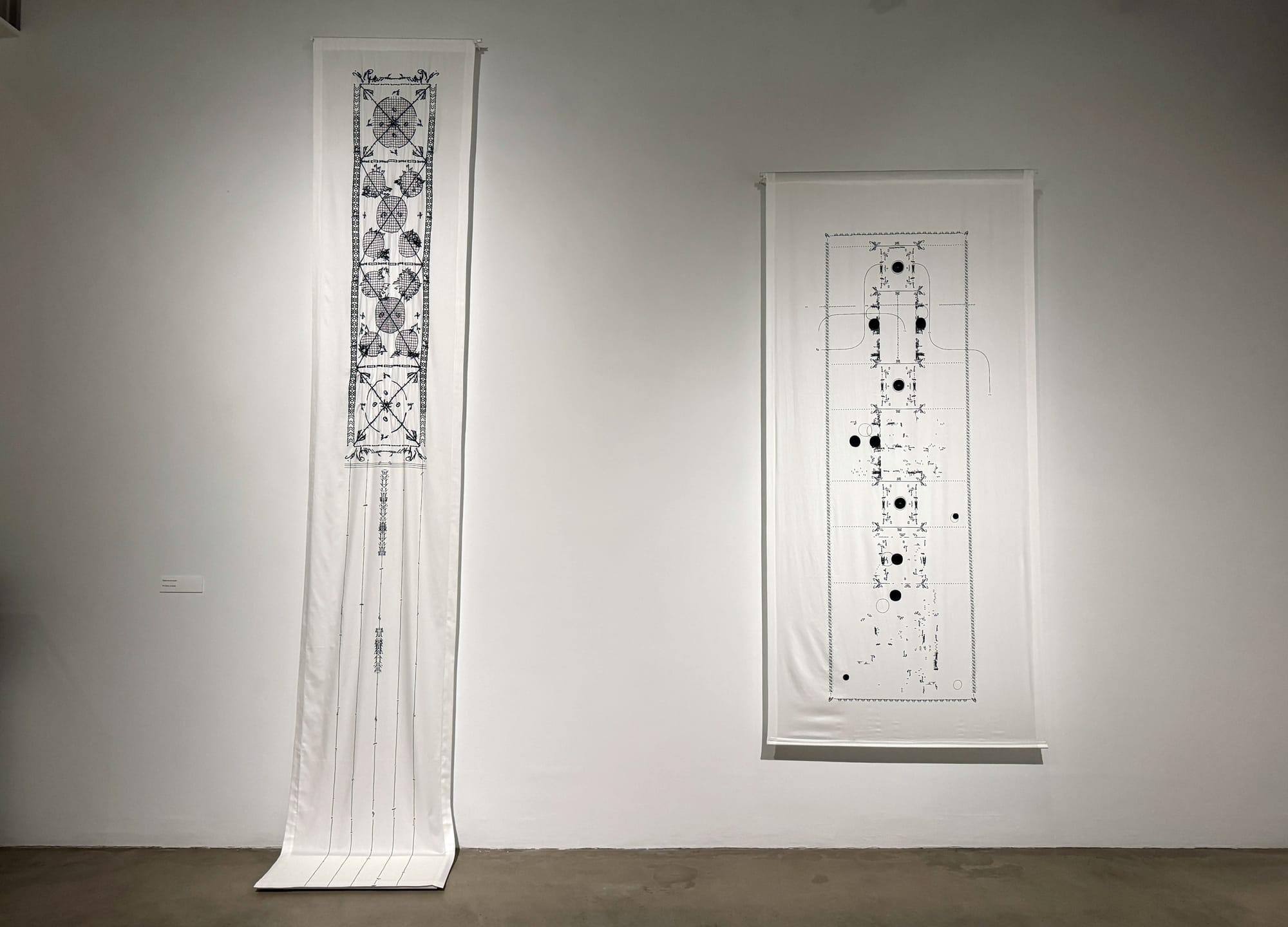
A World in the Making: The Shakers continues at the Institute of Contemporary Art Philadelphia (118 South 36th Street, Philadelphia, Pennsylvania) through August 9. The exhibition was organized by the Vitra Design Museum, the Milwaukee Art Museum, the Institute of Contemporary Art Philadelphia, and the Wüstenrot Foundation in collaboration with Shaker Museum. The exhibition was curated by Mea Hoffmann.