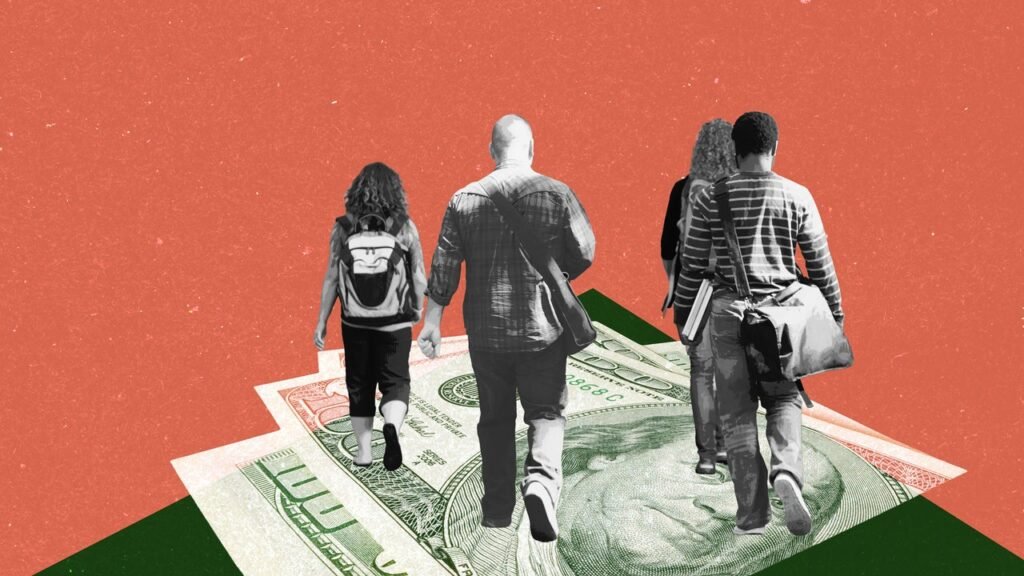
College students will get an unwelcome lesson this fall in the rising cost of campus life.
Already dealing with the rise of AI and a White House that’s made research funding anything but a certainty, students will also feel the effects of inflation, which has raised the cost of laptops, software, transportation, and other college essentials.
Here are just some of the price increases that college students and their families may see this fall semester.
Computers and Technology
Apple recently made the news raising the prices of its iPads and laptops, including the new and well-received Apple Neo, by between 15% and 25%. For the base model Neo, for example, the manufacturer’s suggested retail price rose from $599 to $699. The reason, the outgoing CEO Tim Cook explained, is the seemingly insatiable demand from AI data centers for hardware, especially computer memory chips.
The Mac maker isn’t alone in raising prices for computing hardware. A recent PCMag survey found that while Americans are budgeting about $800 for their next laptop purchase, the actual median price of the devices is double that, with popular PC brands like HP, Lenovo, and Microsoft Surface also boosting prices. Video game console costs have gone up too, even for the current Xbox and PlayStation generations that have been around for years.
The price increases aren’t limited to hardware. Computer software and accessories prices, tracked by the U.S. Bureau of Labor Statistics, also recently soared 17.4% year over year, the biggest price jump since the agency began tracking the product category in 1997. In some cases, that’s come with the addition of new AI-powered features, which some consumers—including students who are often restricted in AI use by school policies—could just as easily do without.
The good news for students is that some colleges offer the ability to buy discounted hardware and software, and many computer and software makers, including Apple and Microsoft, offer educational discounts. Some schools also offer access to educational software, including AI tools, through campus-wide licensing deals, so it’s worth checking with your school before you make any hardware or software purchases. Some students may also find success using free and open-source alternatives to popular commercial tools, though some courses may expect students to use particular digital solutions.
Smartphone prices also seem to be on the rise. Multiple sources are predicting the next generation of iPhones will be significantly pricier than the current iPhone 17 line, and Android phone prices are also expected to rise due to rising component costs. Smartphone inflation numbers are always a bit confusing, since the Bureau of Labor Statistics tries to adjust the raw dollar numbers to take into account phones’ growing computing and camera power, but it seems unlikely the sticker prices of popular phones will go down any time soon.
Analog School Supplies
Switching back to pen and paper may be in vogue with universities trying to help students dodge online distractions and the temptation to offload their schoolwork to AI; the University of Chicago Law School even announced a classroom laptop and phone ban for first-year students.
But ditching technology—or, more practically for most people, using a mix of paper and electronics—won’t entirely shield students and their families from school-supply inflation. A recent report from the Groundwork Collaborative and The Century Foundation, looking at typical K-12 school supplies, found price increases around the board, with single-subject notebook costs up a whopping 23% year over year, with notebook paper and index cards also seeing price increases of 20% or more. Writing implements like gel pens, highlighters, and No. 2 pencils—which may be increasingly relevant with more college faculty shifting back to blue book tests amid widespread AI use—have also all increased in price.
Students hoping to avoid the cost of on-campus dining will even find lunchbox costs have risen 26.8% since last year, according to the report.
Food (and Coffee)
College students stocking their pantries or dorm room fridges will encounter the same food price inflation affecting everyone. Grocery prices have soared 33% over the last seven years, according to recent reports citing Bureau of Labor Statistics data, and they’re expected to continue to rise over the next year amid continuing battles over tariffs and rising energy prices.
Coffee, essential fuel for many students, particularly continues to soar in price, with recent gains attributed in part to the effects of El Niño. The average price of a tub of coffee grounds for home brewing has more than doubled since 2020, according to one recent report, meaning caffeine-loving students might do well to scope out sources of cheap campus coffee, whether that’s the dining hall or the communal coffee pot at a campus job. And yes, even canned energy drinks face potential price increases, with aluminum production and shipping disrupted by the Iran war.
Getting a meal plan also won’t entirely protect students from rising prices. While average room and board costs are below prepandemic prices after adjusting for inflation, according to reporting from the Education Data Initiative based on Department of Education numbers, prices have been rising again over the last few years. Overall, inflation-adjusted room and board costs have risen 83.2% since 1970, according to the Education Data Initiative report.
Transportation
Getting to and from school also isn’t getting any cheaper. Fuel prices have fluctuated as the war with Iran continues to unfold, but they remain sharply elevated since March, when the conflict began, according to data from GasBuddy.
Those flying to campus may not fare much better, with average airline ticket prices also up this year, according to federal data. As of June, airfare in the United States was up 26.5% year-over-year, thanks in part to airlines’ own rising fuel costs, and with demand for travel still strong, carriers seemingly have little incentive to cut costs. (The collapse of the discount carrier Spirit Airlines, which offered cheap fares especially to travelers willing to pack light, and provided some competition for the big airlines, didn’t help matters).
That means students looking to fly home for Thanksgiving or winter break, or even make trips in 2027, might do well to start checking prices sooner rather than later, especially if they can book with an airline or credit card that will let them recoup the difference if prices drop later on.
Thinking outside the airplane-and-automobile box might also help some find savings. There’s a reason ridership has risen on Amtrak and other railroads in recent months, as well as on intercity buses, although of course not all colleges and other destinations are easily accessible by rail or bus, and travel times can be lengthy and unpredictable.
Tuition
The costs of travel, food, and even the highest-end laptops pale in comparison with the sticker prices of many colleges and universities, especially private institutions.
As of the 2025-2026 school year, tuition and fees cost an average of $44,961 at private institutions, according to data from the college survey giant U.S. News and World Report, while public colleges and universities charged an average of $11,371 to in-state students and $25,415 to those from out of state. Those numbers were up about 3.3% over the last year for students at private schools and in-state students at public campuses, and 3.7% for out-of-state students at public colleges, according to U.S. News.
Total cost of attendance, including housing and transportation, has crossed into six figures at a number of private colleges, including brand name institutions like New York University, Smith College, and Duke University, according to data from The Princeton Review and CNBC.
Fortunately, not all students pay the full sticker price. Many colleges offer extensive financial aid based on financial need and other qualifications, like academic or athletic performance. Public and private scholarship aid is also available (as are, for better or worse, student loans), meaning it pays more than ever for students and their families to carefully compare offers, complete forms like the Free Application for Federal Student Aid (FAFSA), and search far and wide for other scholarships that may match their academic interests, demographics, or other unique factors.