When private equity bought the struggling hospital where Marilyn Anthony works, she says things quickly took a turn for the worse. One of the first things to go were the daily changes of patients’ bed linens, important for hygiene and cleanliness.
“They put big signs on the linen carts [saying] that we were to only change the linen every third day unless they were obviously soiled. How disgusting is that?” says Anthony, who has been a nurse at the hospital for nearly 25 years.
The formerly nonprofit Waterbury Hospital, which was acquired by a private equity-backed company in 2016, started cutting out specialist jobs, like nurses who focused on open-heart surgeries or nurses’ aids in the maternity ward. The on-site IT department was also eliminated.
“They started gutting us,” Anthony says. “We’d have nine nurses [on a shift], but only seven working computers.” At times, the hospital had only one functional elevator.
Along with resource cuts, Anthony says, hospital management abruptly shifted its focus. The staff was told to stop calling the people they cared for “patients”—“we were to call them ‘customers’ or ‘clients’ because they were ‘consumers’ of healthcare,” she says. “We were not in the business of healthcare any longer. We were definitely in the business of making money.”
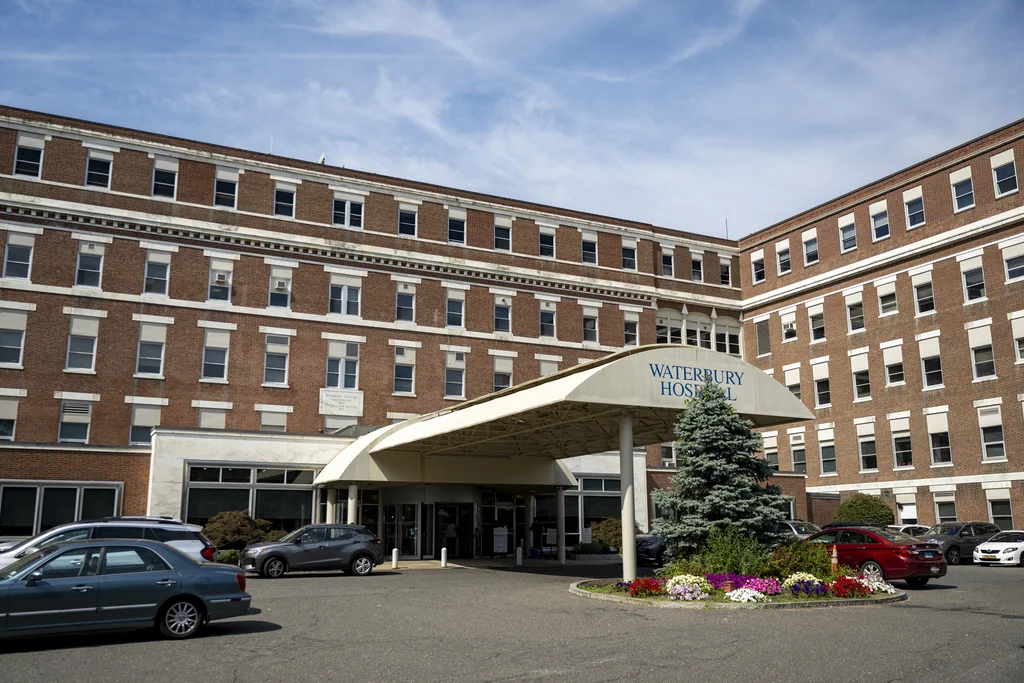
The hospital’s owner, Prospect Medical Holdings, eventually drove Waterbury and two other hospitals in the Hartford area into bankruptcy—but not before the company and its majority owner, Los Angeles-based private equity firm Leonard Green & Partners, sold the real estate out from under the institutions and saddled the hospital chain with more than a billion dollars of debt.
Prospect and Leonard Green used the proceeds to pay themselves and other investors more than $600 million in dividends and fees, leaving the hospitals to try to pay back the loans on their own. (Prospect, which remains in bankruptcy proceedings, and Leonard Green, which sold its stake in the company in 2021, did not respond to requests for comment.)
Anthony thought her hospital’s experience with private equity was unique. But then she went to a legislative hearing in Hartford this spring and heard how widespread the problem is. Not just hospitals, but Hartford’s newspaper, special education schools, mobile home parks, nursing homes, and more have been bought by private equity firms, often resulting in fewer resources, worse service, and higher costs as the firms boost their returns by piling debt onto their acquired companies and stripping their purchases for parts.
The problem is common across America, where private equity controls about 13,500 companies, according to figures from PitchBook. The industry pervades people’s lives in ways big and small. And in Hartford, Connecticut, residents see it everywhere.
A Hartford youth hockey league associated with private equity bans parents from livestreaming their kids’ games for grandparents or other out-of-town family, instead requiring them to buy a $26.99-per-month subscription to the company’s proprietary TV network. (The company, Black Bear Sports Group, was founded by a private equity executive and held in his holding company, but denies that it has a relationship with private equity.)
A private equity firm bought up much of America’s fire truck manufacturing industry, forcing Hartford taxpayers to pay 50% more for every new fire truck and wait a year longer for delivery, according to a recent lawsuit filed by the city, one of a series of similar suits by municipalities across the country.
Senator Chris Murphy of Connecticut sees this rise of private equity as a root cause of the coarsening in American life, with people at each other’s throats and feeling like things are getting worse.
“There’s a tie between what’s happened in Hartford and a lot of other communities, where private equity has come in and gobbled up so many important facets of our culture and economy, and the spiritual unraveling that’s happening in the country,” Murphy tells me. “I think it does make us really exhausted when everything not nailed down is becoming a commodity.”
But Hartford has an advantage against the financial strip-mining. Since the city serves as the state capital, lawmakers spend time there, and they have seen the effects.
“This is a cancer that is spreading,” state Senator Saud Anwar, who represents parts of the Hartford area, recently told the Hartford Courant—which itself is owned by a private equity firm that sold the paper’s headquarters and slashed its staff. “We have to start to make laws to make sure that we don’t allow private equity to harm every important aspect of our lives.”
Hartford is now taking the first tentative steps toward reining in private equity through laws and litigation. It could serve as a model for other American cities that fear the harms caused by faraway financiers who aim to extract maximum profits from their communities.
The private equity playbook
When private equity comes to town, people who rely on the companies they acquire quickly discover that these aren’t the kind of investors who nurture their holdings for the long haul. The firms usually hold their investments for seven years or less, trying to pull out as much money as they can in that time, often with minimal reinvestment, according to Matt Parr, communications director of the nonprofit watchdog Private Equity Stakeholder Project.
The term private equity can be hazy—some firms object to the label, others might not fit it cleanly—but observers say that private equity firms are defined by a handful of practices aimed at extracting value from their investments.
There’s the sale-leaseback, where a private equity firm will buy a company, sell the company’s real estate, pocket the proceeds, and then force the company to lease the property that it previously owned. There’s dividend recapitalization, where the firm saddles its company with massive debt, which the firm uses to pay dividends to itself and other investors. There’s the lack of maintenance and investment in the companies that firms acquire.
It’s these “vulture” practices, buying companies and stripping them for parts, that do the most harm and fuel critics of “private equity,” says Connecticut Attorney General William Tong, noting, “We’ve seen some of the worst excesses in Connecticut.”
In East Hartford, residents of the Rivermead Pointe mobile home park were initially hopeful when they learned that the private equity-backed company RHP Properties had bought the park in 2016. They thought that an owner with deep pockets might mean more investment and better resources. They quickly learned it didn’t work that way.
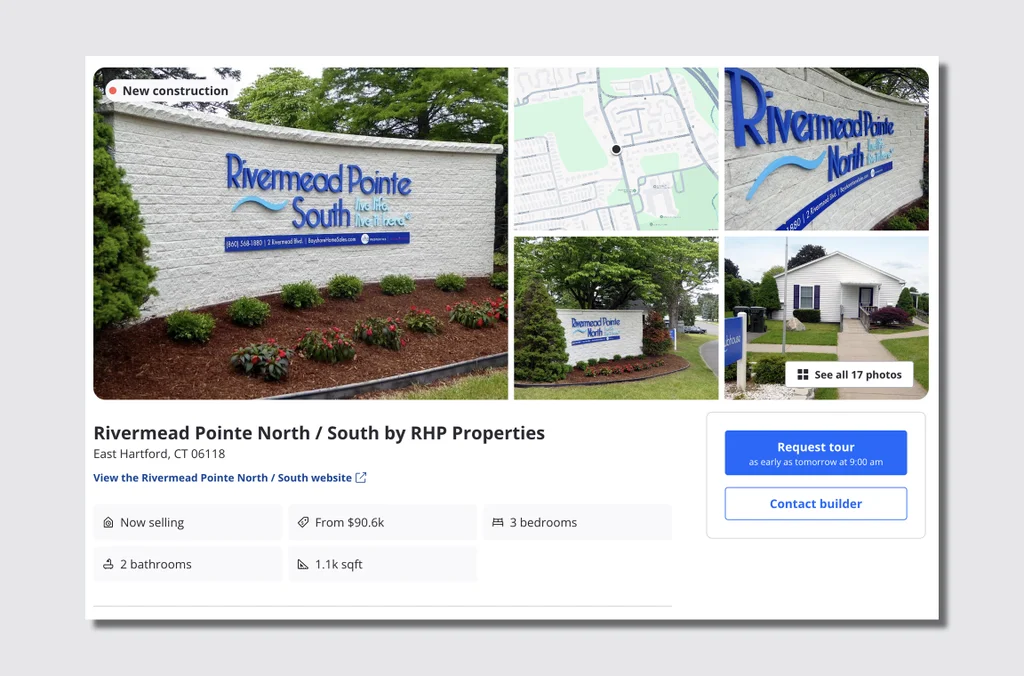
“It’s just increasing rents, decreasing everything else at the same exact time,” says Rebecca Connors, president of the community association.
Residents used to have management that lived nearby, so if there was a problem, someone would respond quickly. Now if residents need to contact management, they have to leave a message with a call center in India, Connors says. Residents have had problems with water, heat, and snowplowing, but little gets fixed. (RHP Properties did not respond to a request for comment.)
Dave Delohery, president of the Connecticut Manufactured Home Owners Alliance, who lives in another private equity-owned park in a different part of the state, says residents used to be able to count on their monthly rent rising by $10 to $15 per year. (As in most mobile home parks, the residents own their houses but rent the land underneath.)
But since private equity came in, those increases have doubled. Monthly rent going up by another $30 each year might not sound like much, but for many residents, who are typically retired and on fixed incomes, that quickly makes their homes unaffordable.
Conners says a similar dynamic is playing out at Rivermead Pointe. “Some of these people have been here for 30 years, so they don’t know any other home, but they’re facing a reality of, Do I skip a meal? Do I figure out how to move out? Do I not go to this doctor’s appointment?” she says.
If they have to move out, there are few other places to go. And anyway, they’ve built a community with their neighbors. They don’t want to be forced to leave by out-of-state investors.
“It’s like living in the American dream that they used to paint when you were a kid. Your neighbor says ‘Hi.’ You wave. You help each other shovel or do your lawn,” Connors says. “The only downside is who owns it.”

The human cost of vulture capitalism
One of the closest hospitals to the Rivermead Pointe mobile home park is Manchester Memorial, which, along with Waterbury and nearby Rockville General, was part of the hospital chain purchased by Prospect Medical Holdings with backing from Leonard Green & Partners.
The hospitals’ private equity encounter included a sale-leaseback, which forced the institutions to start paying rent for property they previously owned. Rather than using the proceeds to reinvest in the hospitals—buying supplies, bringing in more staff—Prospect devoted much of it to paying itself and its investors.
“These are very typical business practices [for] private equity, and that tend to spell trouble, with either bankruptcy risk or having to cut staff, overworking staff, cutting services,” says Parr from the Private Equity Stakeholder Project. He explains: “Private equity firms, for the most part, don’t have any long-term stake in the companies that they’re buying [so] there’s no need for them to invest in order to see long-term viability or long-term growth.”
As long as the firms make their money before pulling out of their investment, “it doesn’t really matter what happens to that company once they get out,” Parr says.
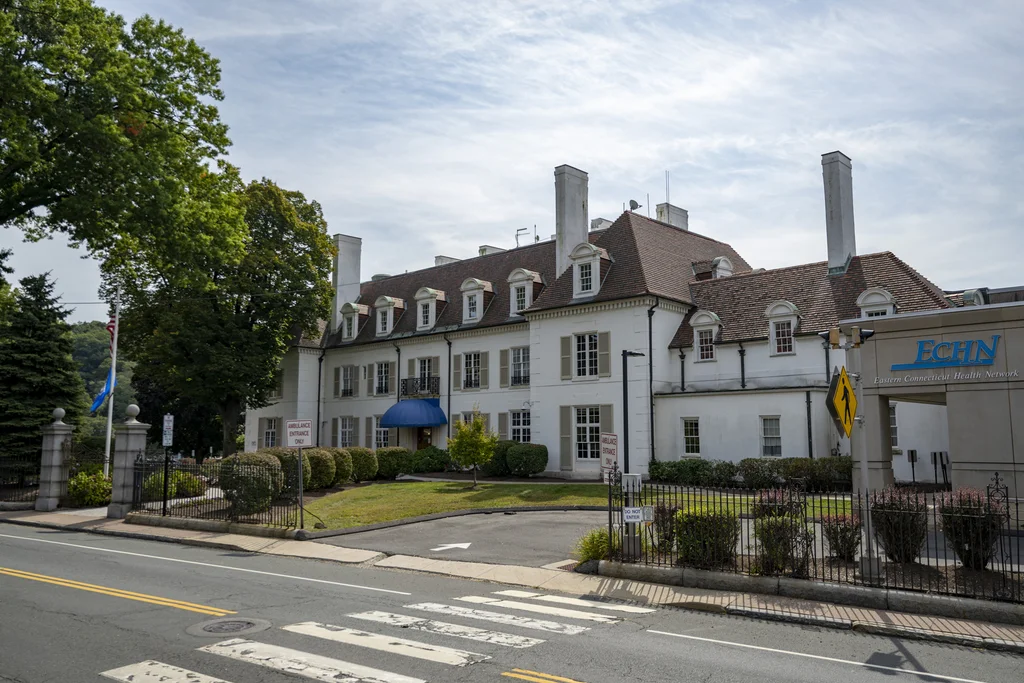
Buried under new debt, the Connecticut hospitals filed for bankruptcy in 2025, leaving the state to clean up the mess. State-funded UConn Health, a branch of the University of Connecticut, bought Waterbury Hospital to avoid letting the institution close. The nonprofit Hartford HealthCare bought Manchester and Rockville General.

Leonard Green, the private equity firm, pulled out of Prospect a few years before the bankruptcy. So did Sam Lee, Prospect’s longtime CEO, who left the company in 2023. Despite the bankruptcy, he did just fine.
A bipartisan investigation by the Senate Budget Committee reported that Lee had “received more than $112 million in dividends” from his involvement in Prospect, and it noted that he “boasts an impressive portfolio of luxury properties,” including multiple homes a short drive from one another in Los Angeles. Senator Murphy wrote: “Sam Lee pillaged three Medicaid hospitals in Connecticut so he could have two mansions 11 minutes apart.” (Lee could not be reached for comment.)
Private equity used a similar playbook at Hartford’s newspaper, the Courant. America’s oldest continuously publishing daily newspaper once owned its headquarters in the heart of the city, two blocks from Connecticut’s gold-domed state Capitol. In December 2020, its private equity-backed owner, Tribune Publishing, cleared the staff out of the building, citing the pandemic.
But the journalists never returned. The printing press was scrapped in 2022; the building sold in 2025. Today, the company is owned by New York City-based private equity firm Alden Global Capital, which is notorious for buying American newspapers and stripping them for parts. (Alden, renowned for its secretiveness, could not be reached for comment; the Courant did not respond to questions sent to its editor.)

When Brad Horrigan joined the staff at the Courant in 2011, the paper had about 10 photographers, he says. When he took a buyout, soon after Alden’s arrival in 2021, there were three. Now the newspaper has one—a decline mirrored in departments across the company. With so few people, “obviously the journalism is going to suffer,” Horrigan says. “So many things are going to slip through the cracks and not be covered.”
In conversations with former staff, memories pour out about when the paper had the resources to report deeply on its community. “When I was at the Courant, I would hear folks saying, ‘I remember when’: ‘I remember when the Courant was this thick’; ‘I remember when there were pages and pages on multiple towns’; ‘I remember when there was a bureau in almost every town,’” says Sabrina Herrera, who worked at the paper from 2018 until 2021.
And they remember a lost romance to the work. Horrigan recalls that when he would drop off his equipment at the office after photographing a late-night event, “I’d walk out to my car, and there’s a big window there into the press room, and you just see everything rolling, and you know the pictures that you just made are there. You’re watching it happen. It was so special.”
The newspaper industry has famously been on a downward slide for decades. But former Courant staffers say things went off a cliff once private equity got involved—a bad situation got much worse. “There are certain universal trends, obviously, that manifest in newspapers all over the country. But it just didn’t have to be as ugly as it ended up being at the Courant,” Horrigan says.
The legislative battle
When Alden took control of the capital city’s newspaper, some lawmakers thought they could save the Courant by targeting dividend recapitalization, the private equity tactic where the firm takes out debt in the company’s name and keeps the money for itself.
A bill introduced in the Connecticut Senate in 2021 would have prohibited the Courant from issuing any debt or paying any dividends that were not in the “public interest.” The idea was to scare Alden away from the Courant, convincing the private equity firm that the paper was not an attractive target and maybe pushing it to sell the paper to a local benefactor.
But the proposal raised significant First Amendment problems—a newspaper association warned that it amounted to “government intrusion into the operation of an otherwise free press” by giving government the power to control the paper’s finances and determine what’s in the public interest—and it did not become law.
Other bills targeting private equity have been more successful. In May, Connecticut’s governor signed legislation that bans hospitals from entering sale-leaseback deals. The law also requires hospitals to attest that no private equity firm owns a controlling interest or controls decisions about patient care. But if a hospital fails to make that certification, it only has to pay a $2,000 penalty.
Another new law, signed in June, aims to protect residents in nursing homes, which are also increasingly being bought up by private equity. If a private equity firm owns at least 5% of a nursing home, the law requires the facility to take out a bond large enough to pay for 90 days of its operating expenses. That way, if private equity drives it into bankruptcy, taxpayers won’t be on the hook for the full cost of keeping the nursing home going.
The law also requires nursing homes to attest that investors do not control patients’ health, care, or safety. Like the hospital law, it imposes a $2,000 penalty for failing to make the certification.
Will penalties like that do anything to change the behavior of billion-dollar private equity firms, or will the firms carry on as before and pay the fees? State Senator Jan Hochadel, who led passage of the nursing home bill, says the laws are a step in the right direction, but she acknowledges the fines are low. “I think nursing homes will say, ‘Okay, whatever, we’ll just pay that,’” she says. The price of the fines was the result of back-and-forth negotiations to win support for the legislation, she says, noting that she expects more, and tougher, restrictions will come.
The last line of defense
Passing any laws to regulate private equity is a challenge. For one thing, the industry has deep pockets, and it spends large amounts on lobbyists and donations. Private equity has given money to nearly 90% of Congress, Megan Greenwell, author of the book Bad Company about private equity, recently told a Connecticut legislative hearing.
Parr, of the Private Equity Stakeholder Project, says the industry has connections to both parties, noting, “It’s really hard, especially on a national level, to really get anything passed.”
Another problem for legislators is defining exactly what should be restricted. The private equity industry is “nebulous,” Parr says, making it difficult to pin down exactly which firms a law aims to regulate. Rather than trying to tackle the industry as a whole, most laws, including Connecticut’s, regulate specific practices, like the sale-leaseback scheme for real estate.
There’s also an uncomfortable reality for many lawmakers: While legislators are trying to limit private equity firms, their state and local pension funds are often invested in the same firms. “That’s the great irony,” says Tong, Connecticut’s attorney general. “In many cases, we are the investors in private equity funds.”

Beyond legislation, lawmakers are trying other tactics to limit the harms from private equity owners. Tong says he’s been using Connecticut’s consumer protection law to go after bad actors—and sometimes it doesn’t even take a lawsuit.
When 2,000 residents had to evacuate their homes this winter in Concierge Apartments, a private equity-owned complex south of Hartford, because of burst pipes and other severe maintenance problems, Tong says he talked to the owners and they started making repairs. “When I called, they understood what it meant to have an attorney general reach out personally and say, ‘You have to fix these problems,’” he says.
Hartford’s recent suit against the private equity firm that, it alleges, bought up much of the country’s fire truck manufacturing industry—and then raised prices while cutting capacity—could offer cities another route to fight the excesses of private equity: antitrust litigation. The lawsuit says that the defendants, which include private equity firm American Industrial Partners and a company it created, REV Group, “have reaped extraordinary profits on the backs of fire departments, taxpayers, cities, and counties.”
In part, that’s because the defendants shut down manufacturing plants with the aim of increasing backlogs and charging higher prices, the suit claims. Hartford’s price to buy a new pumper truck skyrocketed 60% from 2020 to 2024, the lawsuit says. At the same time, it was forced to wait at least three years before receiving the trucks it needed.
American Industrial Partners took REV Group public in 2017 and then ended its stake in the company in 2024. REV Group has said there are many reasons for the higher costs and delays, including supply chain problems and a spike in orders, thanks to the federal money that municipalities received during the pandemic. In a statement, American Industrial Partners says it “disagrees with the allegations in the complaint and intends to defend itself vigorously.”
The suit, which is one of many similar claims against the defendants filed by municipalities across the country, asks the court to use antitrust laws to break up the handful of big manufacturers that still exist in the industry.
Breaking apart large firms that have bought up smaller companies could help address one more problem that comes when private equity arrives in a community: the loss of a local economy. A locally owned business will typically use a hometown lawyer, accountant, graphic designer. When an out-of-town owner shows up, they usually stick with the service providers they already have.
“So you see an entire economic ecosystem begin to erode over time. The impacts aren’t just immediate, they’re long-term,” says Kennedy Smith, senior researcher for the Institute for Local Self-Reliance.
Even as local politicians are taking initial steps toward reining in private equity, the industry is growing—and increasingly focusing on institutions that people can’t live without. “That’s why we see recent interest by private equity firms in buying public utilities: because you have captive audiences that either can’t move or can’t find that service elsewhere,” Parr says. “There’s a lot more leeway for these firms to control pricing, control costs, without having to worry about competition for customer base.”
Across the country, people encounter private equity more than they probably realize. Private equity owns veterinary clinics, fast-food restaurants, clothing brands, home goods stores, and more. But it’s the key community institutions—organizations that people rely on, that can’t easily be replaced—where private equity seems to be causing the most harm.
“It’s really crucial,” Smith says, “for government to do what it can to address this before the community wakes up and it has lost its locally owned newspaper and hospital.”