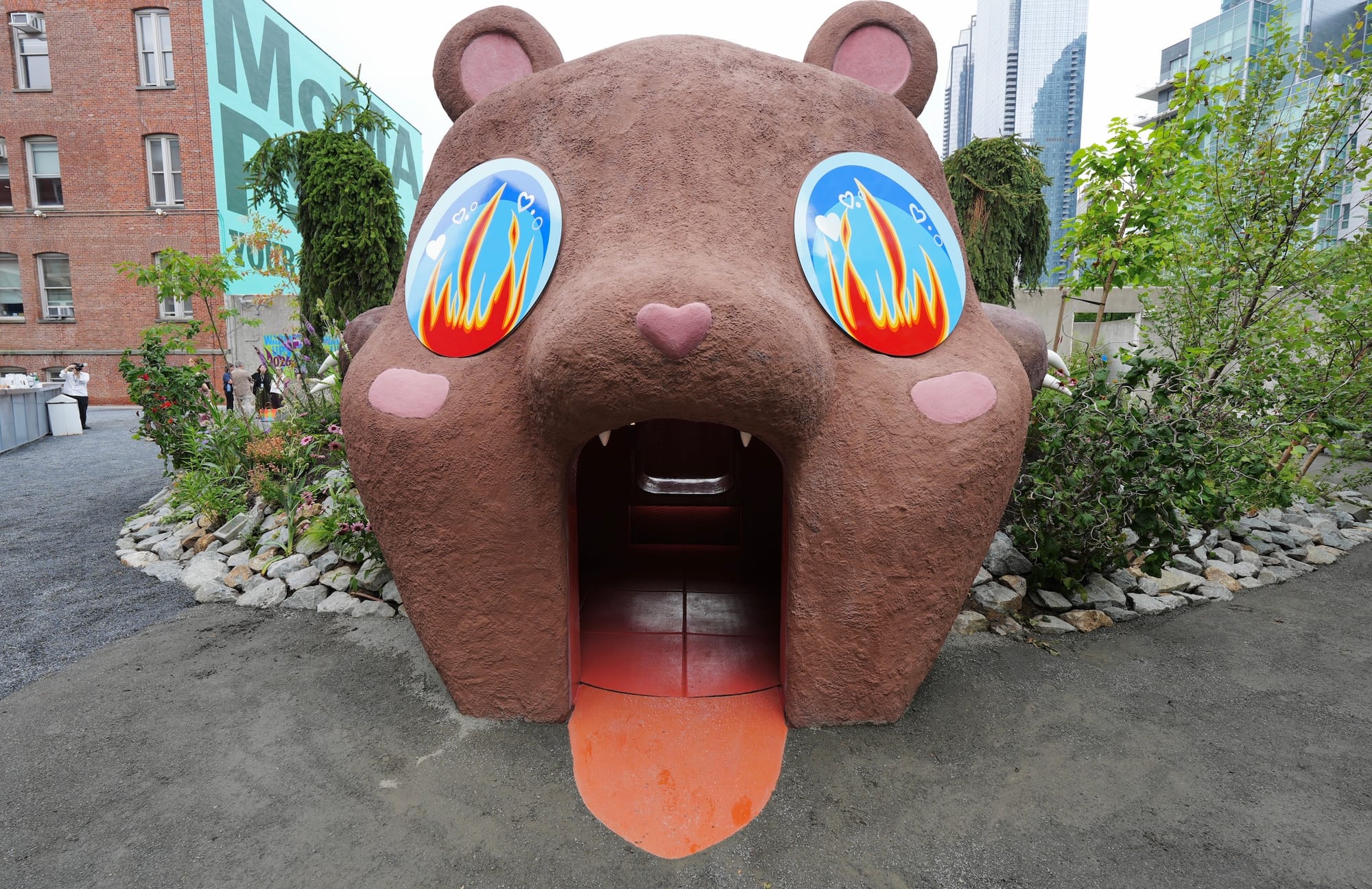

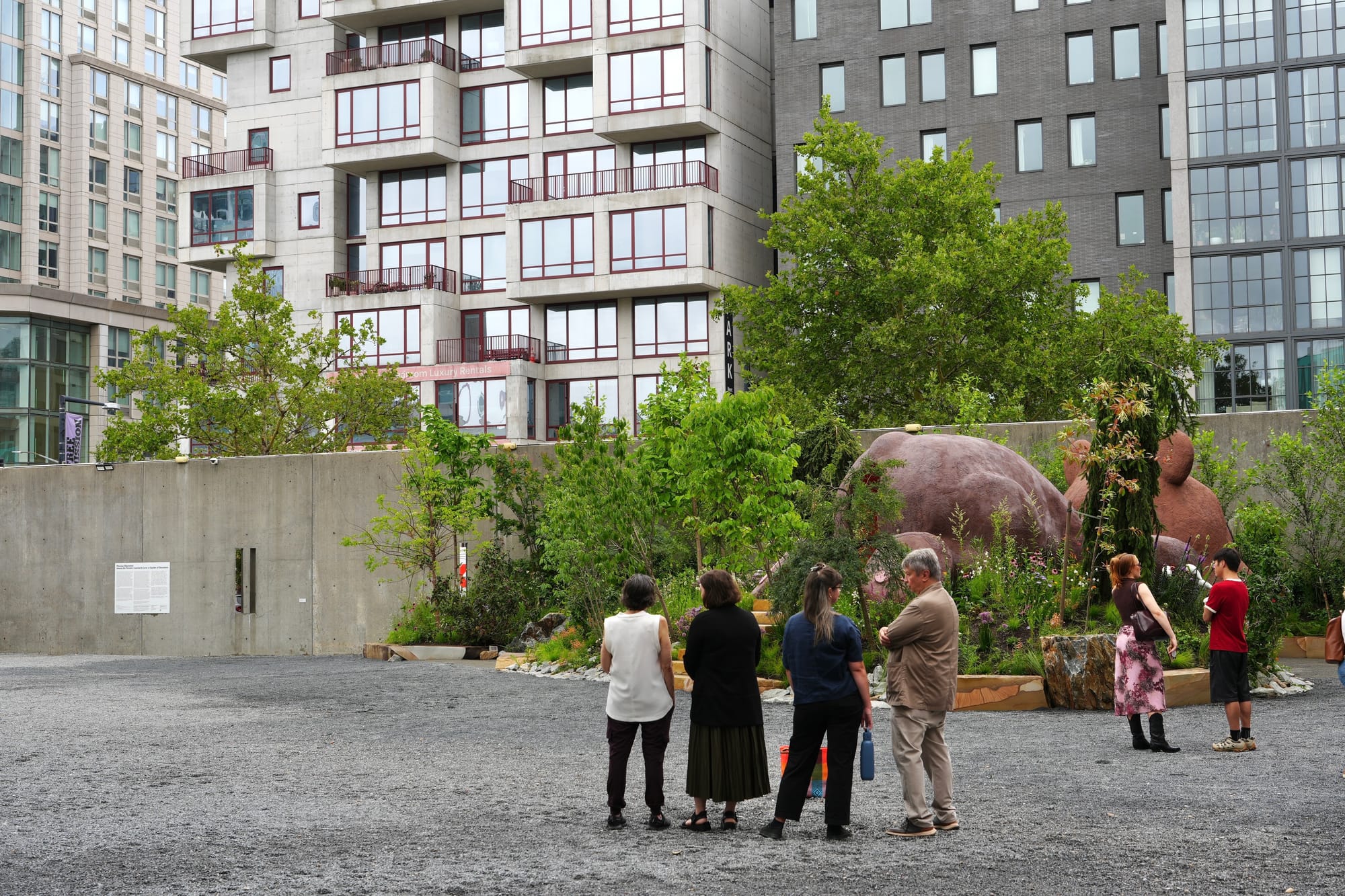
In the famously barren courtyard of MoMA PS1 in Long Island City, Queens, a garden for the next two years has been planted. Created by artist and poet Precious Okoyomon, the elaborate installation invites us to approach a giant teddy bear’s butt and slide through its core to exit through the mouth, like a tongue.
“The rectum isn’t a grave, it’s just a portal,” the artist told me during the press event that took place during an overcast Wednesday sprinkled with drizzle. Their statement riffs on Leo Bersani’s 1987 seminal queer theory essay “Is the Rectum a Grave?”
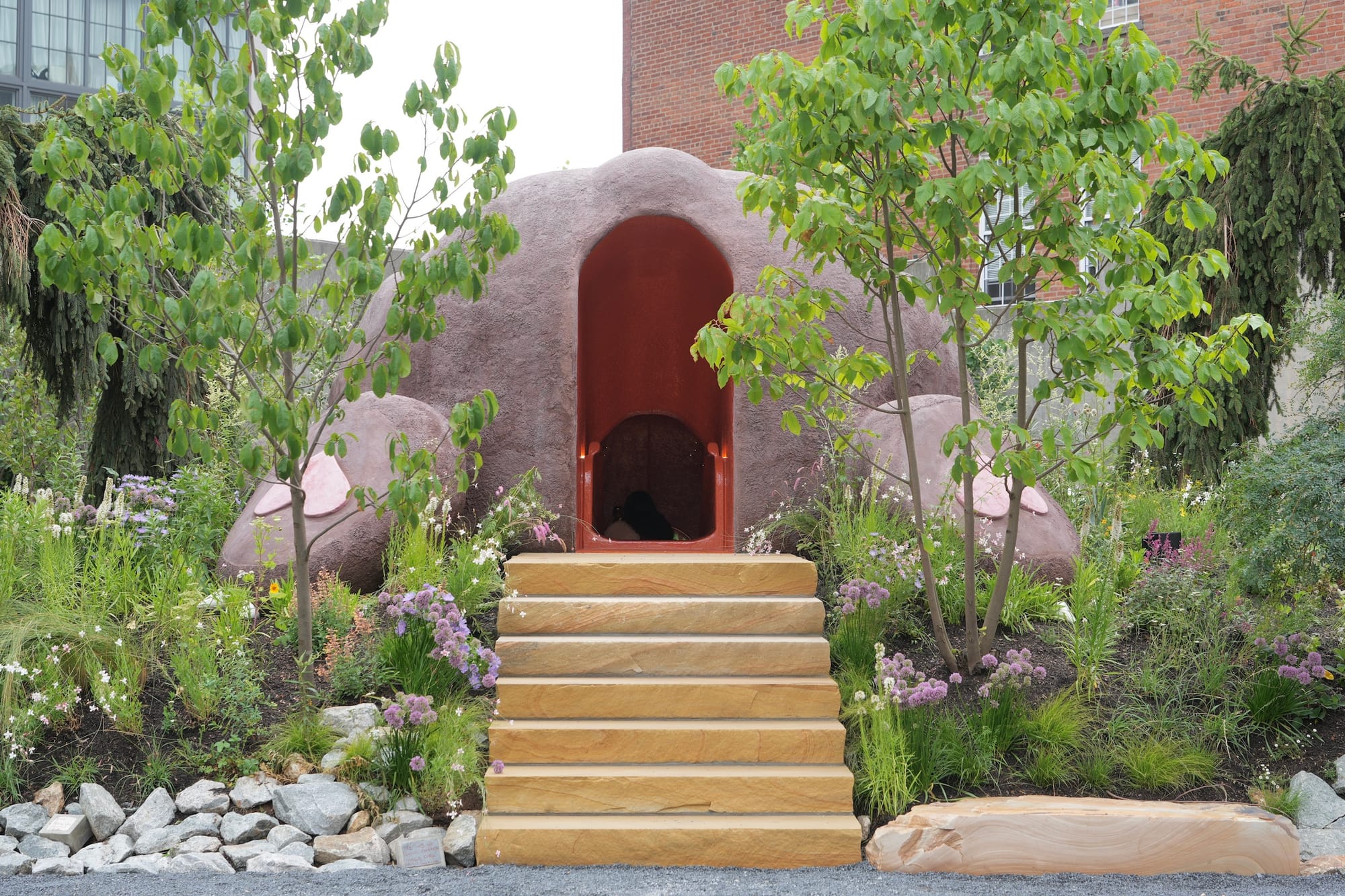
Okoyomon explained that the bear sculpture is called “The Pleasure Principle,” while the entire garden has the poetic title, Among the Flowers I Learned to Love: A Garden of Decreation. The artist has said in the past that they see no separation between poetry and sculpture, and this garden builds on that ambiguity; here they quote a well-known poem by Friedrich Hölderlin. This is only the second time a two-year commission will grace the museum courtyard, the first being Yto Barrada’s far more austere “Le Grand Soir” (2024).
The new work transforms the concrete corner of the museum into a place of joy, exploration, and, dare I say, tranquility. Passion flower, clematis, and morning glory vines are creeping up the gray walls, while many plantings will still blossom in the coming months, including Queen Anne’s Lace. Even in winter, the floral dormancy will allow the Norway spruce that stands tall near the bear’s right flank to shine, and the leaning rows of birch that frame the pathway wrapping around the bear are sure to be a delightful sight when snow settles.
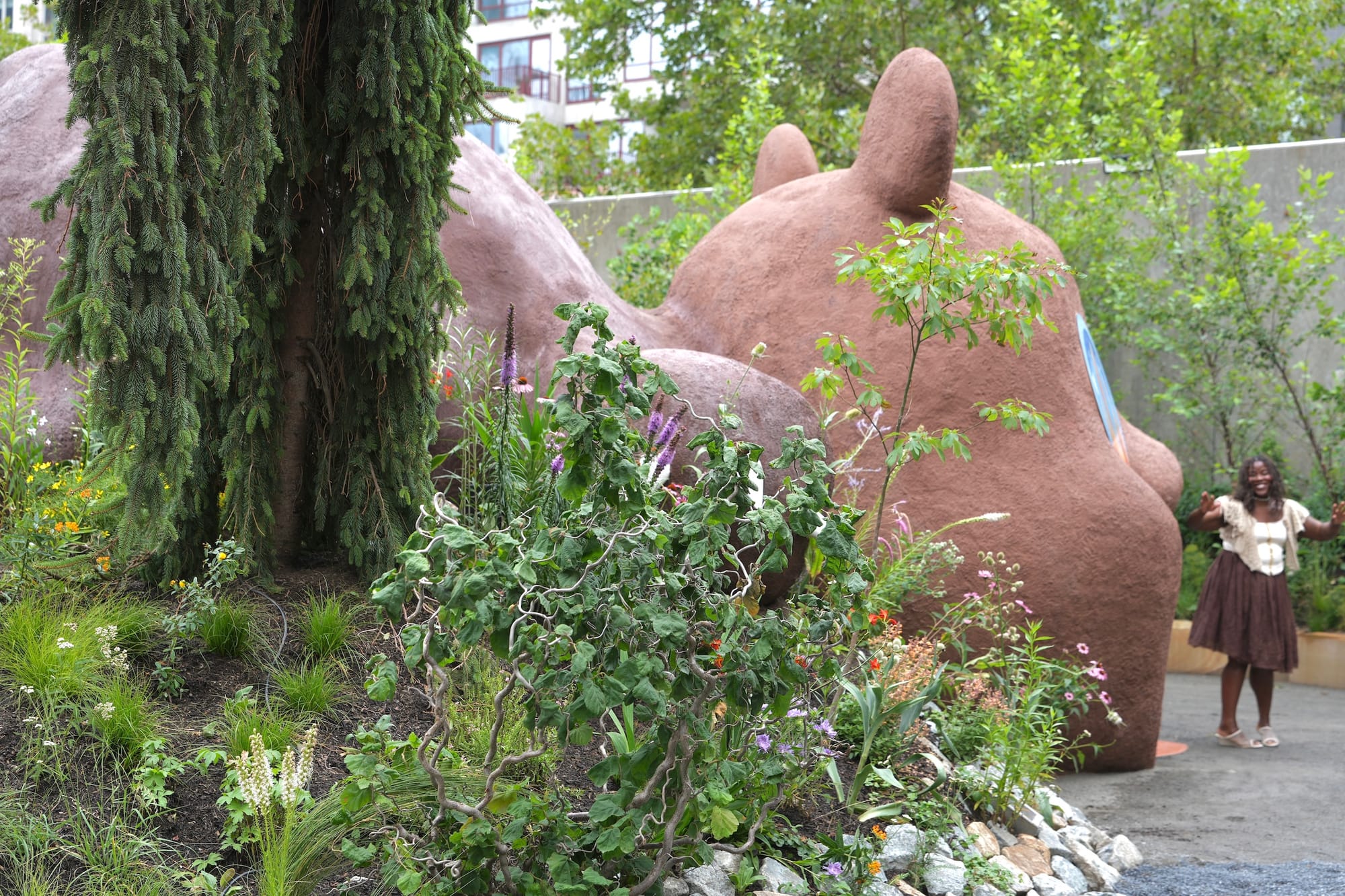
Okoyomon has returned to the teddy bear for years. The motif began with a childhood gift, a bear named Precious after themself, programmed with their young voice to say “I love you.” That bear is gone, and there’s a Lord of the Rings flavor to Okoyomon’s pursuit of their lost Precious. They described the return to origin as “escape, play, and a continuous digestion of childhood.”
During our brief chat, they paraphrased British psychotherapist Adam Phillips, ‘You never recover from a sadomasochistic childhood.’
“You make art about it,” I responded.
And we both laughed while a music box-like tune played in the background and the painted flames in the teddy’s eyes acted like a halo behind them. Gardens are often the settings for many stories of origin and death, and in them we can find harmony and refuge, even if that is illusory.