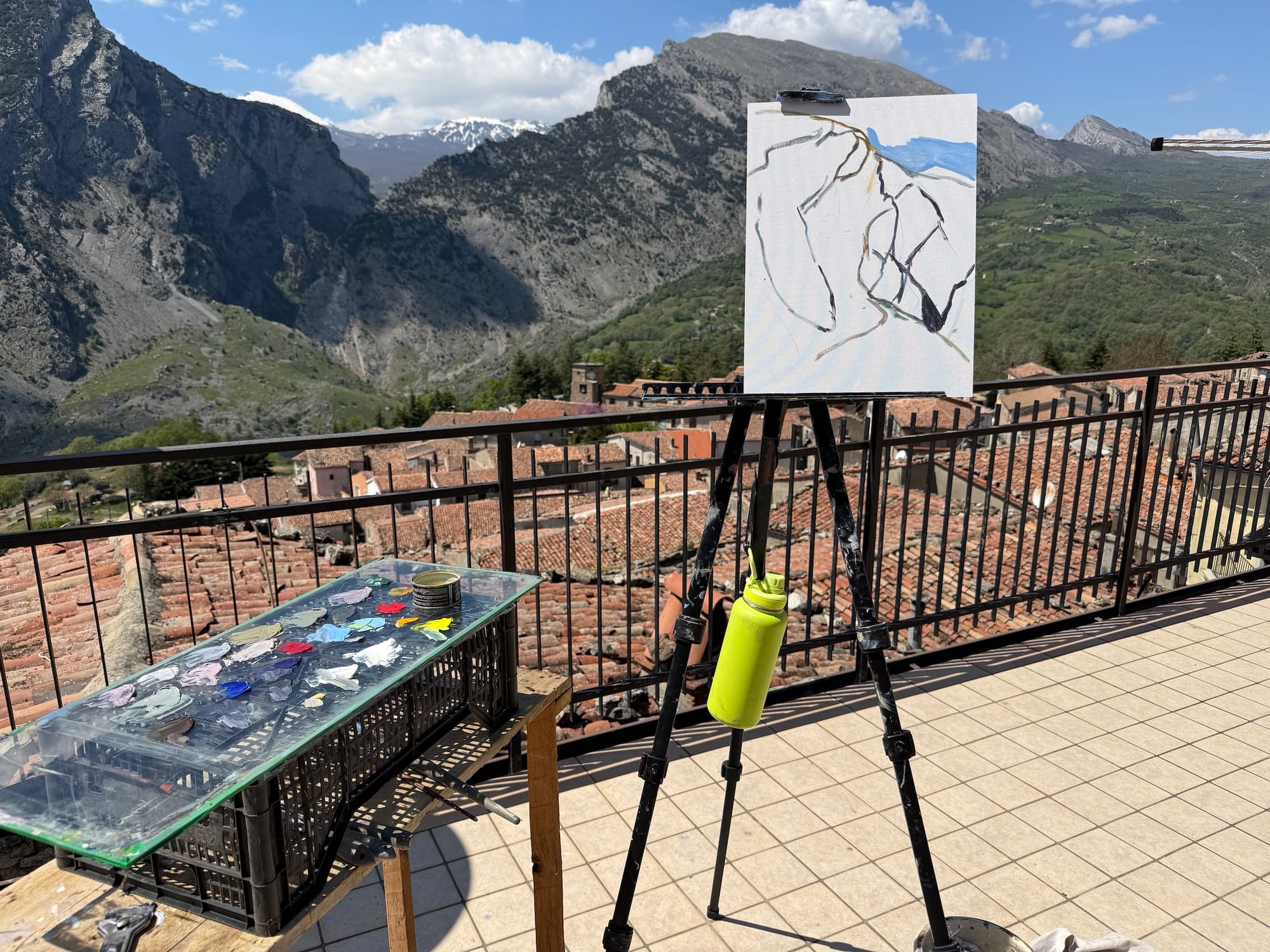
Welcome to the 336th installment of A View From the Easel, a series in which artists reflect on their workspace. This week, Brenda Zlamany returns to her ancestral village near the Pollino National Park in Italy, where she paints in an old sausage factory and grows her own olives. (Fun fact: I walked by her 2016 “Portrait of Yale’s First Seven Women PhDs” on many late nights as a student in the Sterling Memorial Library.)
Want to take part? Check out our submission guidelines and share a bit about your studio with us through this form! All mediums and workspaces are welcome, including your home studio.
Brenda Zlamany, Calabria, Italy
How long have you been working in this space?
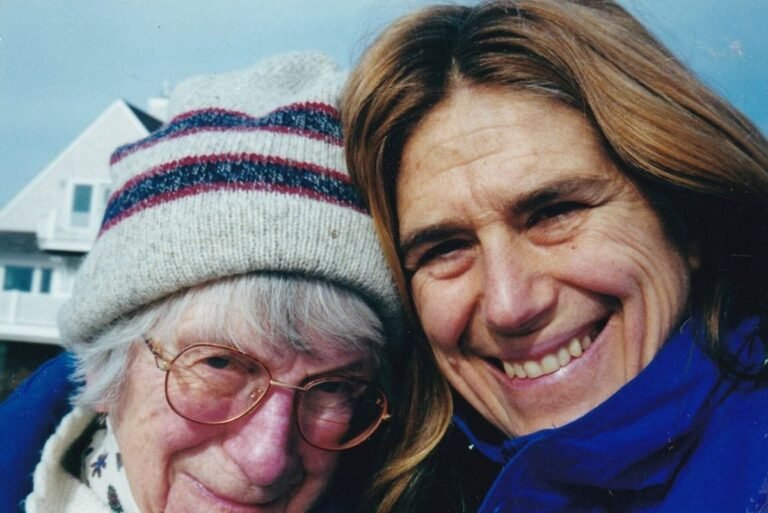
Since April 2024 — but also for 45 years. The first time I saw this village I was a teenager on my junior year abroad at Tyler School of Art in Rome. I took a photo and wrote home to my mother: “Someday I will have a studio here.” My grandfather left as an itinerant cobbler 100 years ago. I came back as an itinerant portraitist.
Describe an average day in your studio.
Monday, Wednesday, and Saturday the fruttivendolo comes up the mountain. To buy vegetables you go down to the piazza, where you will have coffee with every single person along the way, so you get pretty jacked up. Tuesday is the pescivendolo. The village has no cars — the passageways are so narrow you walk single file. Once I have provisions I return to the studio to paint. At night, the one bar. In August there is more happening in this village than in Williamsburg.
How does the space affect your work?
This is the place my grandfather left 100 years ago, and I am back exactly 100 years later. I hike every day and find myself remembering things — a kind of intense déjà vu, as though I’d always been here. There’s such a thing as memory of a place you weren’t born in. It’s in the blood. I’ve never felt more at home anywhere.
How do you interact with the environment outside your studio?
I’m insider and outsider at the same time — expected to know the customs, but allowed to break the rules. The people closest to me here work with agriculture and animals. They understand the hours I keep. There’s something about working the land that speaks to how artists work. That rhythm drives me.
What do you love about your studio?
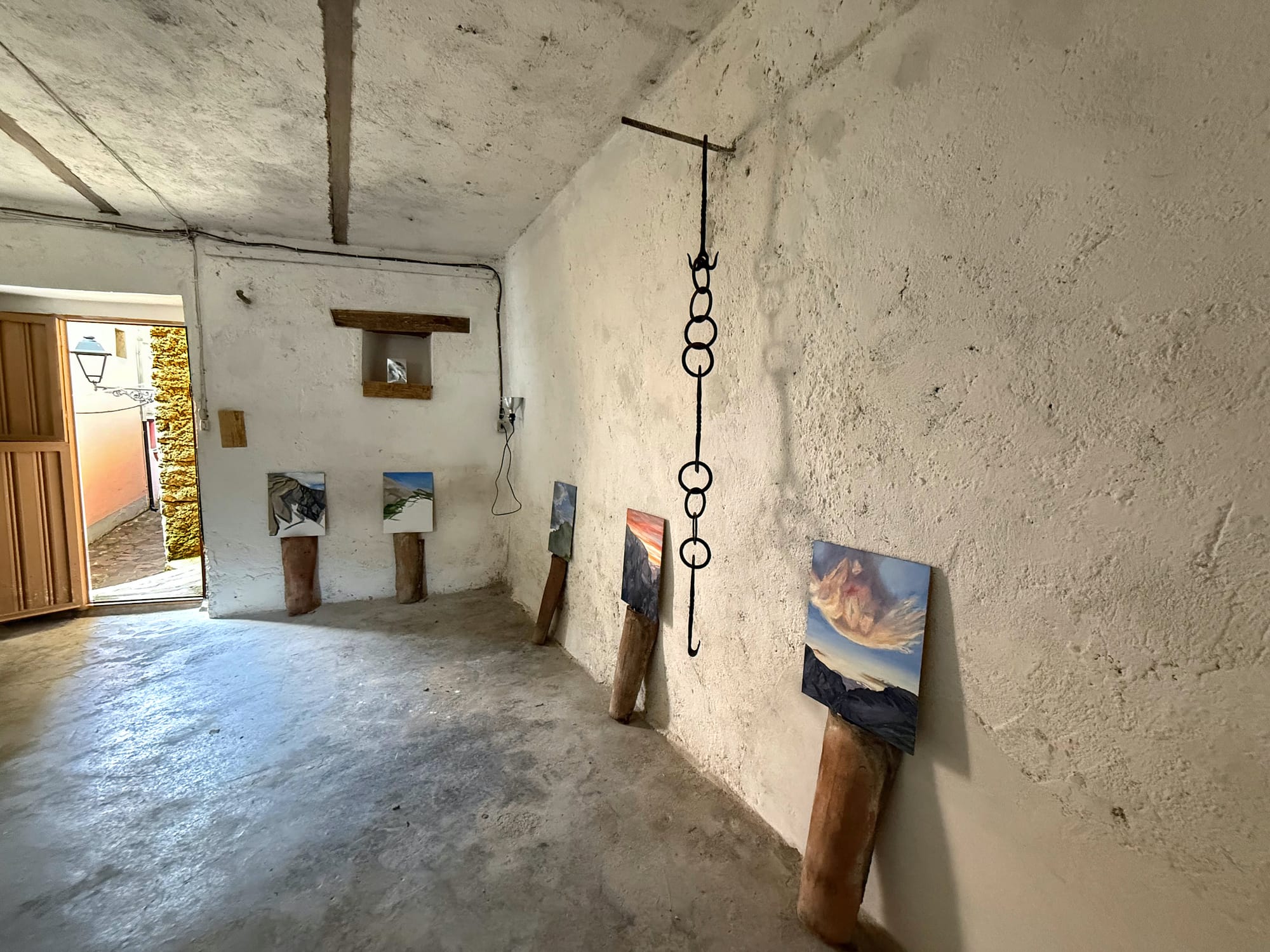
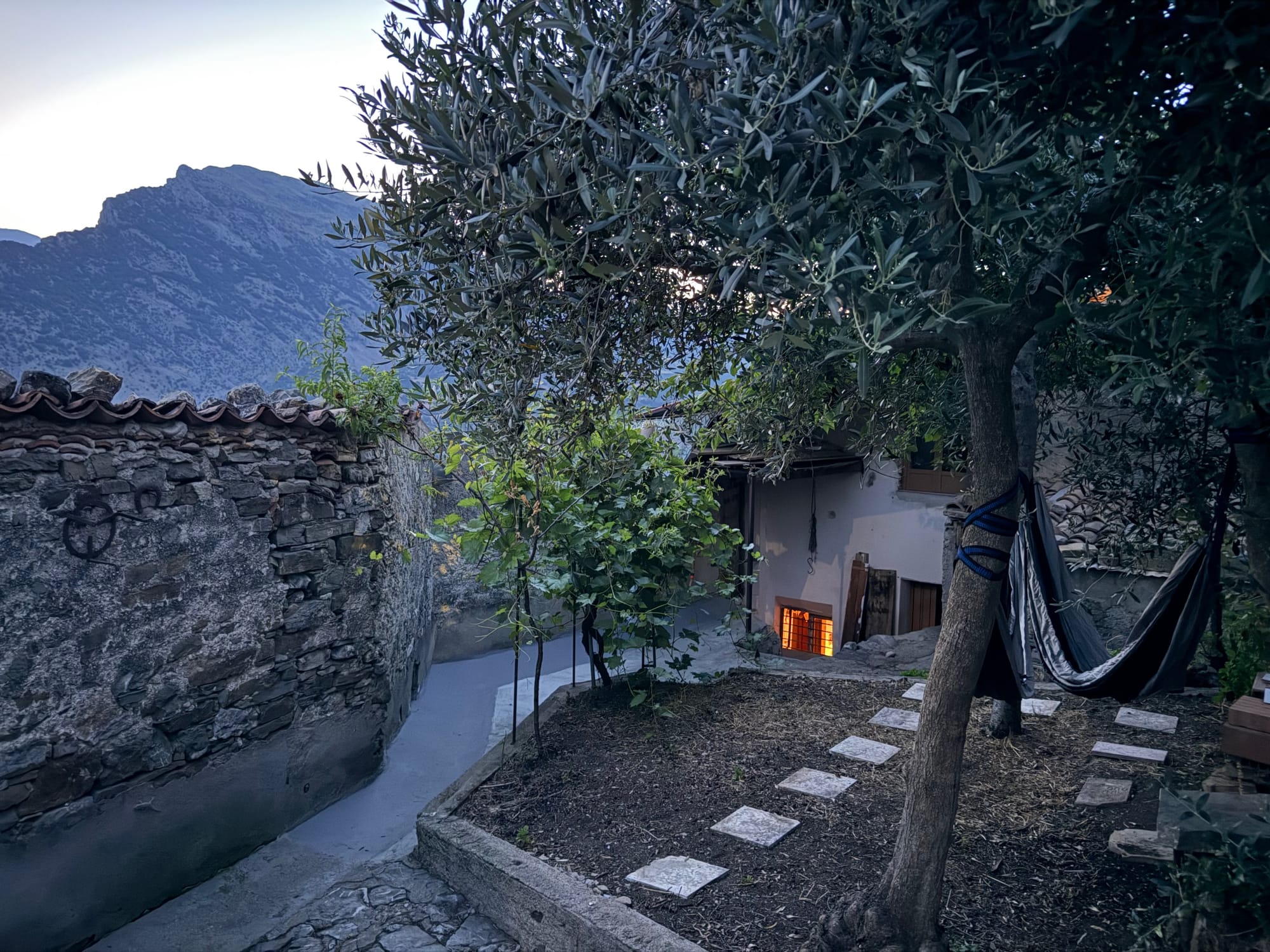
I have a compound: an old sausage factory I’m converting to a studio, a forno building, and a house that came fully furnished with magical objects — I can sense the presence of the self-sufficient woman who lived here before me. I use her sheets after all. The building is 300 years old on the bottom, 50 years old on the top. This summer, my stonemason pressed olive oil from my own olives.
What do you wish were different?
There’s a saying: “Be careful what you wish for.” I wish it were easier to get up and down the mountain — but the reason this place is so untouched is because it’s so remote. So: I wish there were public transportation. But I’m really glad there isn’t.
What is your favorite local museum?
The Museo della Liquirizia “Giorgio Amarelli” near Rossano — a museum dedicated entirely to the Amarelli family’s centuries-old licorice production. It’s the only museum I’ve visited in the south of Italy, which tells you something about how I’m spending my time here. When people here ask me what I find interesting, I tell them: Rome has Michelangelo. We have the mountain.
What is your favorite art material to work with?
Oil paint, always. And I finally found a supplier in Naples who will send materials up the mountain. It reminds me of Steve at New York Central Art Supply in the early days, when there was still such a thing as customer service for artists.