Welcome to the 342nd installment of A View From the Easel, a series in which artists reflect on their workspace. This week, Ashley Chew nurtures community and connection in her studio as an antidote to exclusionary spaces in the art world.
Want to take part? Check out our submission guidelines and share a bit about your studio with us through this form! All mediums and workspaces are welcome, including your home studio.
Ashley Chew, New York, New York
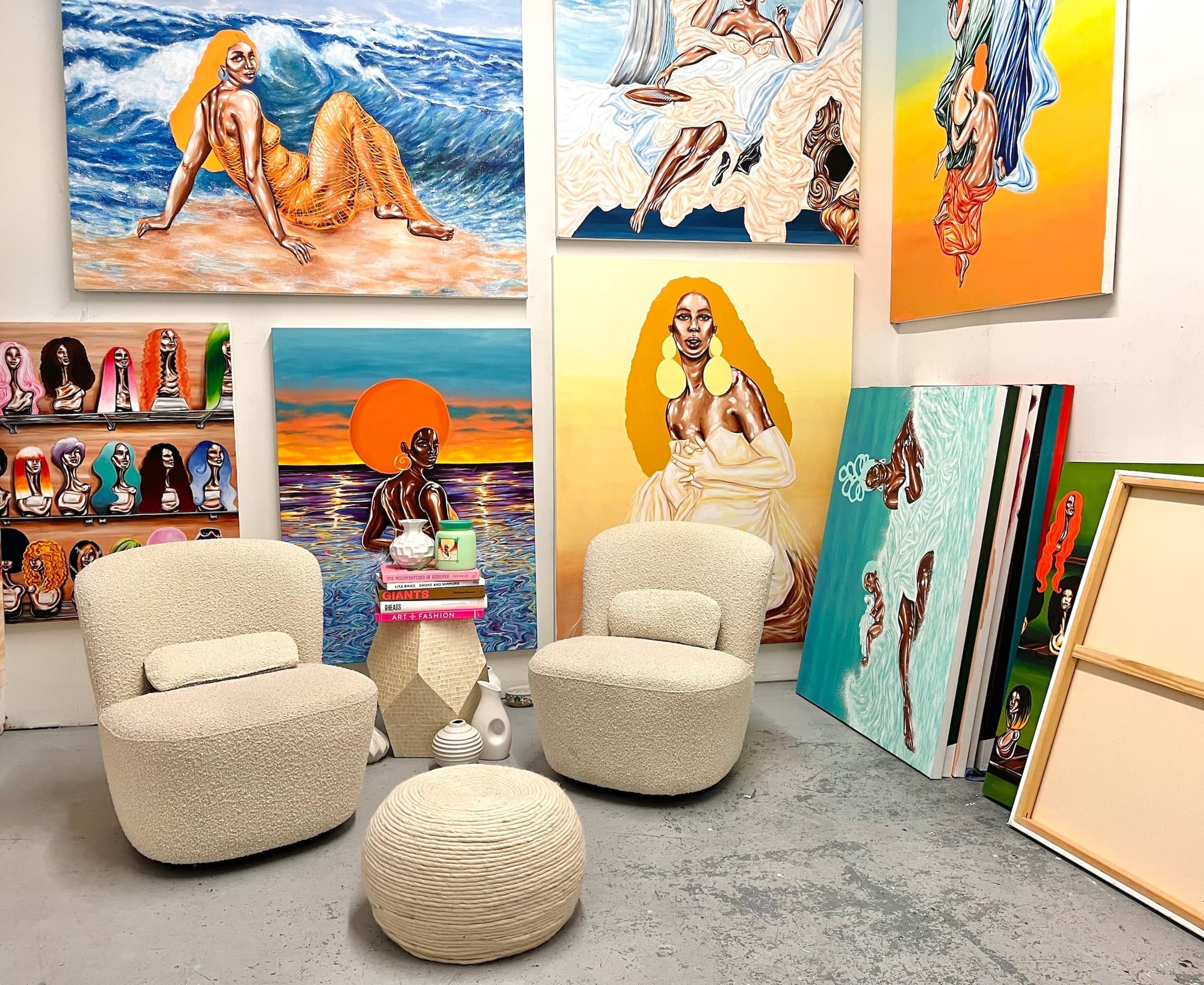
How long have you been working in this space?
Four years.
Describe an average day in your studio.
Aside from painting, I am also an illustrator; this determines my day. I work with many brands so at any given time I could be painting on textiles, product bottles, leather goods, and more.
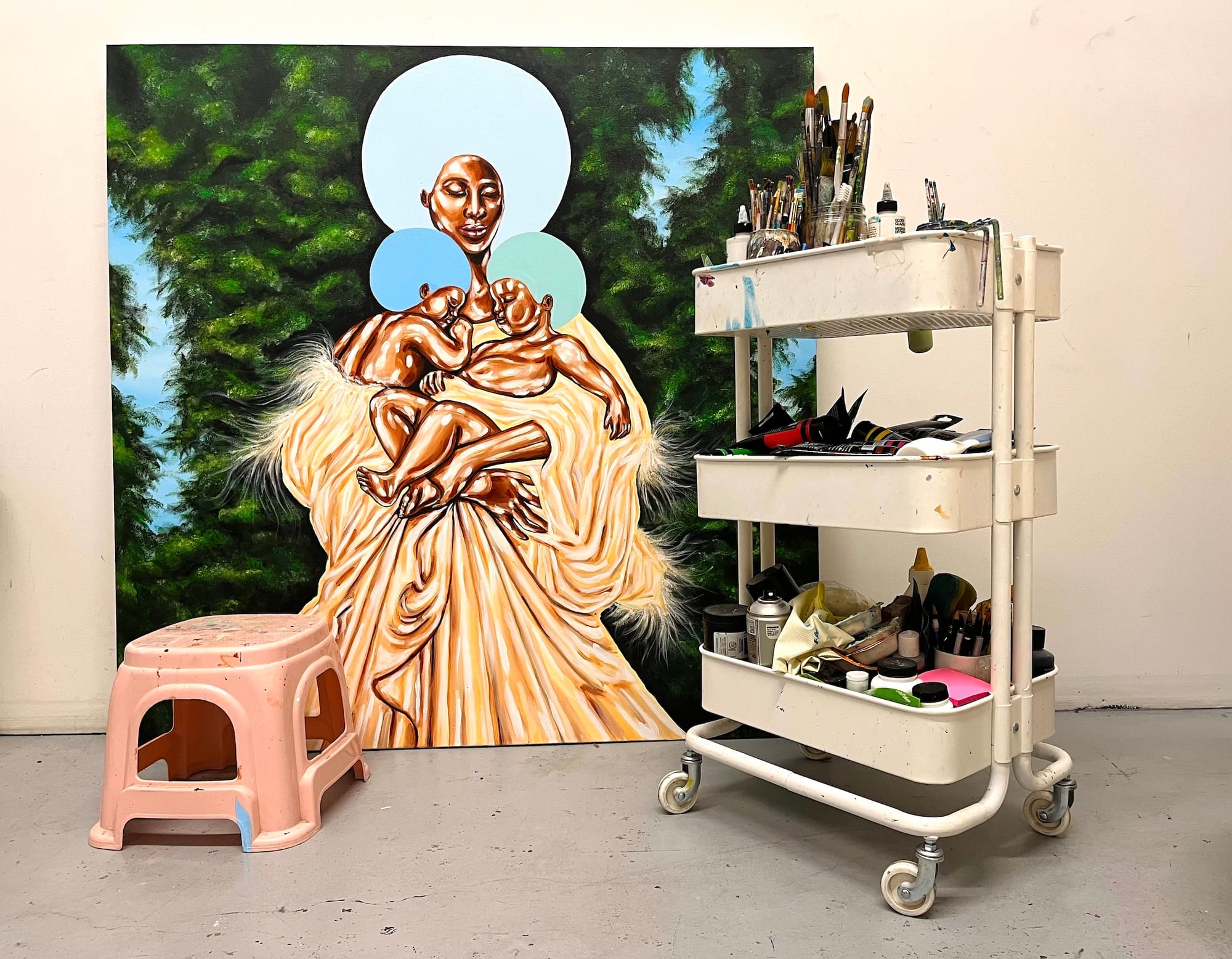
A typical day in my studio is starting fresh. I am very neat visually to keep my thoughts organized — who knows what client work I may have to work on in a different medium. I clean everything before I leave, so that I don’t feel disheveled or frustrated looking for things before the work even begins. I am there around five to seven days a week. I love creating so much, If Michael Jackson and Beyoncé could stay up all night to work on their craft, I can too.
My personal practice is play. I am rarely ever working on one thing at a time. If I cannot solve a painting in that moment, I will switch tasks. I will leave to ride a bike, read by the water or sit at the park. I’ll always come back to the work.
How does the space affect your work?
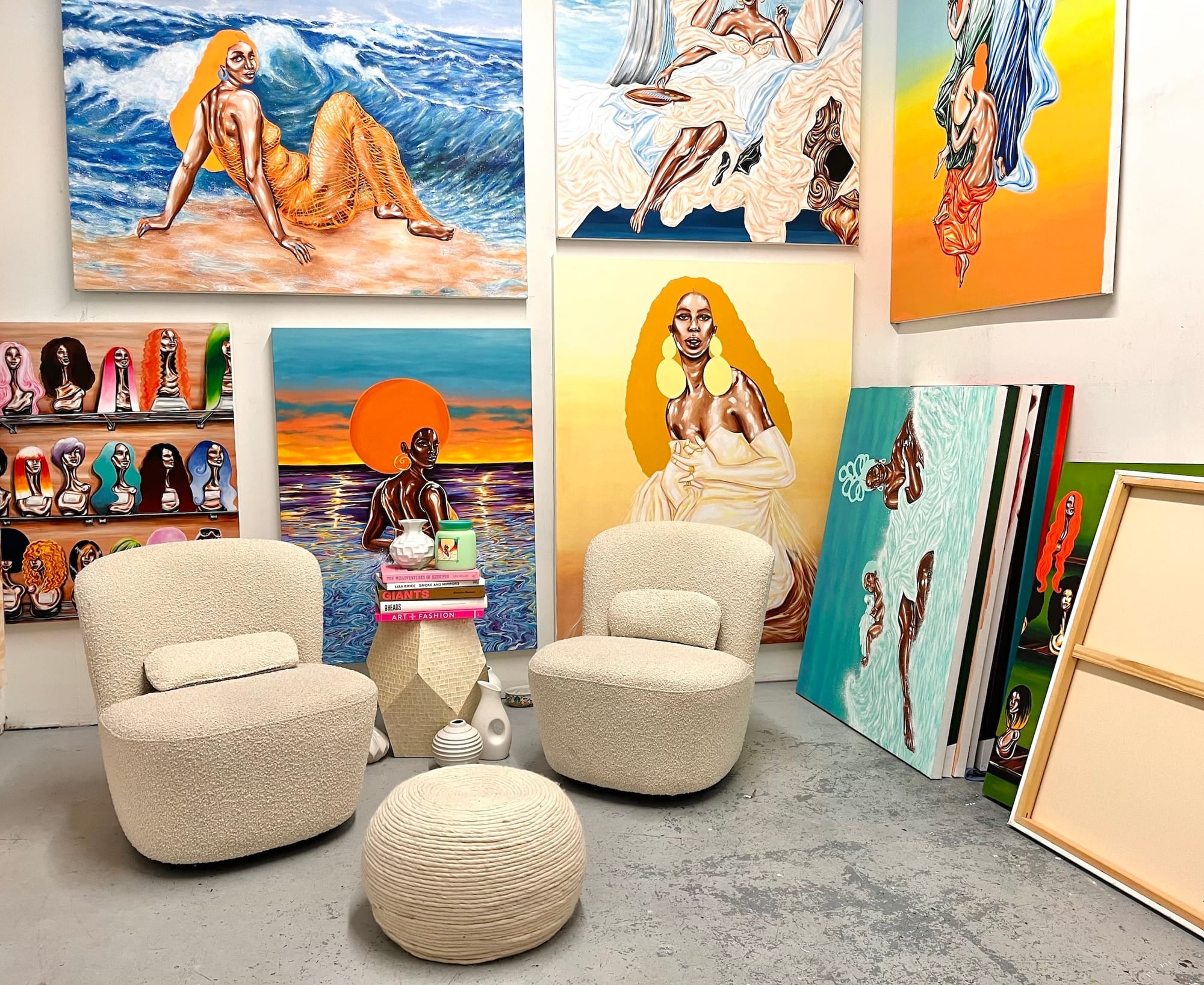
I wanted the space to feel inclusive and welcoming, like a lobby or lounge. Myself and my work have often not felt welcomed within certain spaces and institutions. Unfortunately, when you belong to marginalized communities, those experiences can persist even within the most highly regarded environments. I wanted artists, friends, spectators, and arts workers to stop by and see themselves represented in my work. There was a year I did not show any work, so I showed it in my studio. People love to come by and I love to be there. I hope this love comes across in my work.
How do you interact with the environment outside your studio?
My studio is an abundant arts community. The building is full of artists and hosts open studios. I’m near four museums. The neighborhood has it’s own arts festival, so there’s always something going on just a few steps away. I often step out to attend openings. Thursdays I go to anywhere from one to five openings. My studio is community — I often host creatives to meet each other, and sometimes it’s just talking, or I will facilitate a craft to spark connections.
What do you love about your studio?
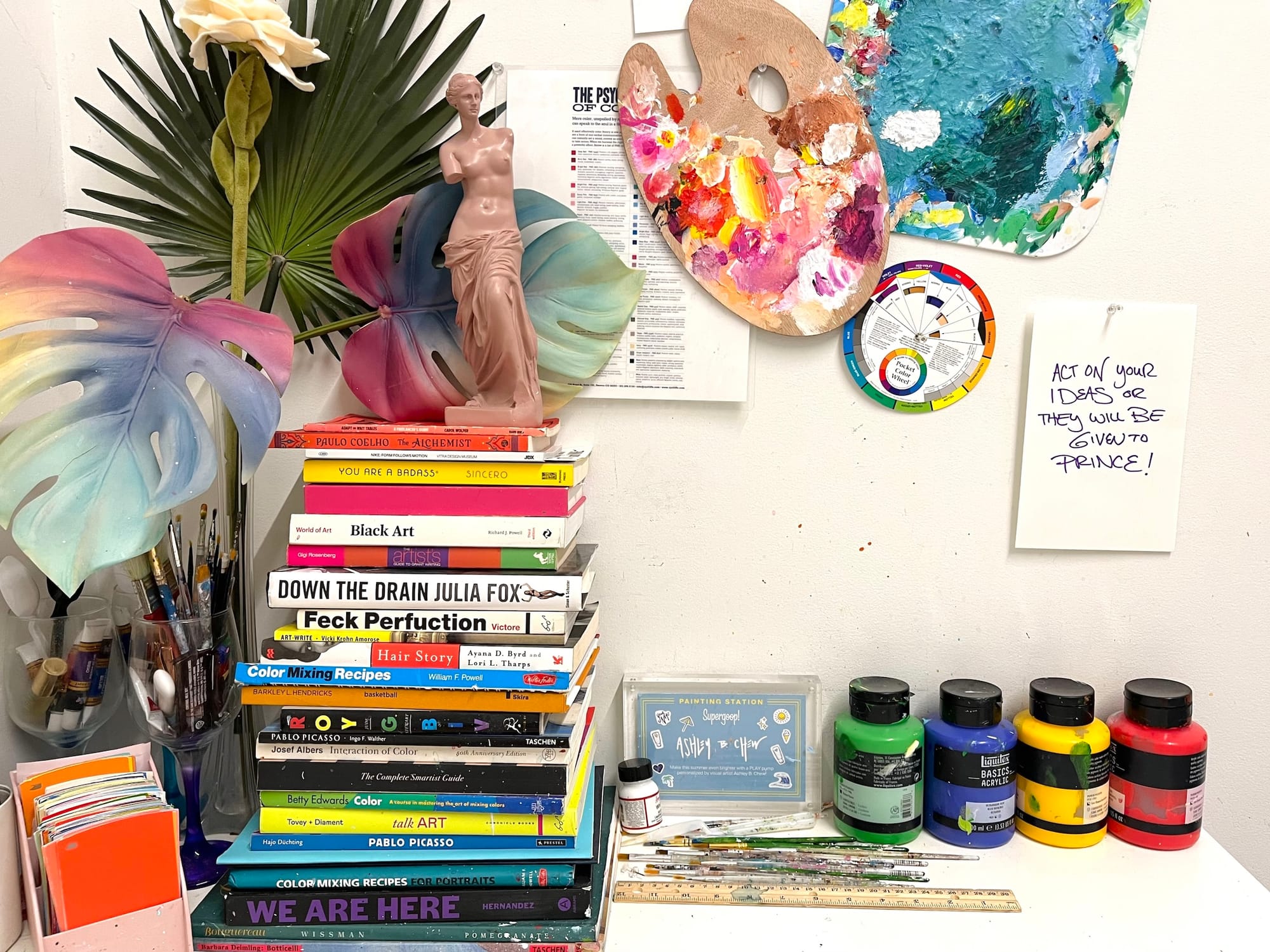
My studio is a manifestation of my coloring book at eight years old. I stayed an artist, I stayed curious, and I get to stare at the result of that every single day.
What do you wish were different?
Nothing, my parents think I’m doing amazing.
What is your favorite local museum?
The Noguchi Museum.
What is your favorite art material to work with?
All things textiles. Acrylic paint is my current journey — it will always be more first love, but I am working on getting off the canvas.