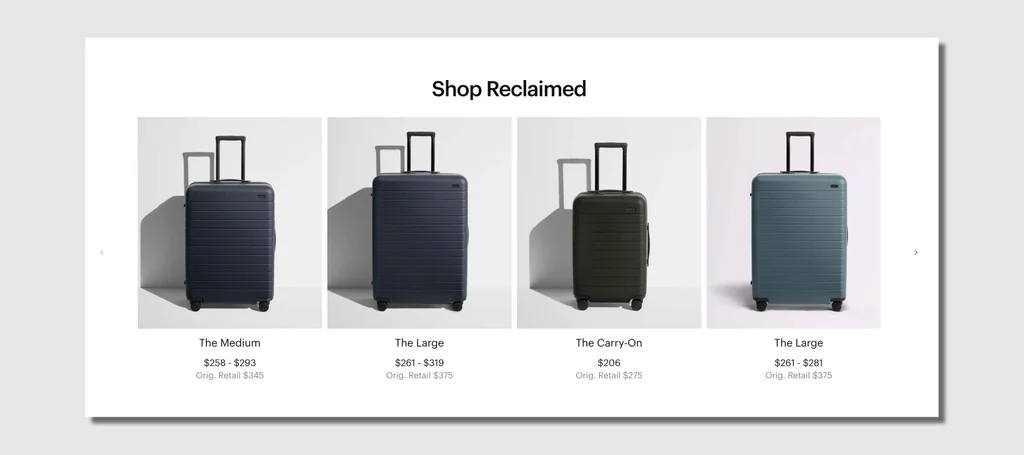
Away’s aluminum carry-on sells for $625, but right now you can snag one for $436. A medium suitcase in navy usually goes for $345, but you can get it for $293. There’s a catch, though: Some of these bags may have a little scuff here or a dent there.
The suitcases are available on Away Reclaimed, a new site where the luggage brand sells its own products that cannot be sold as new. Its inventory comes from customer returns, which Away accepts within 100 days of purchase, as well as from the last few units of a limited-edition color or collab that the company didn’t manage to sell.
And there’s more. The site also sells Away’s backpacks, totes, and duffles. Later this month, the company plans to add an “Employee Archive,” which will include luggage that staffers have gently tested, along with one-of-a-kind production samples.
Because it no longer has to waste perfectly usable inventory, the company can be more sustainable. The platform also provides a new revenue stream.
Jessica Schinazi, Away’s CEO, says Reclaimed could effectively introduce the brand to new consumers who are looking for products that are slightly more affordable, perhaps turning them into loyal customers down the road.
A sustainability problem
Before Reclaimed, much of Away’s returned merchandise didn’t have an obvious place to go. That’s a problem across retail, where returns are among the biggest sources of waste. U.S retailers expected 15.8% of their annual sales would be returned in 2025, or $849.9 billion worth of merchandise, according to a study by the National Retail Federation and the return platform Happy Returns.
Brands generally treat wasted returns as a cost of doing business. Many returned products never make it back onto shelves. Some items are liquidated to off-price retailers like T.J. Maxx; others are donated. A lot ends up in landfills: 9.6 billion pounds annually, according to the reverse logistics company Optoro.
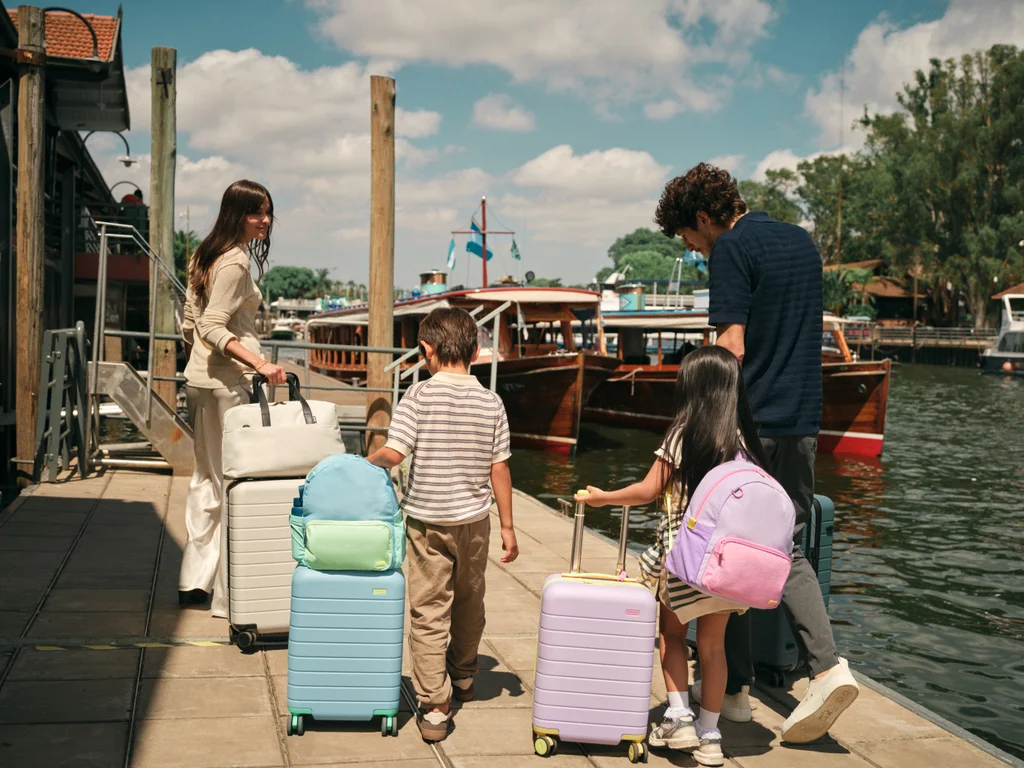
But today, shoppers are much more comfortable acquiring things that aren’t brand-new. For instance, 59% of consumers shopped secondhand apparel in 2025, up 7% in three years, according to ThredUp’s most recent report. Schinazi says Away’s own customers have been asking for a resale option for years.
But resale is complicated—it takes a reverse logistics system to collect old products, inspect them, and list them online. That’s why Away is starting with its own returned and unsold inventory. To build Reclaimed, the company partnered with Trove, which powers the resale programs for many brands, including Carhartt, Cotopaxi, and Eileen Fisher.
Away opened a dedicated reverse logistics warehouse, where every product is inspected, cleaned, refurbished, and graded on a three-point scale from “excellent,” meaning it’s essentially new, to “good,” which means there’s some noticeable wear. Away replaces wheels, trolley handles, linings, or anything else that affects the functionality of the suitcase.
“If the item is not performing the way that it should be, we will not sell it through Reclaimed at all,” Schinazi says. “If there’s a sticky zipper, we will never sell a product like that.”
Customers have been snapping these bags up. Away soft-launched Reclaimed in August with no marketing and sold 80% of its initial inventory within the first two weeks. The company says return rates on Reclaimed purchases have been low, and some customers have already come back to buy a second piece.
“It’s an interesting testament to how important those kind of programs are for the American consumer today,” Schinazi says, pointing both to interest in sustainability and to shoppers who are watching their wallets.
For now, the biggest thing holding Reclaimed back is supply. Since inventory largely comes from returns, Away cannot control how many pieces come in.
“We’re learning as we go in these early months,” Schinazi says, noting that the company is exploring a buyback program that would take back suitcases customers have owned for years.
For now, though, it’s running a test through its “Trade In, Trade Up” event this month. Customers can bring in a wheeled suitcase from any brand in any condition to a participating Away store October 16 through 18 and October 23 through 25 (by appointment) and receive $100 toward a new suitcase from Away’s newly redesigned Series 3 line. The company will use the event to learn how trade-in programs might eventually feed into Reclaimed.
Selling discounted versions of its own products could, in theory, cannibalize Away’s full-price sales. But Schinazi isn’t particularly worried. She believes Reclaimed will be an entry point, especially for younger shoppers who aren’t willing to spend full price on a carry-on.
“We know that Away Reclaimed might be their first purchase,” she says. “But we’re going to be able to have them experience our bags.” As they travel more, she hopes they will buy new pieces for themselves, their family, or as gifts.