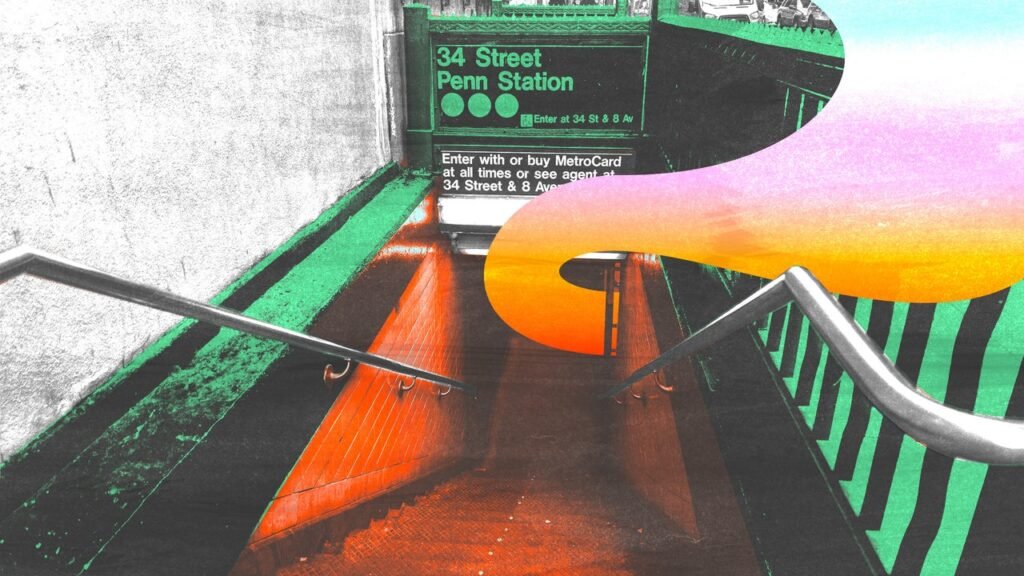
On a hot summer day in New York City, walking into a subway station can feel like descending into a sauna, improbably even hotter and muggier than the air outside. Unlike more modern subway stations around the world, New York’s century-old stations lack air conditioning—with staircases open to the outside air, AC would be inefficient and ineffective. And while you can blissfully cool off on the air-conditioned trains, they’re also making the problem worse: Cooling the cars means constantly pumping hot air into the tunnels and stations.
At the East Broadway station on Manhattan’s Lower East Side, the Metropolitan Transportation Authority is launching a pilot to test a potential new solution. Tucked into arches in the ceiling and hidden behind grates, a radiant cooling system will passively pull heat from the air to cool the station with minimal energy use. In the future, the same type of system could send the heat that’s captured to nearby buildings to heat hot water, saving even more energy.
The city is racing to find better ways to deal with extreme heat. “We are keenly aware, especially when we get into the heat of summer, about the impact of climate change on our customers and our infrastructure,” says Jamie Torres-Springer, president of MTA construction and development. The subway system has to deal with multiple climate challenges, including coastal flooding and heavy rainfall. But heat is particularly difficult to tackle because of the way the system is designed. “We’re quite honestly and explicitly in experimentation mode here, and we’re looking for what the best alternatives are,” he says.
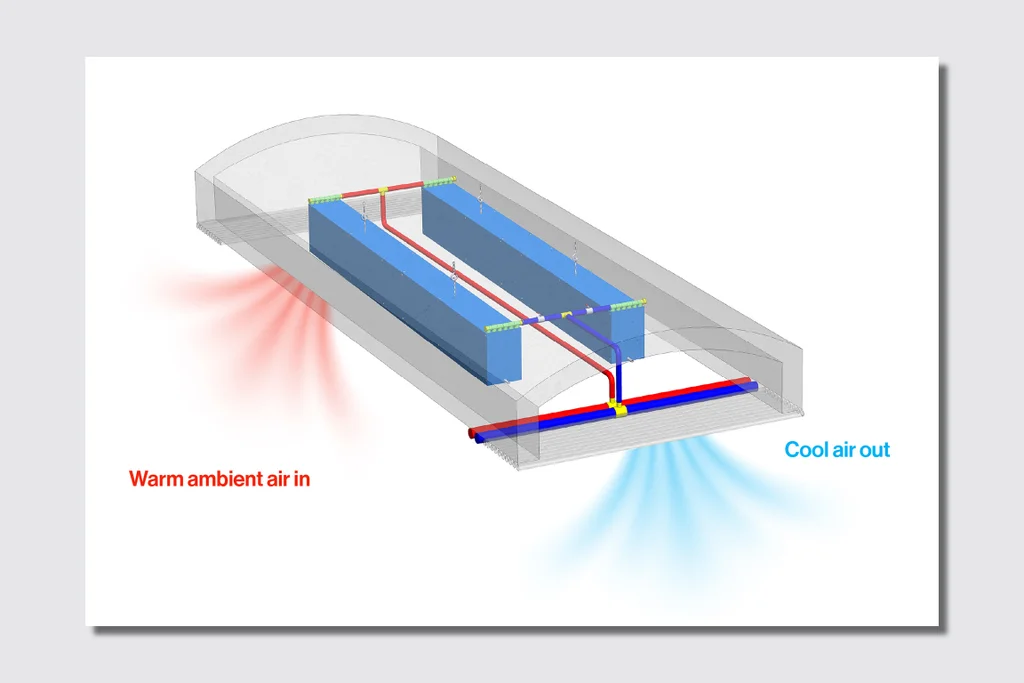
The pilot will test technology from a startup called Cascara Energy. The basic radiant cooling tech isn’t new; some other large buildings, including airports in Asia, use a similar approach. Pipes with chilled water or refrigerant are installed in a wall or ceiling, absorbing heat from a room and then pumping the warm water away.
In the pilot, the MTA is using a refrigerant to chill the water, though a future version could potentially use refrigerants directly in the pipes. Unlike a traditional air conditioner, the system doesn’t blow cold air, helping it use 25%-35% less energy. While many other systems are built into walls, Cascara says that its add-on version is easier to retrofit into old buildings. It can also be customized to fit into small spaces, such as the arches in the subway station’s ceiling.
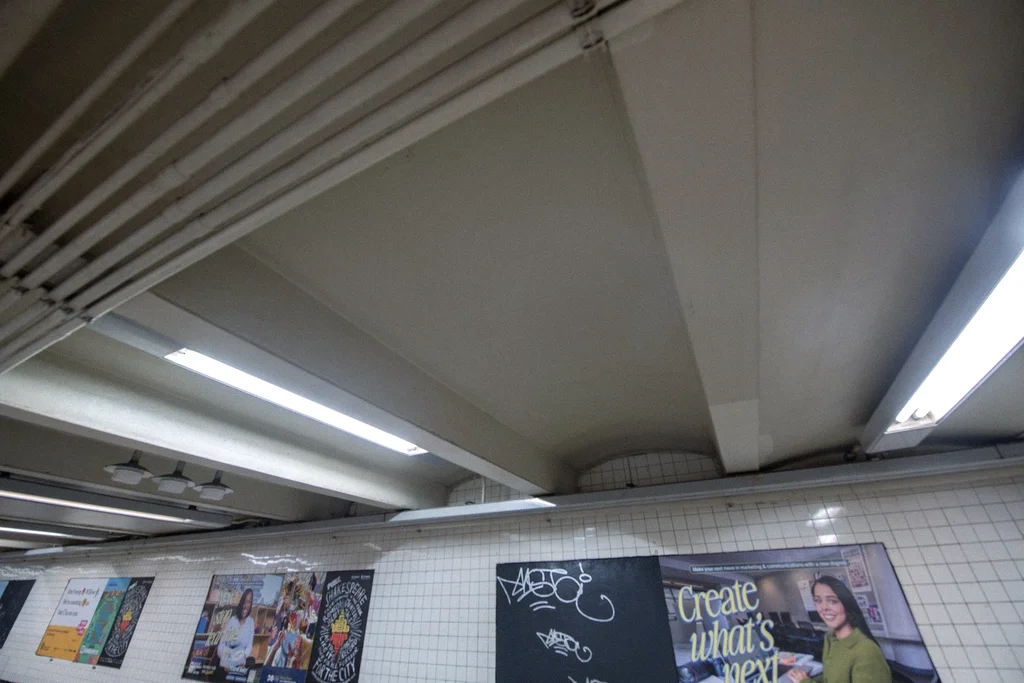
Over the next year, the team will monitor how much the temperature changes in the test area, a passageway that’s around 1,000 square feet (93 square meters). The goal isn’t to make the area cold, but just more comfortable, maintaining a temperature around 85 degrees Fahrenheit (29 degrees Celsius), even as heat continues to flow in from open staircases, subway cars, and people in the station. Unlike traditional AC that cools the air, radiant cooling cools people directly—absorbing heat not just from the air but from bodies—so hot air added to the station has less impact on the system’s ability to work.
The data will also be used to calculate the value of the waste heat—the warmed coolant that is piped out of the station—and how much the MTA could potentially make in the future by selling it to other buildings nearby. The potential for this type of system is huge, says Cascara’s CEO, Robert Croghan. “Every city has a massive geothermal exchange already built into the city,” he says. “And they run trains through it.”
New York wouldn’t have the first subway system to reuse heat. In London, an abandoned Underground station has been turned into an energy center with a huge fan that pulls heat from subway tunnels, then heats water for a district heating system connected to 2,400 homes nearby.
For the MTA, the project is still in the earliest stages. The system has 472 stations, and even if the pilot at East Broadway performs as expected, there’s no plan yet to scale it up. The agency is also exploring other options, including the possibility of geothermal cooling that would make use of steady temperatures farther underground. Meanwhile, they’re trying to make passengers more comfortable by running trains more often.
“The most important and best thing that we can do to help our passengers stay cool is offer frequent and reliable service,” says Torres-Springer. “No one wants to wait in a station, no matter what temperature it is. But the cars are cool, and as soon as that train pulls into the station, everybody’s getting on and feeling a lot of relief. So we have been investing in that reliable, frequent service.”