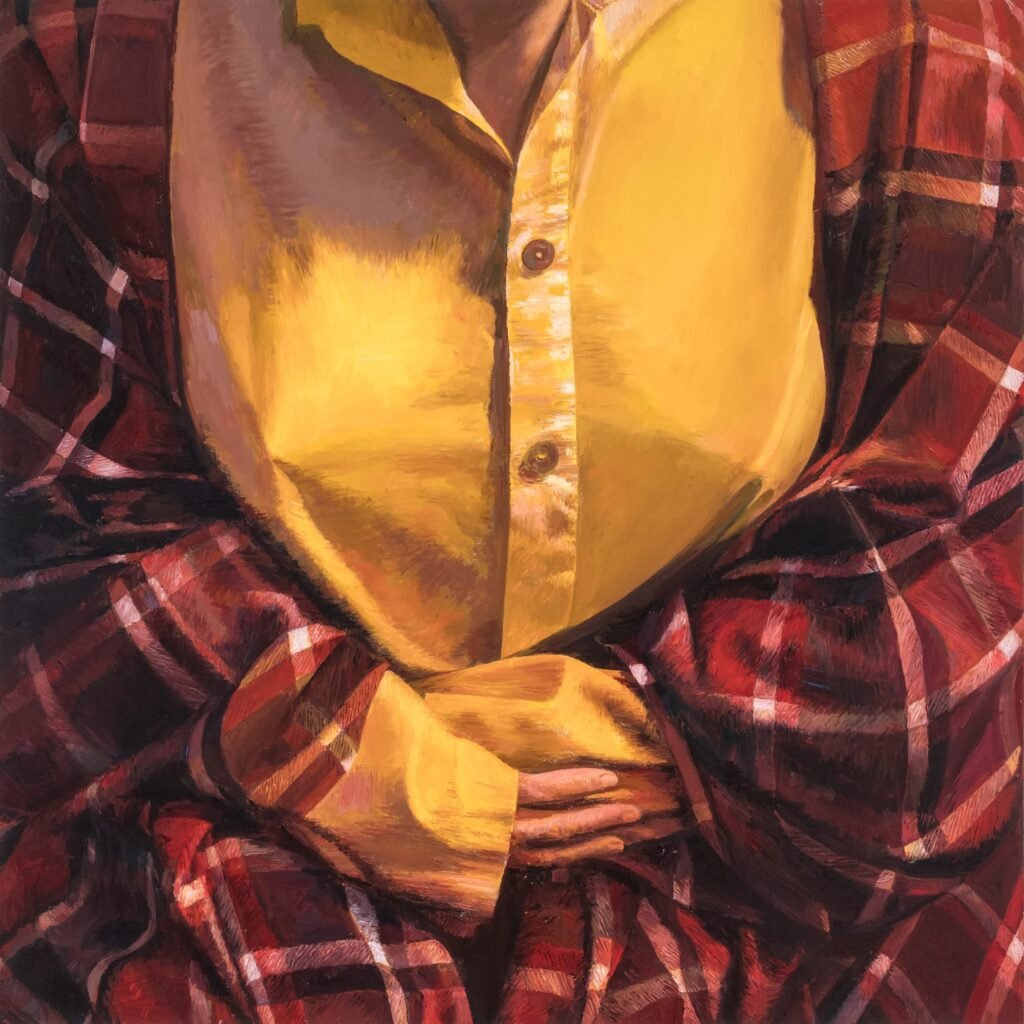
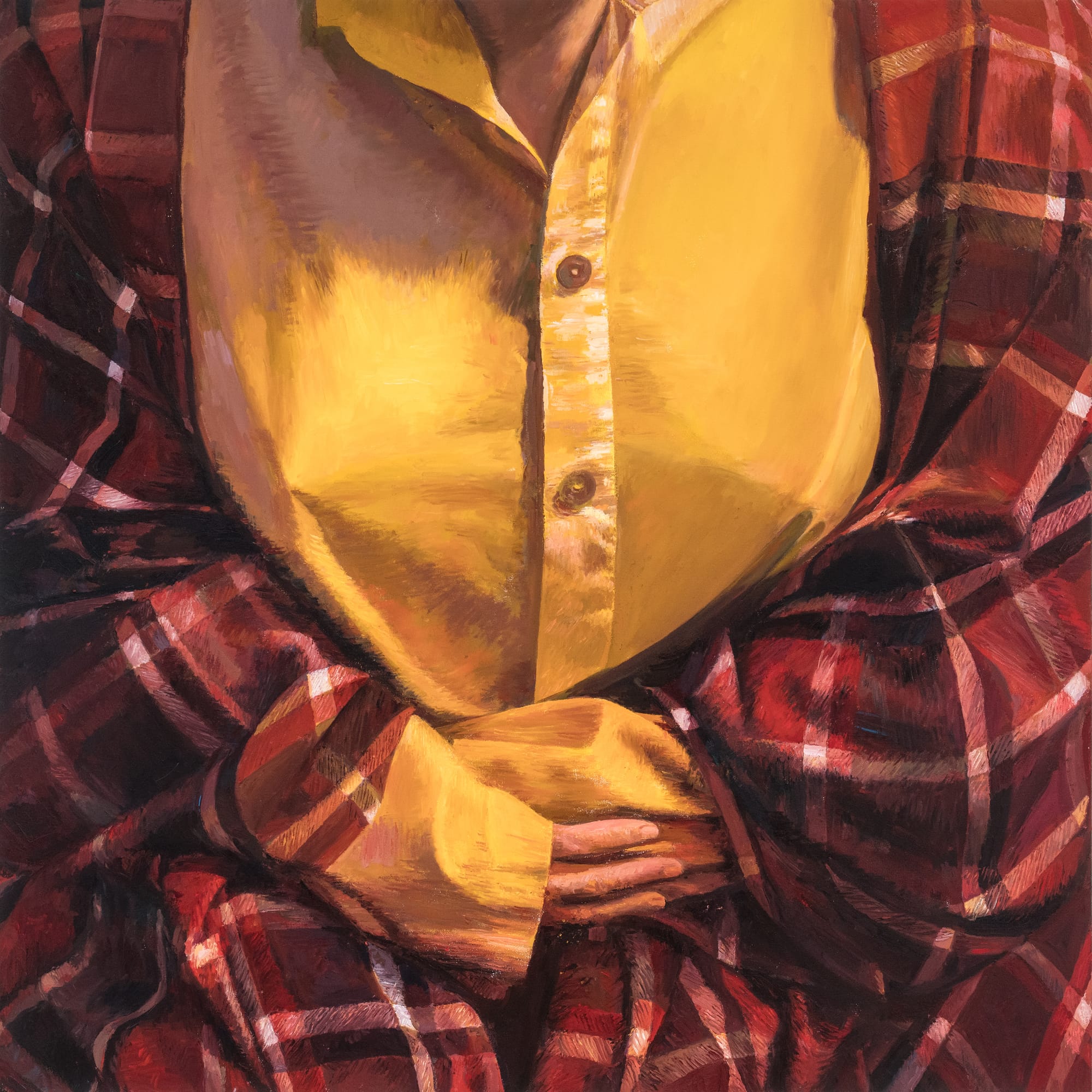
POUGHKEEPSIE, N.Y. — I first saw Catherine Murphy’s work at the now-defunct Xavier Fourcade gallery on Manhattan’s Upper East Side in 1980, and I have admired it ever since. Her career began when her paintings were included in the 1972 Annual Exhibition at the Whitney Museum of American Art (a precursor to the Biennial). Since then, Murphy has characterized herself as an “observational painter” who bases her work on what she sees. Throughout her career, however, she would move from what she saw to setting up situations based on dreams and memory, broadening the definition of realism as well as breaking with the realist painting convention of working on a one-to-one scale. With these two innovations, Murphy single-handedly pushed observational painting into a fertile territory that is all her own. Like Alex Katz, whose paintings she saw as a student, Murphy wanted to make large paintings that could hold their own next to the Abstract Expressionists and, in opposition to them, reject style and working in series.
While I have written about Murphy many times, including in the only monograph on her paintings and drawings, I continue to find the richness and perceptual complexity of her works wonderfully daunting. Whether I am looking at two clear plastic bags filled with used clothes, stacked on a broken office chair; stacks of books with yellowed pages, seen from the side; or a wallpapered corner of a room with baseboard and red wall-to-wall carpet, I always feel like I am just scratching the surface. While I have long focused on her attention to detail within the overall view, it recently struck me that I had not paid enough attention to the structure of the paintings, and that the friction between the entire picture and its parts was another of the innovations for which Murphy deserves recognition.
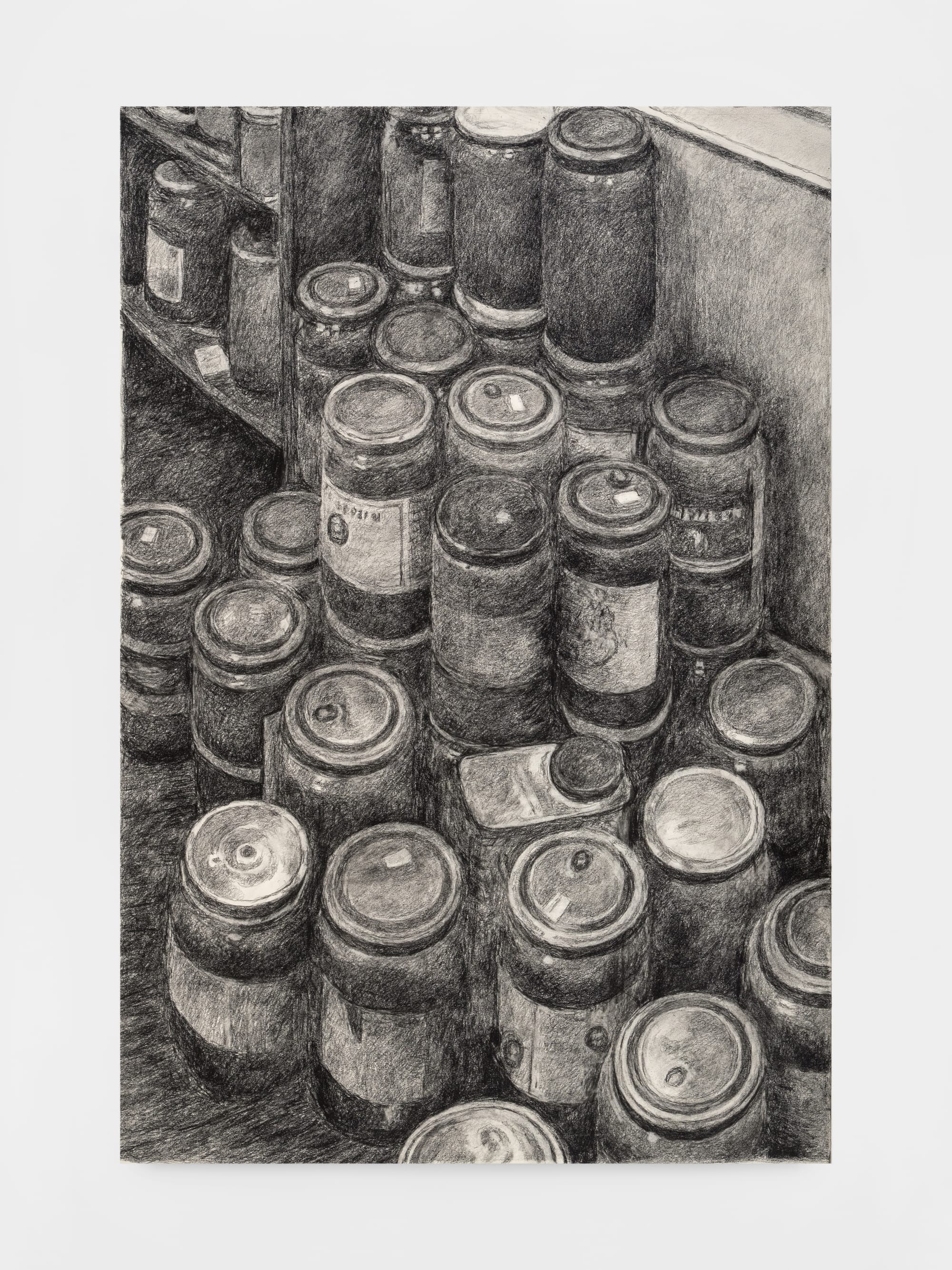
What I am proposing is that after breaking with the conventions governing realism, Murphy recognized that her ambition was even larger than her accomplishments. To keep moving, she had to take on the modernist conventions controlling abstraction, including the grid and the two-dimensional picture plane. Could they be reconciled with one-point perspective while being transformed into something fresh? Simply put: Murphy wanted to have her cake and eat it too. This meant she had to further articulate a trajectory that was hers alone, even as it brought pictorial challenges none of her contemporaries were addressing. To attain a rapprochement between realism and abstraction that had not been thought possible, she had to forgo the certainties she earned in her singular paintings and break new ground.
Murphy is a subversive painter who has made work in dialogue with Renaissance painters and classical subjects, such as the nude, as well as work by her peers and generations before, including Lois Dodd and Robert Mangold. Refusing to embrace the postmodern ideology that all is rubble, or that the utopian ideal of progress is dead, Murphy rejected the by-now-familiar strategies of parody, citation, and irony. She was not interested in mocking high modernist motifs, but rather in utilizing modernist compositional devices, such as the grid, to revamp the mundane into the unexpected. In making realism (the three-dimensional) and modernism (the two-dimensional plane) inseparable, she could shape and honor time passing without seeking sanctuary from inevitable destruction; this became a lifelong preoccupation. It is what makes her paintings so engaging. Confronted by her scrupulously formal arrangement of telling particulars, at once isolated and connected, we see something of ourselves in her work — the inevitability of mortality and solitude.