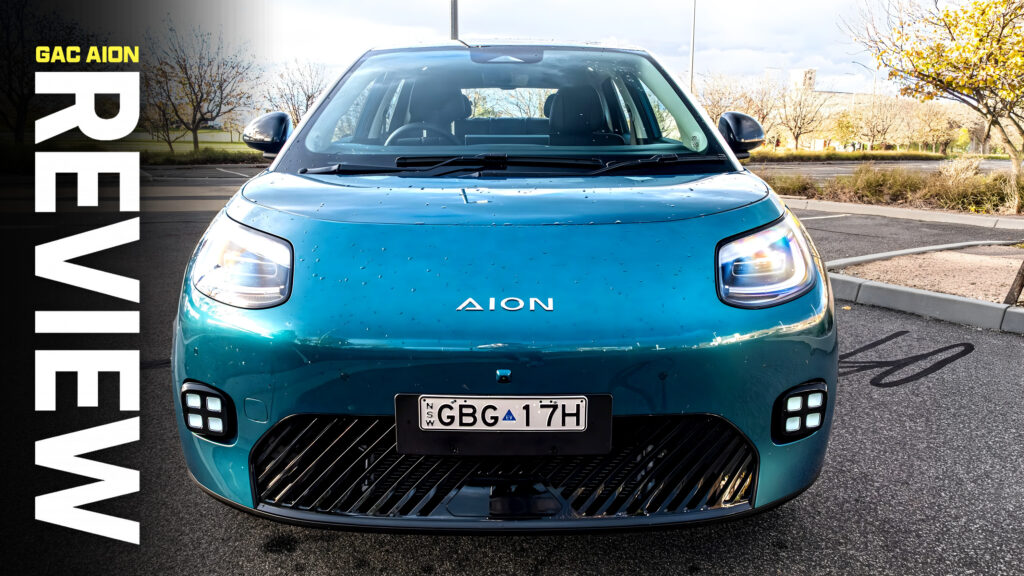
Not too long ago, EVs sat out of reach for most people, carrying steep premiums over the simpler combustion cars they were meant to replace. That has changed in many markets like Australia, where a flood of new Chinese brands has pushed small electric hatchbacks within reach of ordinary buyers who never seriously considered one before.
The single cheapest EV on sale in the country is the BYD Atto 1, starting at a shade under AU$26,000 (equal to US$18,100 at current rates), though its tiny footprint holds it back from the start. The second-cheapest is the car in front of you here, the GAC Aion UT, and it sidesteps that problem by being large enough to appeal to a wider audience, all while asking about the same as a basic Toyota Corolla. That combination of size and price is what makes it worth a closer look.
Read: Porsche Built The Macan EV For The World, GAC Built A Bigger One For China
For those who don’t know, GAC, or the Guangzhou Automobile Group, is a state-owned brand from China that launched in Australia at the end of 2025. As we discovered while spending a week with the Aion UT, GAC has developed an electric hatch with a lot going for it.
QUICK FACTS
SWIPE
Photos Brad Anderson/Carscoops
Obviously, the Aion UT’s price is the headline. When it was launched, the first 600 examples were priced from AU$30,990 (US$21,600) in Premium guise and AU$35,990 (US$25,000) for the Luxury version. These prices have since been increased to AU$32,990 (US$23,000) and AU$37,990 (US$26,400), respectively, yet it still remains a very good deal. The Toyota Corolla Hybrid starts from AU$32,110 (US$22,300).
We reviewed the flagship Aion UT Luxury model. Designed to compete with models like the BYD Dolphin and MG 4, the GAC model uses a 60 kWh battery pack and a front-mounted electric motor with 150 kW (201 hp) and 210 Nm (155 lb-ft) of torque. That’s enough power for a hatchback like this, and despite the reasonably small battery pack, the quoted range of 430 km (267 miles) is respectable.
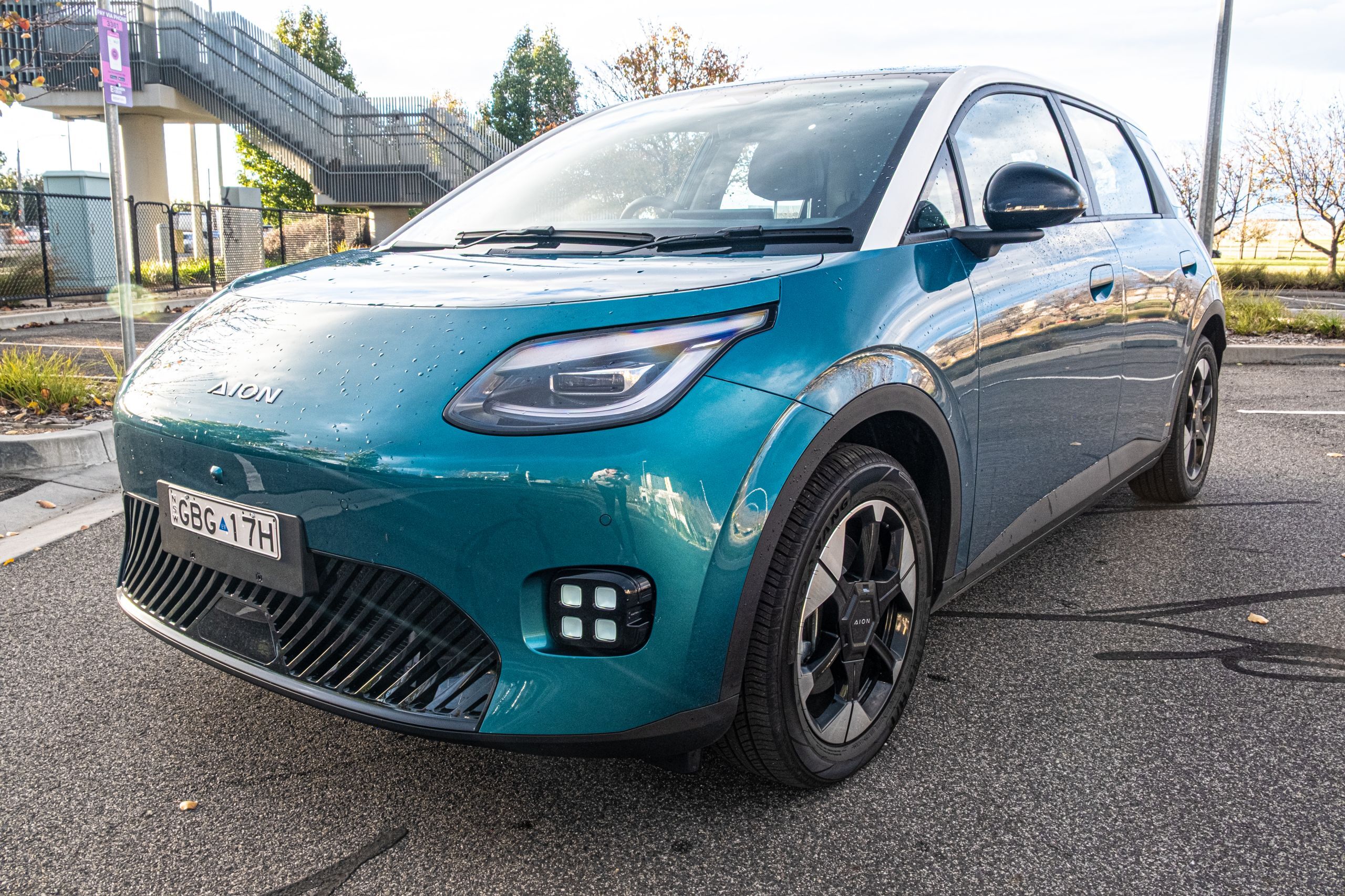
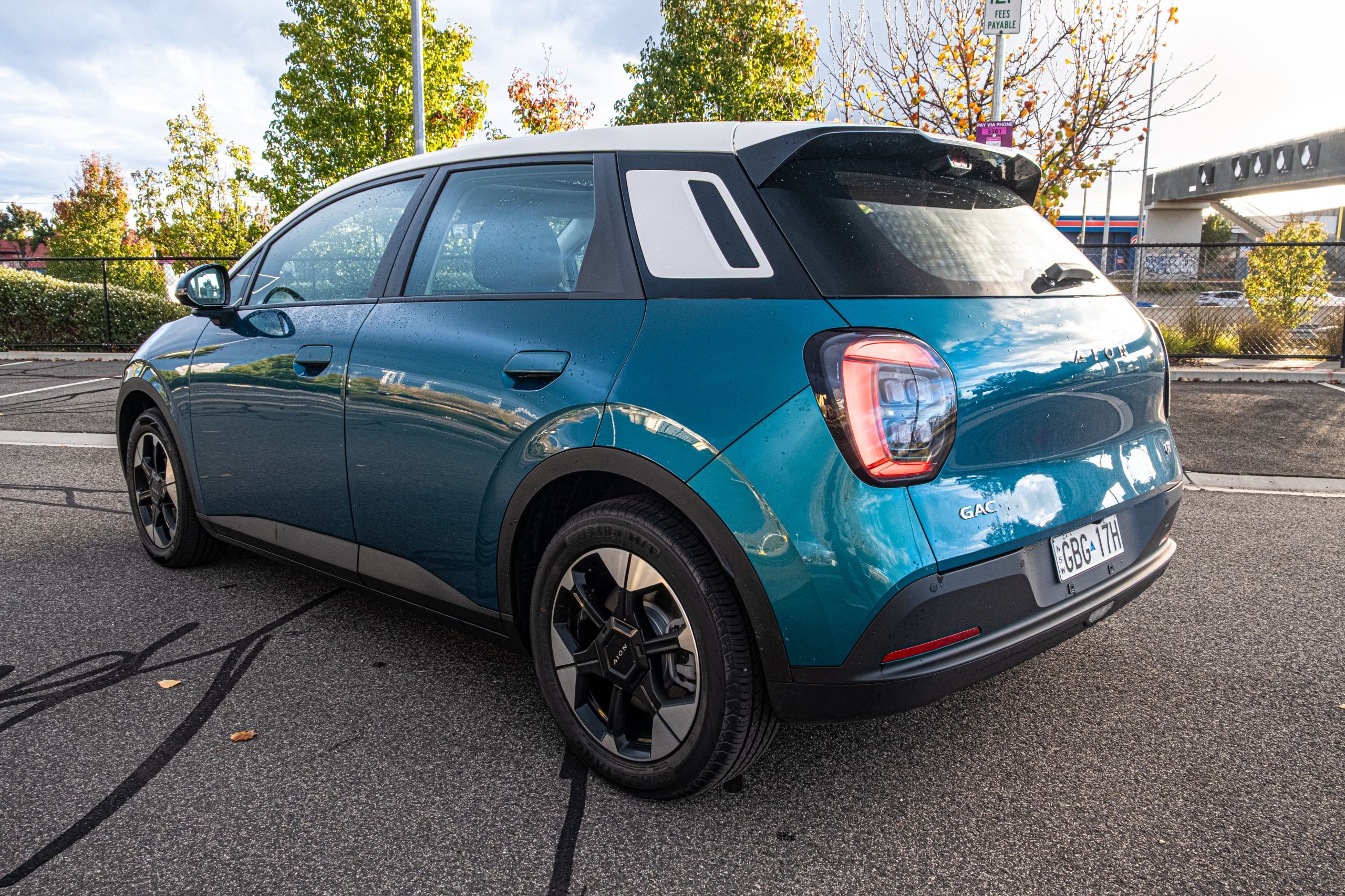
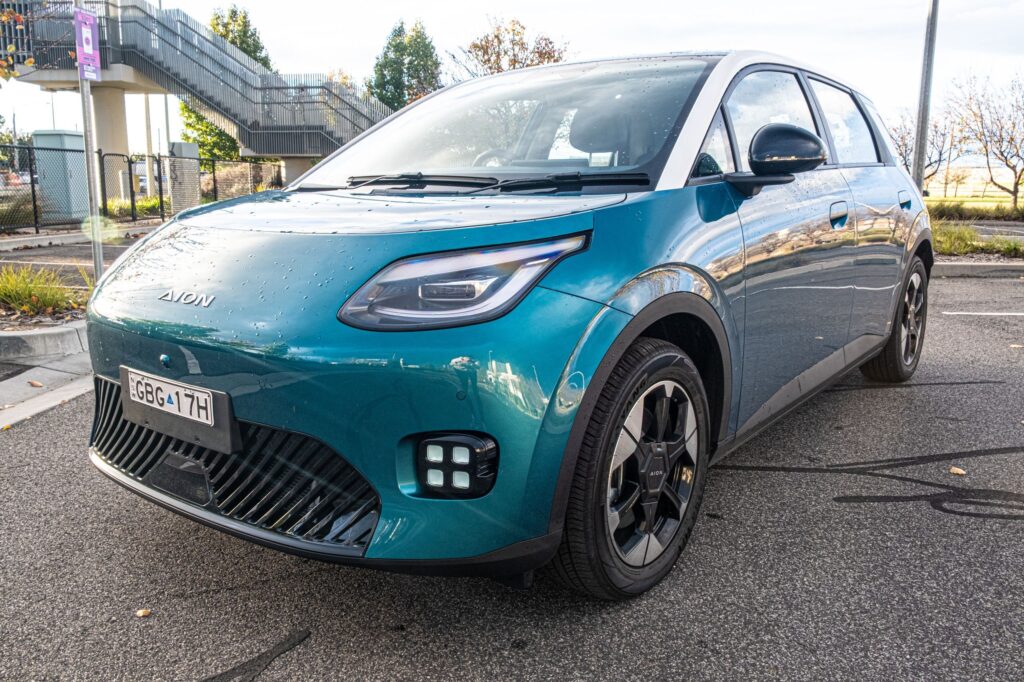
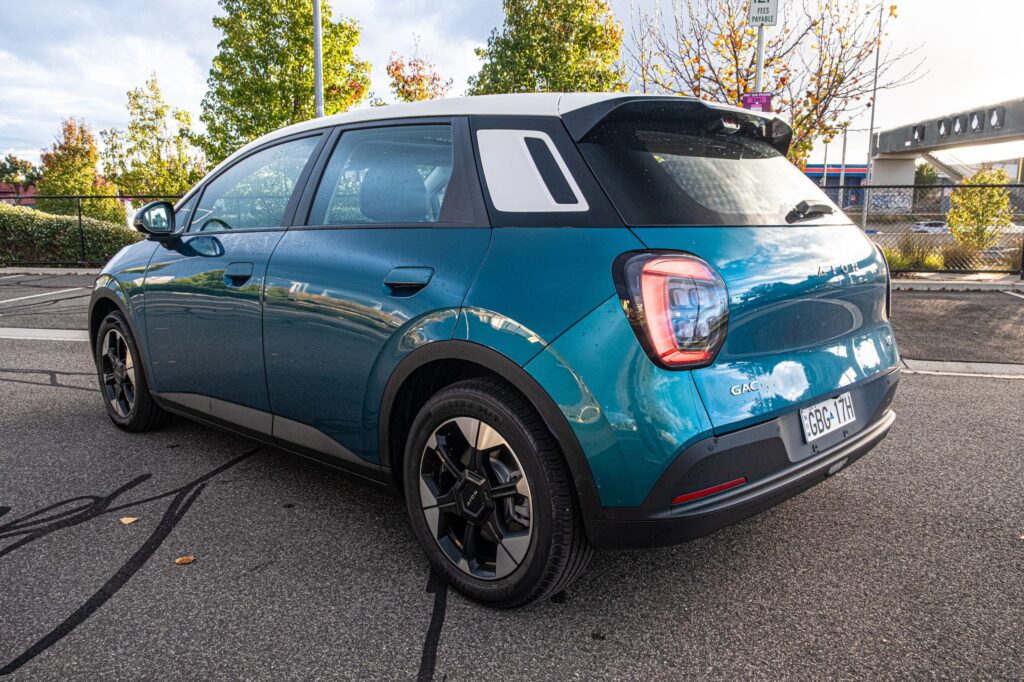
In photos, and in person, the Aion UT certainly stands out from most other hatchbacks in the market. It has a reasonably long 2,750 mm (108.2-inch) wheelbase, or 100 mm (3.9 inches) longer than a Toyota Corolla, and exceptionally short front and rear overhangs. Clearly, GAC has made the most of the skateboard-like electric architecture, creating a cabin as spacious as possible. Overall, it looks funky and fun, although, of course, not everyone looks for those attributes in a car.
Sleek And Premium
Photos Brad Anderson/Carscoops
Given how cheap the Aion UT is, I had expected it to come equipped with a cabin that felt stripped-back, basic, and was clad in the trashiest materials known to man. That’s not the case at all. In fact, it feels impressively premium.
A large 14.6-inch infotainment display sits in the center of the dashboard. It’s much the same as any other you’ll find in a new car out of China, housing all of the important controls, including those for the climate control. Crucially, the A/C settings are located on a tab at the bottom of the screen, so they’re always accessible.
The screen itself is crystal clear and colorful, responding quickly to inputs in a way that displays in cars from many older legacy brands simply can’t match. Clearly, despite the car’s bargain price point, GAC hasn’t skimped on processing power.
Photos Brad Anderson/Carscoops
Also found within the Aion UT’s cabin is an 8.8-inch driver display. While it works well enough, it offers virtually no customization options and does look a little bland.
Elsewhere, the hatch is bathed in plenty of synthetic leather that’s exceptionally soft to the touch and adds to the premium feel. There’s also a wireless smartphone charger, heated and ventilated seats, and a heated steering wheel. Annoyingly, the lack of physical buttons means these functions must be activated on the screen. A panoramic glass roof on the Luxury is another welcome feature.
Read: GAC Is Now Building A $248,000 Flying Taxi
I was particularly fond of the faux-metal air vents and the toggles used to open and close them, which reminded me of the vents on some recent Volvo models. As with a Tesla, features such as the wing mirrors have to be adjusted through the central display and then via the steering wheel controls, which can be a nuisance when switching between drivers.
The overall sense of spaciousness is impressive. While the Aion UT is relatively compact, it doesn’t feel cramped inside. This is the same in the second row as it is in the front, where there’s enough legroom and headroom for two tall adults. On the flip side, there’s just 321 liters (11.3 cubic feet) of cargo space at the back, or 689 liters (24.3 cubic feet) with the second-row seats folded down.
A Budget Price, But Not A Budget Drive
Photos Brad Anderson/Carscoops
While there are some new EVs we’ve tested that feel like they’re not quite finished, that is not the case here. The GAC Aion UT Luxury is efficient and comfortable, and it shows that you don’t need an absurd amount of money to enjoy the serenity of an EV.
Peak figures of 150 kW (201 hp) and 210 Nm (155 lb-ft) may not seem like all that much compared to some compact EVs out there, but it’s a lot more than a basic Corolla 1.8L Hybrid that costs about the same and delivers just 103 kW (138 hp). GAC says the Aion UT can hit 100 km/h (62 mph) in a respectable 7.3 seconds, and in our testing, that time felt right on the money.
The Aion UT doesn’t feel frantic off the line, despite being on par with some warm hot hatches, but instead delivers its power in a smooth, linear fashion. It also manages to avoid the torque steer that can trouble front-wheel-drive EVs at this level of power.
The GAC is also impressively efficient. During our time with the car, we averaged 15.1 kWh/100 km, beating the carmaker’s claim of 16.4 kWh/100 km, so the quoted 430 km (267 miles) range is very much achievable in the real world. It is possible to tweak the level of regenerative braking, but only by diving into the infotainment system, rather than using paddle shifters for on-the-fly adjustments like some other EVs. Additionally, there’s also no one-pedal driving mode, which is a shame.
What’s not so good is the steering feel, because there isn’t any. The steering, regardless of the driving mode, is extraordinarily light and provides very little feedback about what’s going on under the front tires. As such, the Aion UT can feel out of sorts when driven in a sporty manner through some twisty roads. The cheap, Chaoyang tires don’t help in this regard.
Also disappointing is the charging speed. The Aion UT only supports DC charging at up to 87 kW, which is pretty poor, and means charging from 30-80 percent takes 24 minutes. As for AC charging, it’s the standard 11 kW expected of most current EVs, more than enough for an easy overnight charge at home.
Ride quality in the Aion UT is excellent and, once again, defies what you might expect from a vehicle at this price point. It doesn’t have the same extraordinary level of comfort and suppleness as the Kia EV4 we recently tested, which rides more like a premium German sedan than an affordable EV, but the GAC isn’t far off.
Over speed bumps and through potholes, the hatch feels composed and almost always delivers a comfortable ride. It will serve customers brilliantly as a daily driver in this sense, as it never feels tiresome to drive, no matter how dodgy the road surface may be.
Perhaps the most frustrating part of driving the Aion UT is its safety systems. As standard, things like the fatigue and distraction alert systems are engaged, and will beep even if you take your eyes off the road momentarily. Similarly, the speed limit warning constantly dings. All of these systems have to be disengaged through the screen every time the car is turned on, which is annoying.
Verdict
Photos Brad Anderson/Carscoops
The GAC Aion UT is exactly the type of vehicle that could sway some traditional ICE buyers to switch to an EV. Sure, the design is somewhat polarizing, but found beneath the skin is a competent package that’s practical, efficient, and enjoyable to drive.
However, prospective buyers will have to live with some intrusive safety systems and subpar regenerative braking. Here’s hoping GAC is readying some over-the-air software updates for the EV, as they could easily morph it from a good EV into a great one.
Photos Brad Anderson/Carscoops