Speaking With Scott Krugger
Autoblog recently spoke with Scott Krugger, the head of North America design at Stellantis. Prior to this role, Krugger managed exterior design for the Dodge brand and SRT performance vehicles, meaning he was responsible for styling the current 2026 Dodge Charger.
Jared Rosenholtz/Autoblog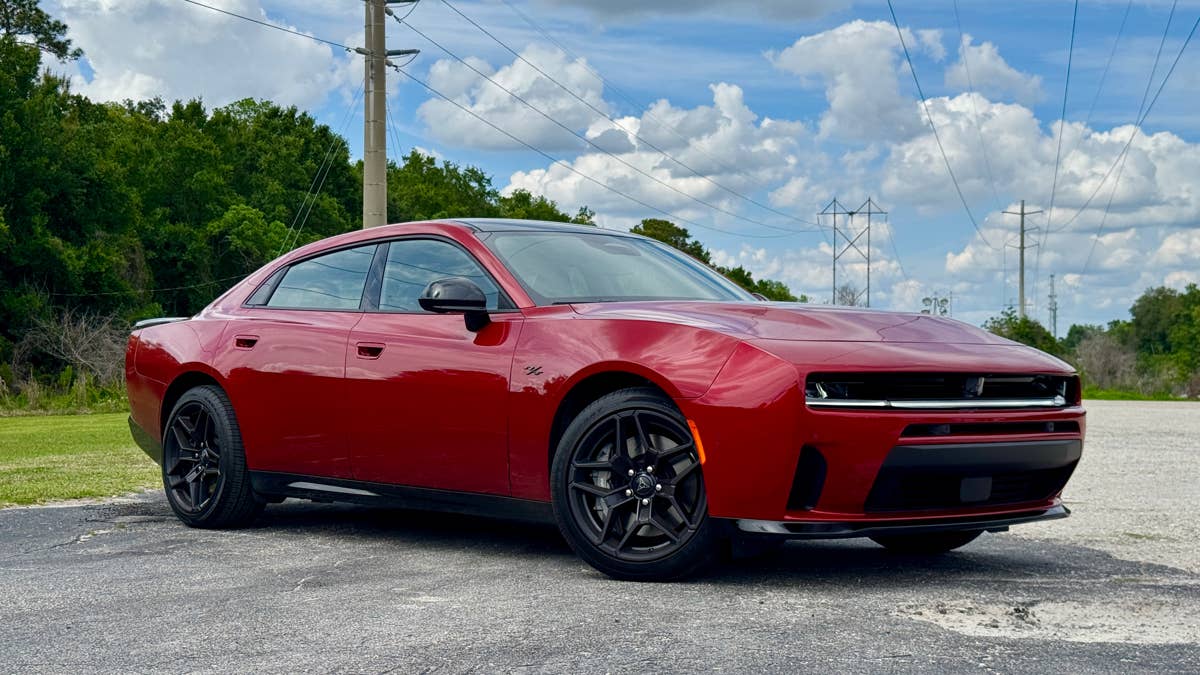
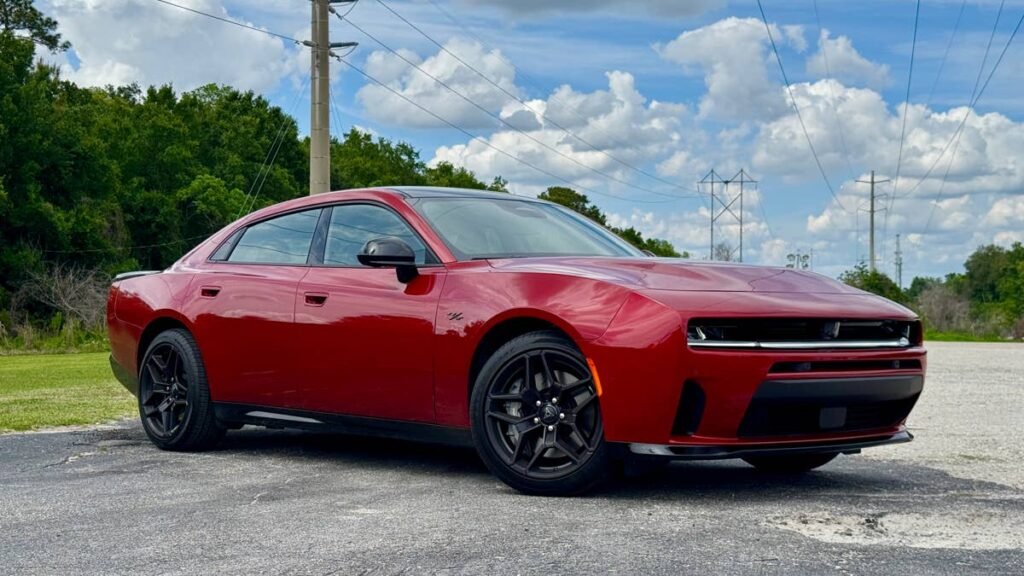
The new Charger, particularly the electric Daytona version, has been steeped in controversy as early price cuts inevitably led to huge depreciation in a short period. Now though, Dodge has brought out gas-powered versions with the company’s Hurricane inline-six engine, which should better resonate with customers. Krugger’s design also seems to be winning over casual observers based on what we can tell from online comments and in-person reactions to the car.
“We wanted to have an iconic proportion that was clearly a Dodge and had that Charger feel,” Krugger said in our interview.
Why Make It So Big?
Jared Rosenholtz/Autoblog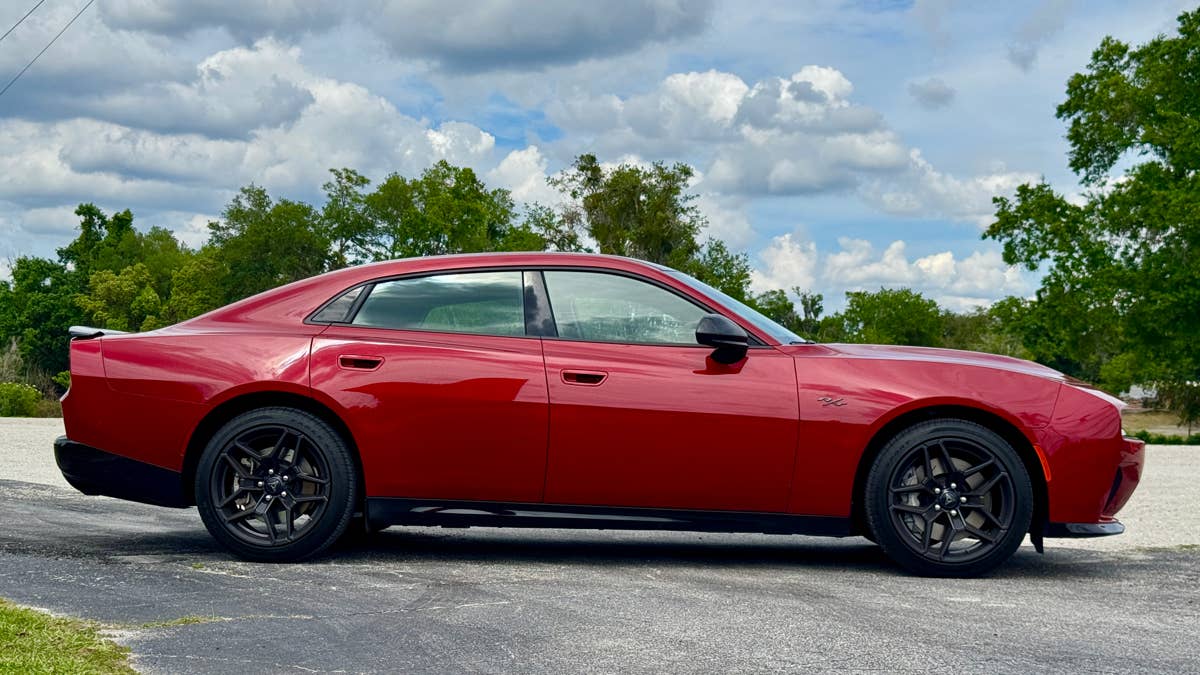
Automakers don’t typically build “big” two-door coupes anymore, but the new Charger breaks the mold. It’s 206.6 inches long in both coupe and sedan form, meaning it’s over two inches longer than a Chrysler Pacifica minivan. Only the Rolls-Royce Spectre (214.7 in) is longer among current two-door cars.
“We wanted to consolidate down the number of parts, pieces, and complexity,” Krugger said when asked why the Charger coupe and sedan share the same length and wheelbase. “It’s a muscle car not a pony car. We lean into it.”
Aside from a very minor improvement to cargo space in the sedan, the two Charger body styles are virtually identical in dimensions. Buyers can pay $2,000 more for the sedan if they want the practicality of two additional doors. “It’s an easy sell from a functionality standpoint as a family vehicle. But you don’t have to sacrifice anything on cargo and passenger space [with the two-door],” he said.
Why A Hatchback?
Jared Rosenholtz/Autoblog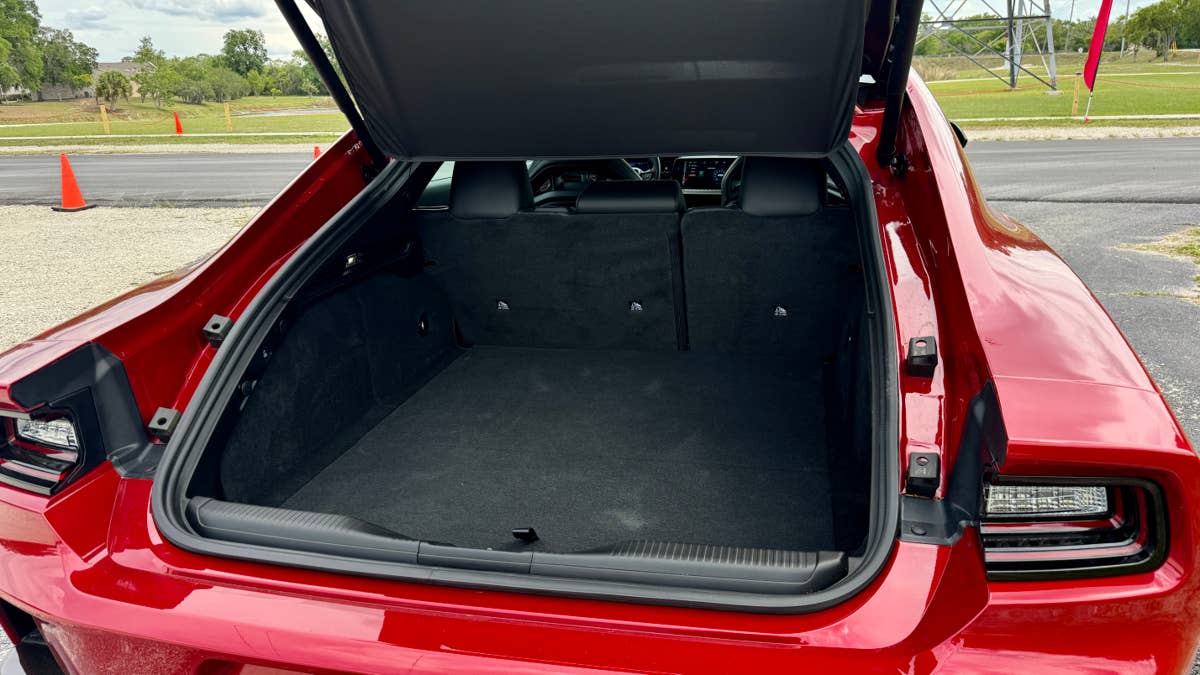
The outgoing Charger and even the Challenger were hot sellers because they offered affordable performance combined with usable practicality. This new Charger takes it a step further with a hatchback trunk that’s even more spacious than the previous model, accommodating up to 38 cubic feet of space with the seats folded. We figured the decision to offer a hatchback was driven by SUV popularity, but it was actually a result of aerodynamics.
Krugger explained how his team wanted the new Charger to harken back to the 1968 Charger, but bring the design into the future. “With the proportion of the vehicle, the side profile suited well to a backlight angle that was perfect for the magic aero angle (around 71 degrees),” he explained. “If we could get a hatch on this thing, we could have an amazing cargo area, which would align to what Dodge has always been: have your cake and eat it too. This is a functional, family-oriented vehicle that doesn’t compromise.”
Will You Bring Back The Widebody?
Jared Rosenholtz/Autoblog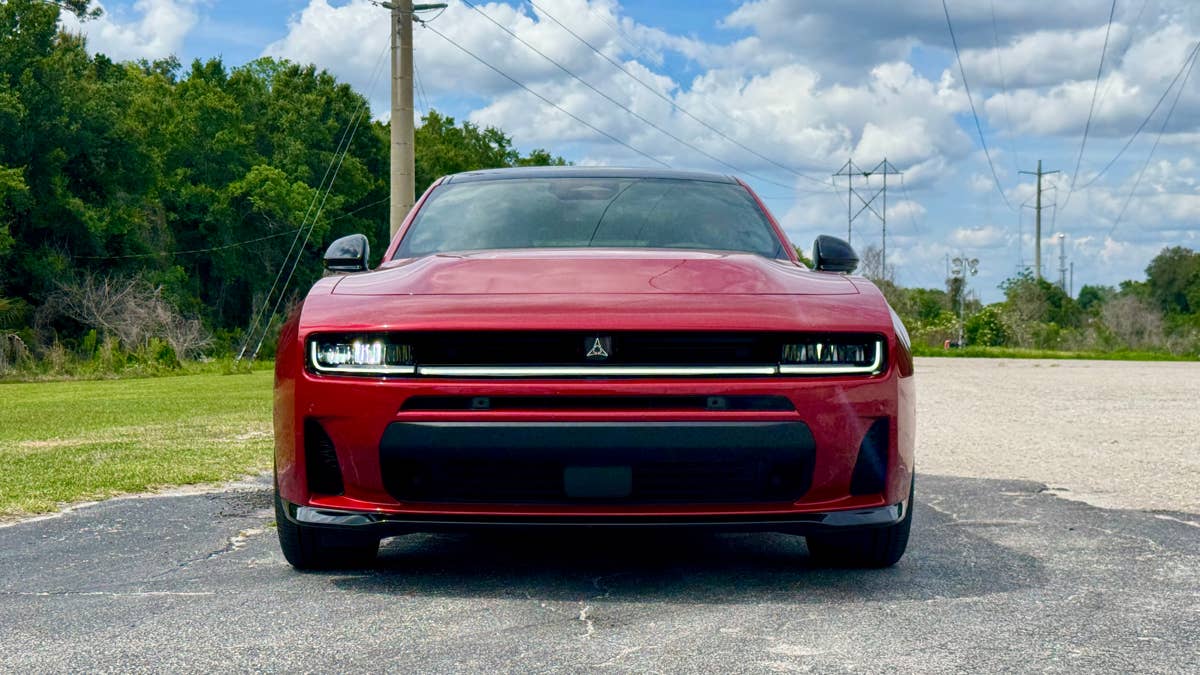
Aerodynamics explains why the Charger gained its practical new trunk, but it also helped eliminate a much-loved feature from the outgoing Charger and Challenger models: the widebody kit.
“The Charger and Challenger lived a long life,” Krugger joked. “We laugh because the first SRT tire was a 245 and it was wide back then. We eventually went to tires as wide as 305. So the wide flare add-on was actually an afterthought, so to speak, because it was done [late] in the lifecycle. We never had the visual path that we would make the cars that wide. To get that tire [to fit], we had to add the flares.”
While the new Charger may not have flares that bulge out from the body, it’s actually wider than the old widebody cars, measuring 79.8 inches (not including mirrors). The old Charger and Challenger were only 78.3 inches wide. Krugger even teased that the new car is only 0.2 inches way from legally needing marker lights, like a bus or a Ford F-150 Raptor.
“We wanted to have up to a 325 on the back, so we need a widebody for all to accommodate the tire,” he explained. “The widebody for all mentality suits where we want to be in proportion. Dodge’s design language is all about presence. Something that you see and you know from a mile away. We wanted a sleeker design visually with pure proportion on the side.”
Krugger says the widebody cars have become like “folklore” but there was a time before their release when he didn’t know how customers would respond. “I remember when we put the flares on. ‘Can we make this look right?’ They look so aggressive and nasty on the road and it has its own presence and character,” he said.
More Exciting Stuff Coming?
Jared Rosenholtz/Autoblog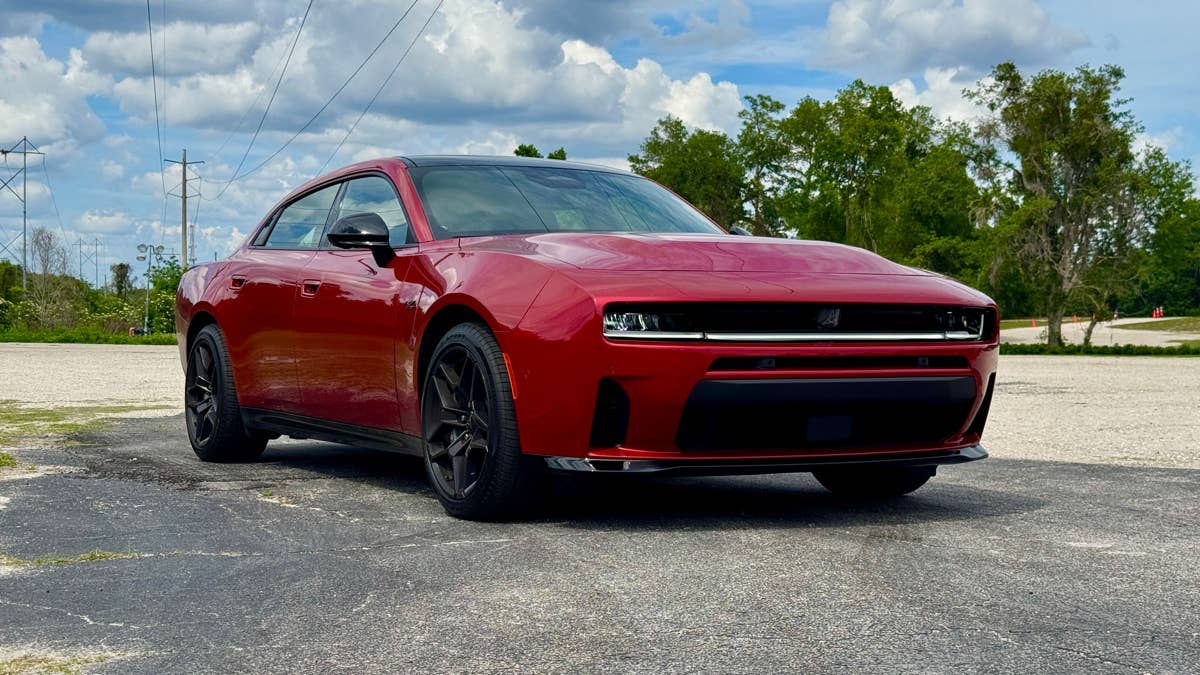
Though this new Charger likely won’t receive wide fender flares, unless Dodge decides it needs even wider tires, Krugger hinted that we haven’t seen all of his team’s ideas for this car yet. The Charger is still early in its life cycle, and we’d be shocked if a V8 model wasn’t in the cards.
“We think of the life of this vehicle in the future. We have tons of ideas of what we want to do with it,” he teased. “There are parts and pieces that we’re going to think of in the future that could be as aggressive and done in a different way that gives it that edgy presence. But we wanted the car to look more modern on the road.”
“From the standpoint of where we go into the future with color, with La Shirl Turner, who is on my team as head of the Advanced Color & Materials Group, she has tons of ideas,” Krugger added. “When you think of colors like Green Machine or others from the past, a design like this can wear colors you would not expect from the ’70s and ’80s that would be difficult to place on a modern car. There’s a lot of colors to come that we’re working through that will be pretty unique and different that you would not expect to see.”