If you’re new to hiking, it’s easy to feel intimidated before you even step on the trail.
I know because that’s exactly how I felt when I started hiking after college. I didn’t grow up outdoorsy, and I definitely didn’t see myself as “a hiker.” I was out of shape, got out of breath quickly, and worried about slowing other people down. Honestly, I was embarrassed by how hard hiking felt at first, so I often hiked alone.
Over time, though, hiking became one of the biggest parts of my life. But getting comfortable outside didn’t happen overnight. I made a lot of beginner hiking mistakes along the way — wearing the wrong clothing, not bringing enough water, getting lost in the snow because I couldn’t follow the trail, and even damaging a nerve in my big toe from wearing hiking boots that were too tight.
The good news? Most hiking skills are learned through experience. You do not need to be super fit, spend thousands on gear, or know everything before you start.
This beginner hiking guide covers the basics I wish someone had explained to me when I was starting out, including:
- How to choose a beginner-friendly hike
- What to wear hiking
- What to bring on a hike
- Hiking safety basics
- Hiking etiquette
- Beginner mistakes to avoid
1. Choose the Right Hike
One of the biggest mistakes beginners make is choosing hikes based on Instagram photos instead of their actual difficulty level.
A hike might look easy online, but factors like elevation gain, altitude, heat, shade availability, snow, and trail terrain can completely change how difficult it feels.
When choosing a beginner hike, pay attention to:
Mileage
For your first few hikes, I’d recommend starting with something around 3–5 miles round trip.
That’s usually enough time to get comfortable without completely exhausting yourself.
Elevation Gain
Elevation gain is often what makes a hike feel hard.
A 5-mile hike with 2,000 feet of climbing is going to feel very different than a flat 5-mile trail.
As a general rule:
- under 500 feet = easier
- 500–1,500 feet = moderate
- over 2,000 feet = more challenging
Trail Conditions
This is something beginners often overlook.
Snow, mud, loose rocks, river crossings, or overgrown trails can make a hike much harder than expected.
One time when I first started hiking, I completely lost the trail because there was snow covering the trail that lingered well into June. At that time, smart phones didn’t exist, and I didn’t have a GPS, and we got so far off track that it took us hours to find our way back to the trail. That experience taught me how important it is to pay attention to trail conditions before heading out.
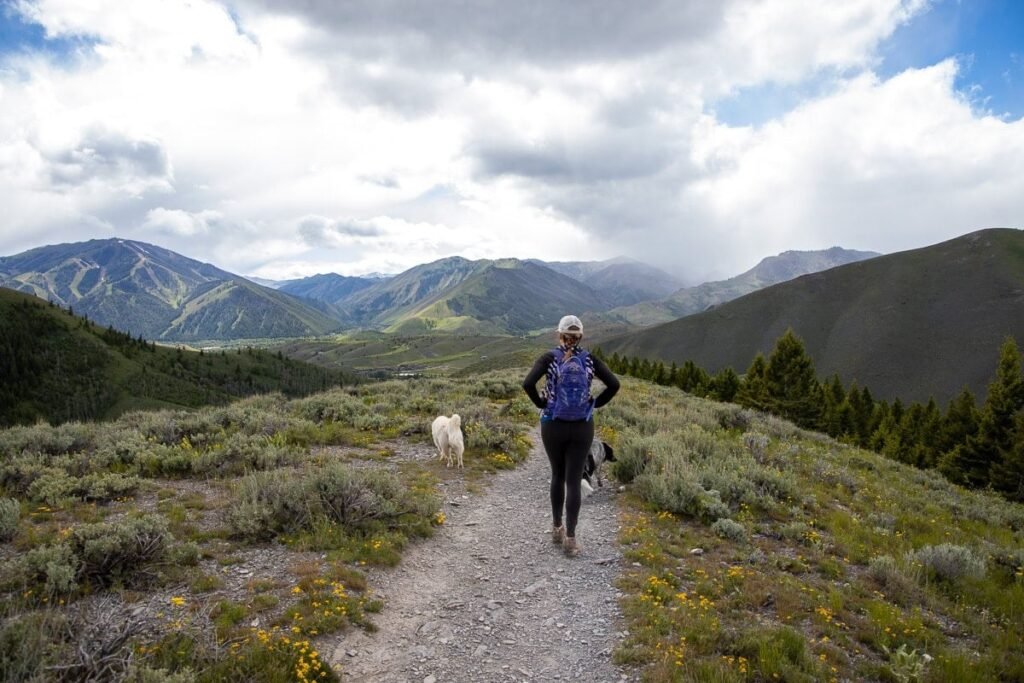
If you’re brand new to hiking, look for trails that are well-marked and relatively smooth underfoot. Dirt paths with gradual elevation gain are usually much more beginner-friendly than rocky, steep, or uneven trails that require careful footing (and higher quality hiking footwear) .
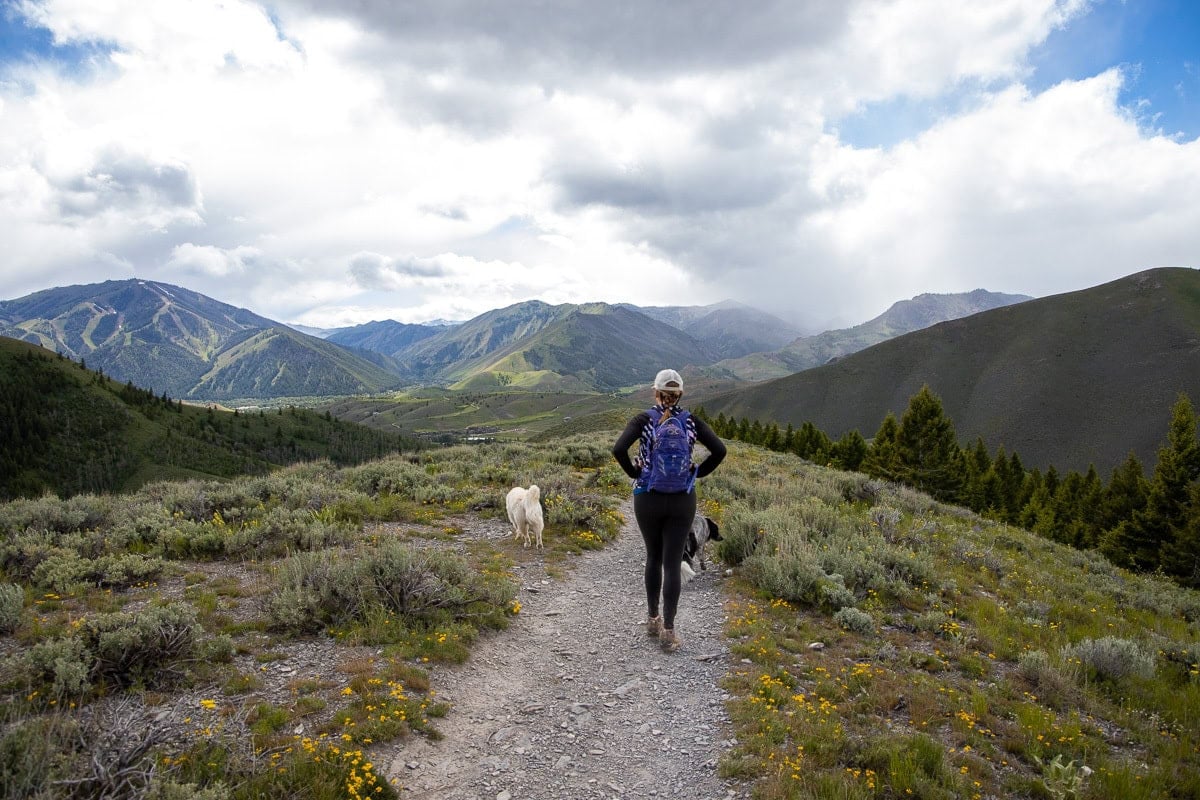
Trails with lots of loose rocks, roots, scrambling, or narrow exposed sections can feel surprisingly tiring and intimidating if you’re still building confidence. Starting on smoother trails lets you focus on enjoying the experience instead of constantly watching your footing. Rail trails, lakeside paths, and popular local hiking areas are often great places to start.
Read Recent Trail Reviews
Apps like AllTrails can be really helpful for checking:
- recent trail conditions
- snow coverage
- road access
- water crossings
- bugs
- parking situations
But don’t rely on reviews alone. People have very different fitness levels and comfort zones.
2. You Don’t Need Expensive Clothing to Start Hiking
A lot of beginners think they need a closet full of expensive hiking apparel before they can hike.
You don’t.
Honestly, some of my first hikes were in random gym clothes and cheap layers I already owned. While I eventually upgraded my hiking clothing over time, I’m glad I didn’t wait until I had the “perfect setup” to get outside.
That said, there are a few things that really do matter.
What to Wear Hiking
Avoid Cotton
You’ve probably heard hikers say “cotton kills,” but honestly, cotton is usually fine for shorter hikes on mild summer days. On my first big multi-night backpacking trip, I wore the same white cotton t-shirt 5 days in a row. And I’m still here to write about it.
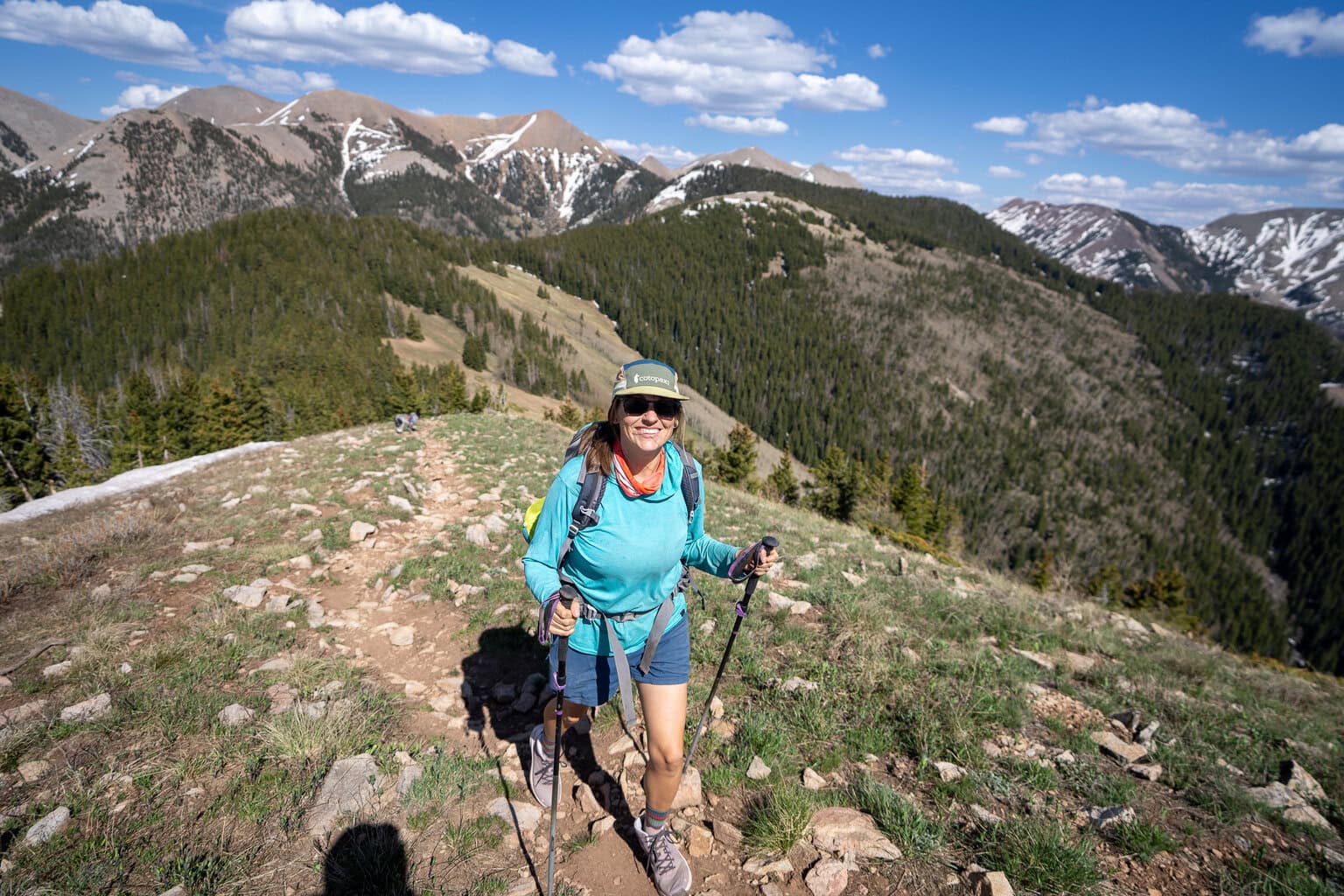
The reason cotton isn’t the best material for hiking is when cotton gets wet and stays wet. If you get caught in a rainstorm, sweat heavily, or the temperatures drop, a soaked cotton sweatshirt can become cold and uncomfortable really quickly because it dries slowly.
For most hikes, moisture-wicking synthetic fabrics or merino wool are better choices, especially for layers you’ll be active in. But you also don’t need to panic if all you have is a cotton t-shirt for an easy local hike in good weather.
Wear Comfortable Shoes
One of the biggest beginner hiking questions is:
“Do I need hiking boots?”
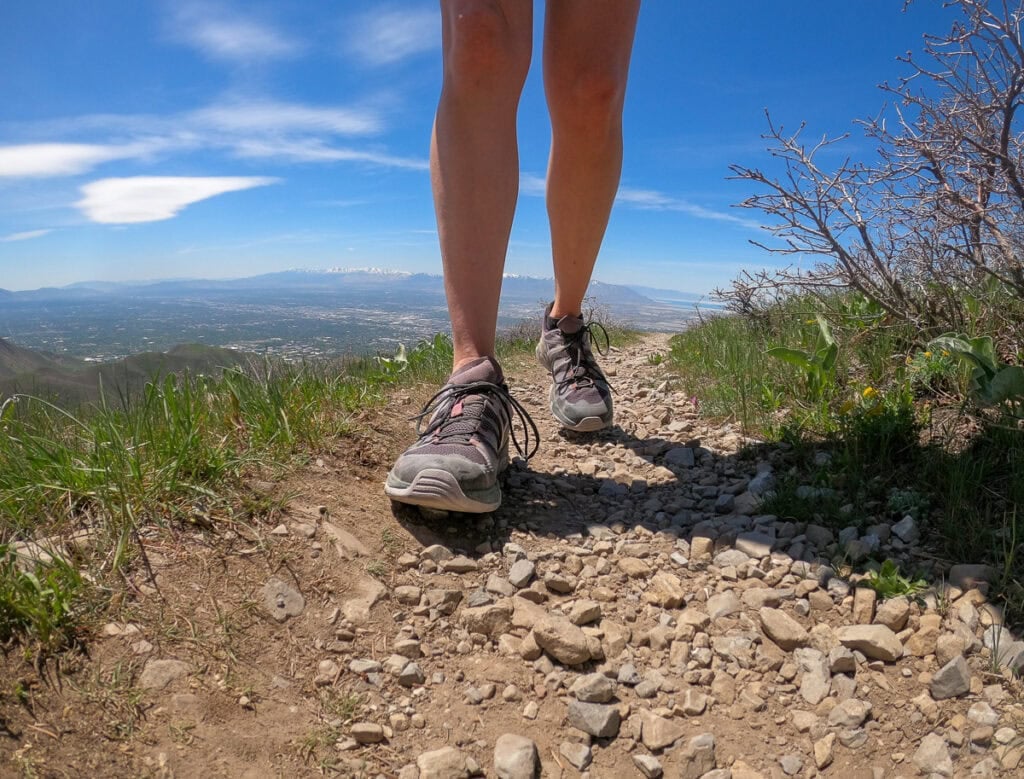
Not necessarily. For many beginner day hikes, trail runners or lightweight hiking shoes work great.
What matters most is:
- Comfort: Your shoes should feel good right away. Don’t assume hiking shoes need to be stiff or painful to “break them in.” If your feet hurt during a short walk around the neighborhood, they’ll probably feel even worse a few miles into a hike.
- Traction: Look for shoes with good grip on dirt, rocks, and uneven terrain. This becomes especially important on steep trails, loose gravel, wet rocks, or muddy sections where slippery shoes can make you feel unstable.
- Proper fit: Your toes should have room to move without sliding around, and your heel should be locked in place. Hiking shoes that are too tight can cause blisters, numbness, bruised toenails, or foot pain. I learned this the hard way after wearing hiking boots that were too tight on my John Muir Trail thru-hike, which unfortunately caused lasting nerve damage in my big toe. At the same time, shoes that are too loose can lead to rubbing and blisters, especially on descents.
If you’re looking for a recommendation, I personally wear Oboz Footwear on all of my hikes
Dress in Layers
You’ll often hear hikers talk about “dressing in layers,” but that doesn’t mean every short local hike requires a full technical layering system. If you’re heading out for an easy hike close to town on a mild summer day, you can usually keep things pretty simple.
Where layers become more important is in the mountains or on longer hikes where weather, temperature, and wind conditions can change quickly. In those situations, bringing an extra layer or lightweight rain jacket is a smart idea, even if the forecast looks good when you leave the trailhead.
A simple layering system looks like:
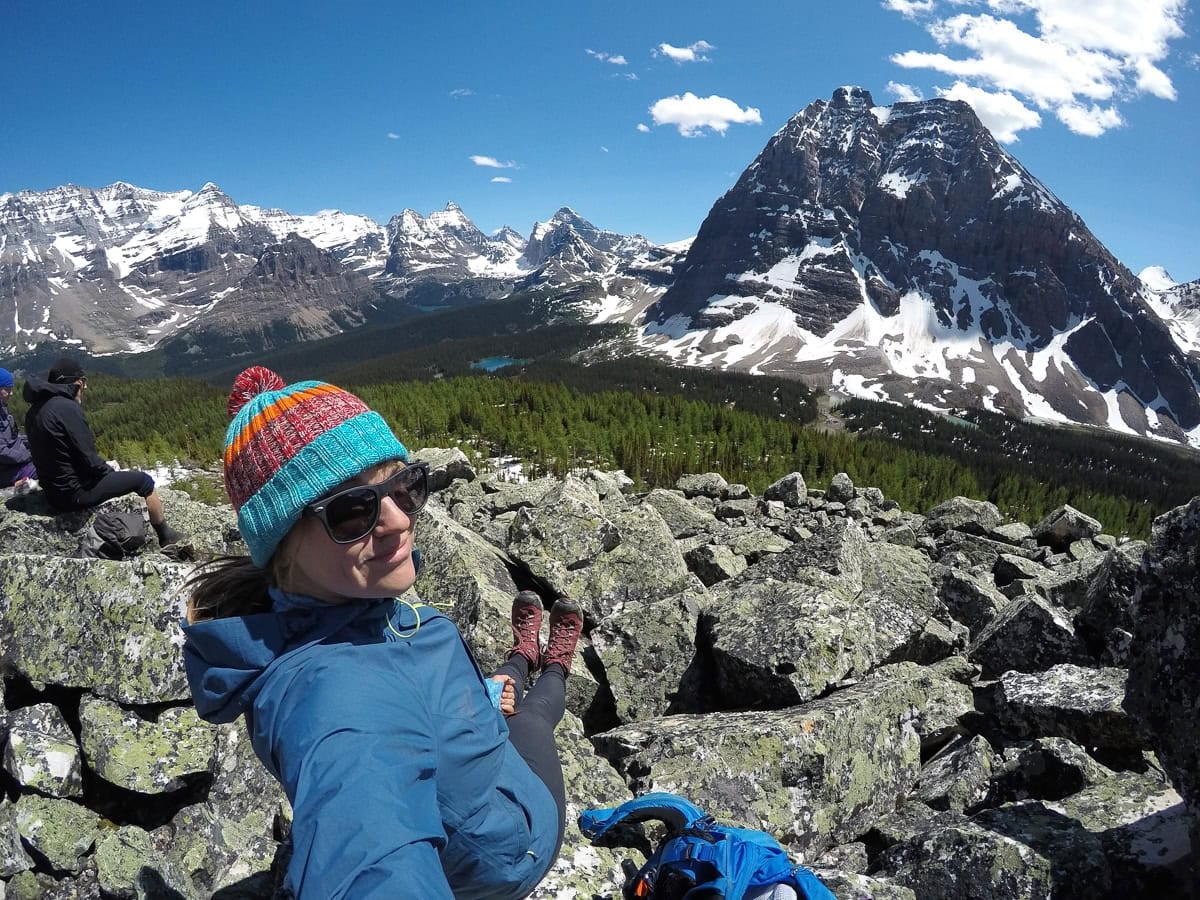
A good rule of thumb is to think about where you’re hiking, how long you’ll be out, and how far you’ll be from your car if conditions change.
The further out you’ll be — especially in the mountains or on less-traveled trails — the more important it is to bring extra layers and basic safety gear in case weather moves in or something doesn’t go according to plan.
3. What to Bring on a Hike
When I first started hiking, figuring out what to pack always felt confusing. I either underestimated what I needed — especially water and snacks — or overthought it and packed way more than necessary.
Over time, I realized most hiking essentials fall into two categories:
- things that keep you comfortable
- and things that help if something unexpected happens
For a short beginner-friendly day hike, you really don’t need a ton of gear. But there are a few basics I’d recommend bringing every time.
Get a free downloadable + printable Hiking Checklist
SEND IT OVER!
We promise to keep your email address safe. Unsubscribe anytime.
Start With a Comfortable Daypack
For most beginner hikes, a small daypack is all you need.
Something in the 15–30 liter range is usually plenty of space for your basic hiking essentials. I share my favorite daypacks that I’ve tested here.
Ideally, you want a backpack with a hip belt, which helps distribute weight more evenly across your body so all of the pressure isn’t sitting on your shoulders. This becomes especially noticeable once you start carrying more water, layers, or food on longer hikes. You also want to make sure the pack fits your properly, otherwise you may end up achy shoulders.
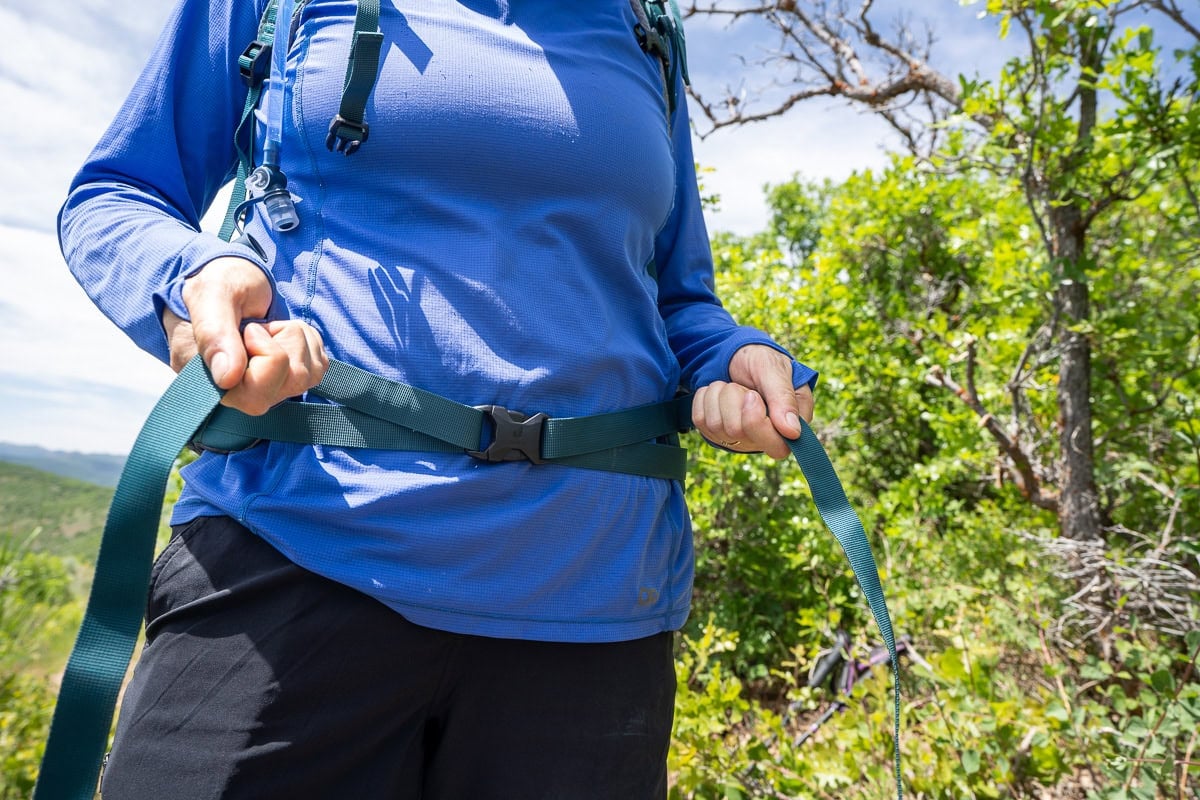
However, you don’t need to rush out and buy an expensive hiking backpack right away. If you already own a comfortable backpack, that’s enough to get started on shorter hikes. As you hike more, you can always upgrade to a hiking daypack later.
Bring a Few Basic Safety Essentials
You’ve probably heard hikers talk about the “10 Essentials,” which are basic safety items traditionally recommended for hiking and backpacking.
But honestly, I don’t think beginner hikers need to stress about carrying a giant list of emergency gear on every short local hike. The level of preparation should match the type of hike you’re doing.
For example, a busy 2-mile trail near town in good weather requires a very different level of preparation than a long mountain hike with changing weather and limited cell service.
For most beginner day hikes, I’d focus on carrying:
- extra water
- snacks
- navigation
- sun protection
- an extra layer
- a headlamp
- a small first aid kit
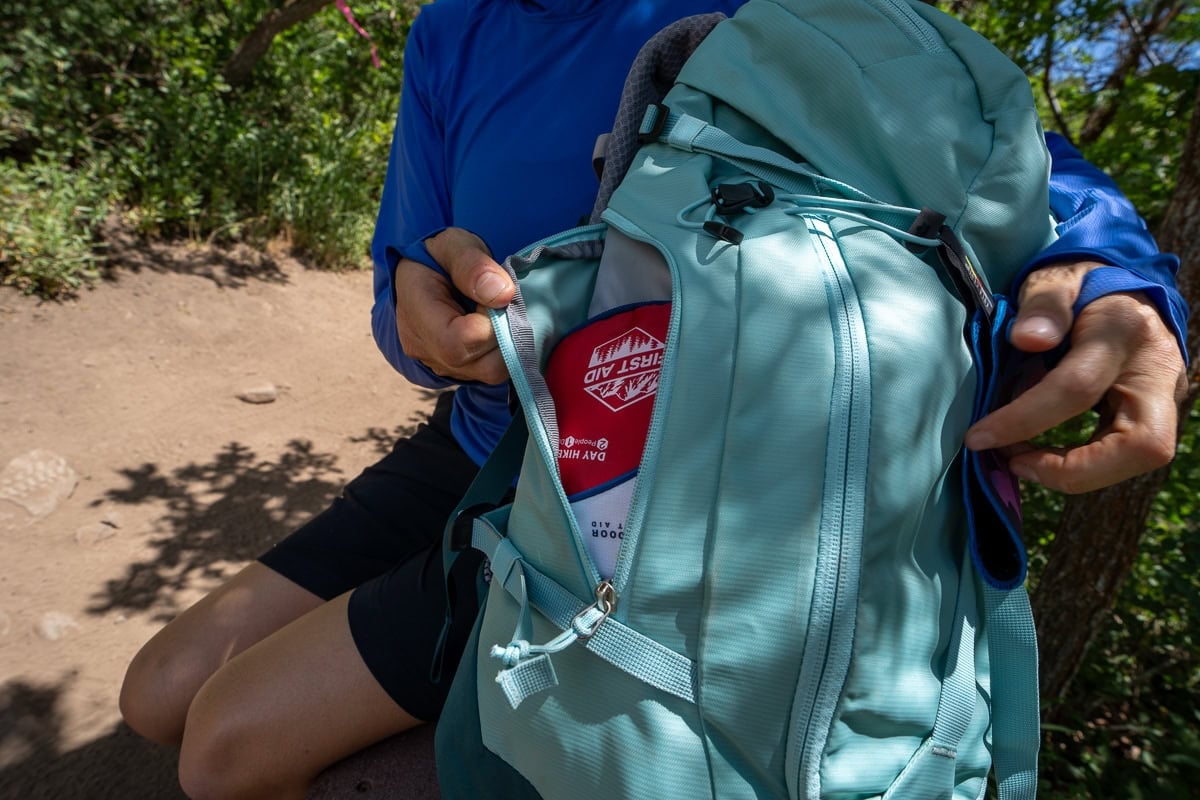
As your hikes become longer, more remote, or more physically demanding, your gear and preparation should evolve too.
The goal on a beginner-friendly hike isn’t to pack for every possible worst-case scenario. It’s to be reasonably prepared if your hike takes longer than expected, weather changes, or something small goes wrong.
A few lightweight items can make a big difference without overcomplicating things.
Bring More Water and Snacks Than You Think You Need
Hiking usually feels more physically demanding than people expect, especially if there’s elevation gain, heat, or altitude involved. And once you get dehydrated or run out of energy, even a short hike can start feeling miserable.
I almost always bring extra water and snacks, even on shorter hikes.
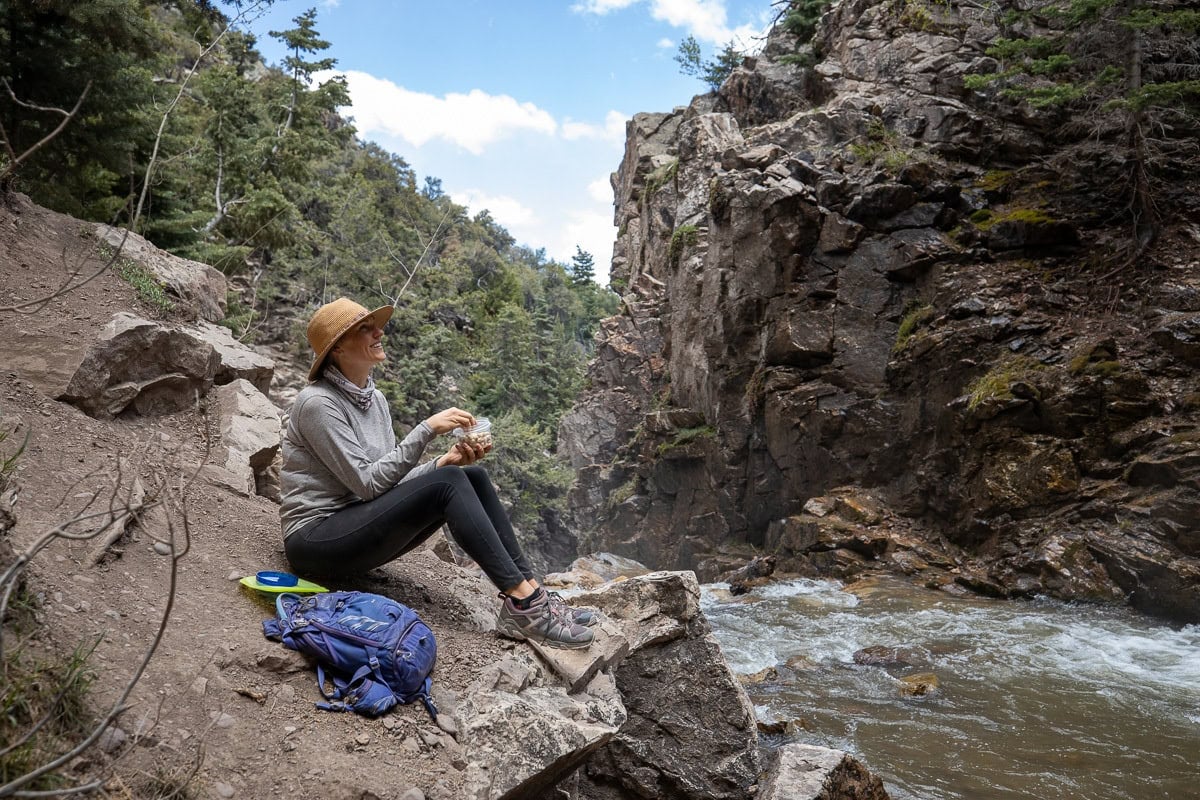
Some easy hiking snacks include:
- trail mix
- bars
- dried fruit
- jerky
- peanut butter and jelly sandwiches
- electrolyte packets
You don’t need anything fancy. Just a mix of carbs and protein to keep your energy up.
How much water you need depends on:
- the length of the hike
- temperature
- elevation gain
- altitude
- and how much you personally sweat
As a general rule of thumb, I think carrying 2–3 liters of water is a good starting point for most beginner hikers, especially while you’re still figuring out how much water your body needs on the trail. Personally, I get really thirsty when I hike, so I usually err on the side of bringing extra.
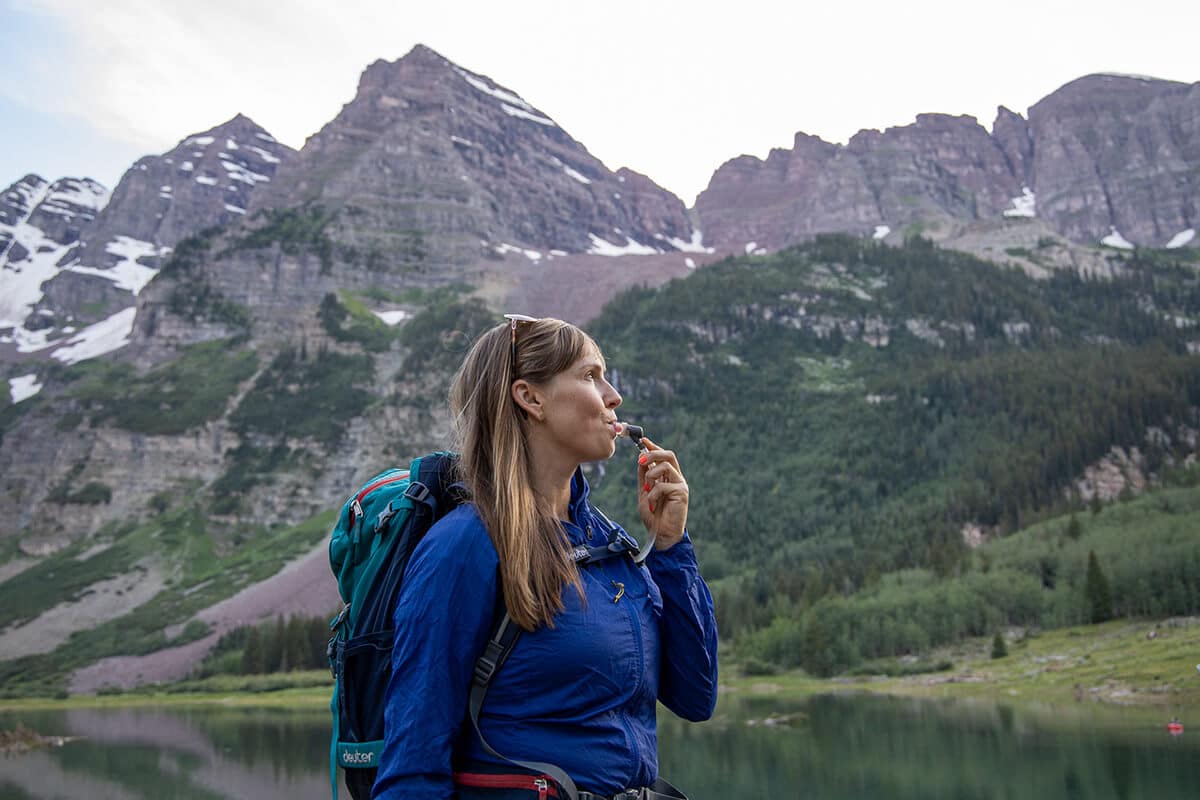
I also prefer carrying my water in a hydration bladder instead of water bottles. A hydration bladder is basically a soft water reservoir that sits inside your backpack with a drinking tube that clips onto your shoulder strap. I find it much easier to sip water consistently throughout a hike without having to stop and grab a bottle out of my pack.
Don’t Rely on Cell Service for Navigation
Back before hiking apps existed, I got very lost on two different hikes in remote areas. I was still new to hiking at the time and assumed trails would always be clearly marked and easy to follow. Those experiences taught me not to rely solely on trail signs and to always have some form of navigation with me.

Thankfully, hiking apps have made navigation much easier than it used to be, especially on popular trails. These days, I rarely carry a paper map on casual day hikes because apps like AllTrails (get 30% off here), Gaia GPS, and OnX Backcountry make it easy to see your location directly on the trail map.
The important thing to understand, though, is that most hiking apps won’t work properly once you lose cell service, unless you’ve downloaded the map ahead of time for offline use. Many apps require a paid subscription to access offline maps, but if you plan to hike regularly, I think it’s worth it.
I personally download offline maps before every hike so I can still access the route if I’m out of service. Some hikers also use GPS watches or GPS devices, like Garmin watches, which can provide navigation and tracking even without cell reception.
4. Hiking Safety Tips for Beginners
A lot of beginner hikers worry about things like bears, mountain lions, or getting seriously lost. While those situations can happen, most hiking problems are actually much less dramatic.
Usually it’s things like:
- not bringing enough water
- underestimating the difficulty of the hike
- getting caught in changing weather
- starting too late in the day
- or not knowing what trail conditions are like ahead of time
The good news is that most of these issues are preventable if you are aware of basic hiking safety.
Research the Trail Before You Go
Before heading out, take a few minutes to look up:
- mileage
- elevation gain
- trail conditions
- weather
- regulations
- and recent reviews
This helps you understand what to expect and whether the hike matches your fitness level and experience. It also makes it much easier to figure out what type of clothing, shoes, and gear you’ll actually need for the hike.
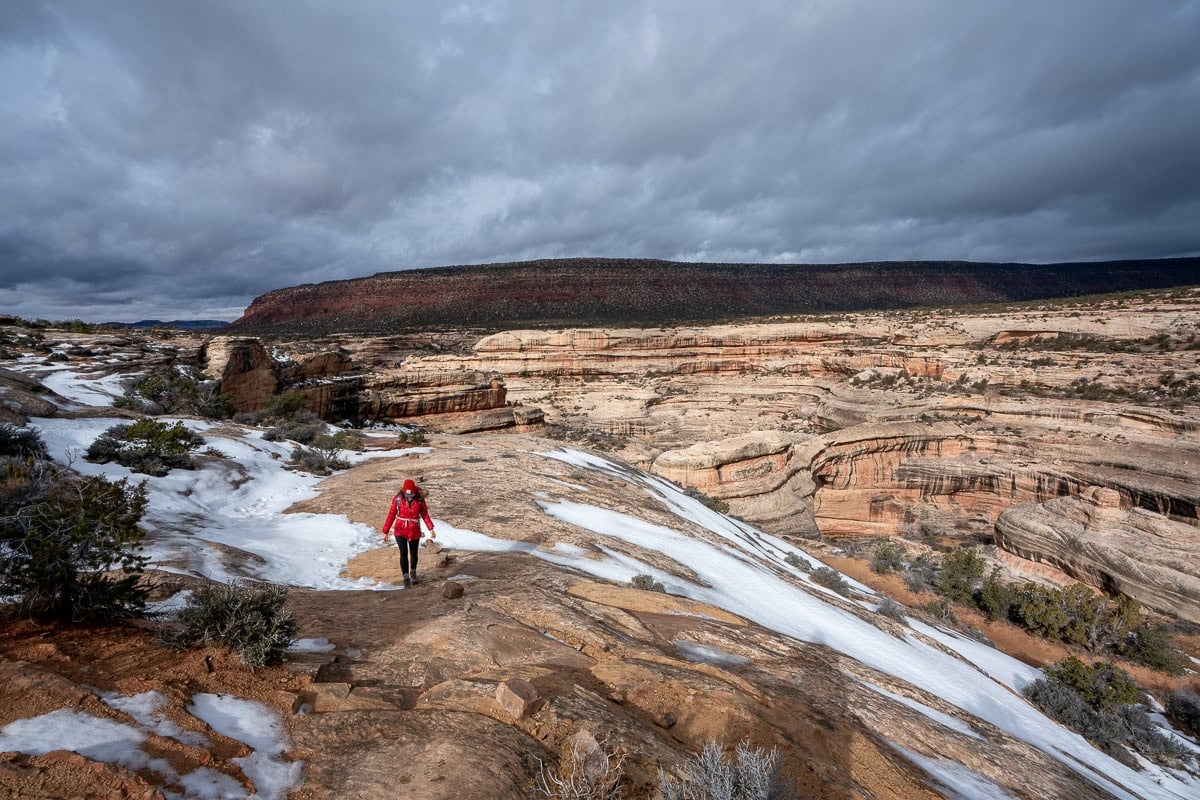
Apps like AllTrails are especially helpful for checking recent trail reports, including things like snow coverage, wildlife sightings, downed trees, or seasonal closures.
Tell Someone Where You’re Going
Even on shorter hikes, it’s smart to let someone know:
- where you’re hiking
- when you expect to be back
- and when they should worry if they haven’t heard from you
This becomes more important on longer hikes or trails with limited cell service.
Start Earlier Than You Think You Need To
Between breaks, photos, slower uphill sections, route finding, and unexpected trail conditions, hikes often take longer than people expect — especially in the mountains.
Starting earlier gives you more flexibility if:
- weather moves in
- trail conditions are more difficult than anticipated
- you want to take your time
- or you simply hike slower than planned
This is especially important in the mountains, where afternoon thunderstorms are common during summer and daylight disappears quickly in the fall.
Check the Weather
Weather can change quickly outdoors, especially in higher elevations. Even if the forecast looks warm and sunny at the trailhead, temperatures and conditions can be very different higher up on the trail.
Before heading out, pay attention to:
- temperature swings
- storms
- wind
- snow conditions
- and heat advisories
Know That It’s Ok to Turn Around
One of the best hiking skills you can develop is knowing when to turn around.
I can’t tell you how many hikes I’ve turned around on over the years because conditions didn’t feel right, weather changed, or I realized I was running out of daylight.
One fall day in Idaho’s Sawtooth Mountains, I attempted to summit Thompson Peak, the tallest peak in the range. The hike ended up being much more difficult than I expected, and by 4 p.m., I found myself deep in a boulder field with patchy snow, still below the summit.
At that point, I knew that if I kept going, I’d be descending in the dark. Given the loose rocks, snow, and tricky footing, I knew that wasn’t a safe decision, so I turned around before reaching the top.
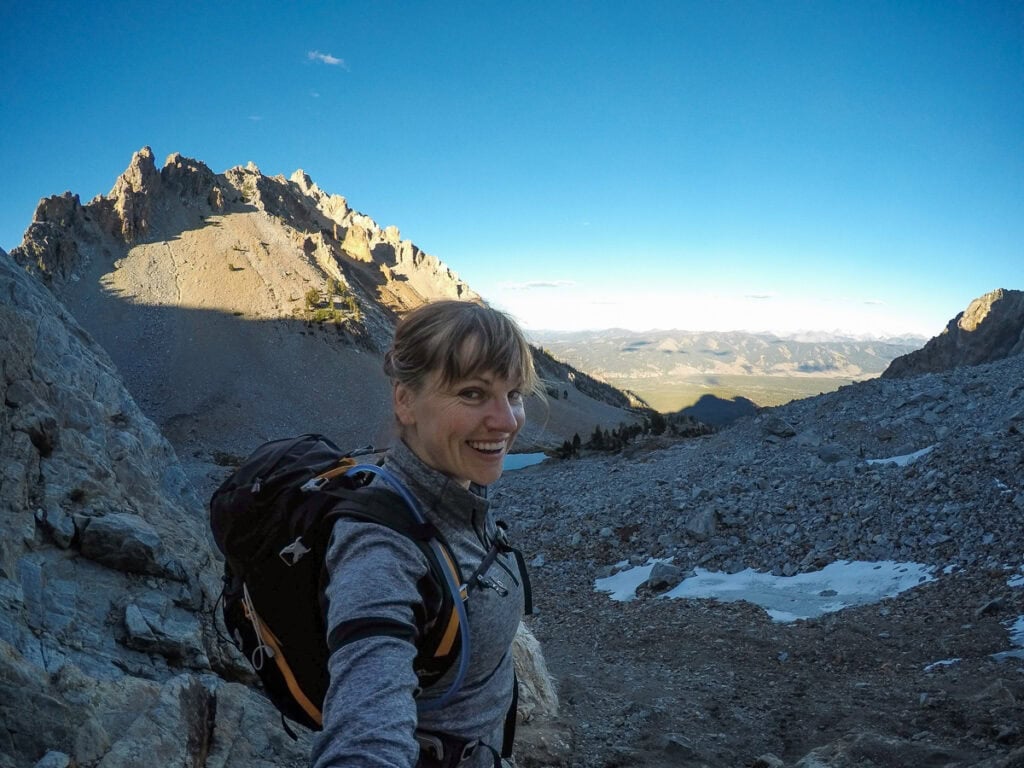
It was disappointing at the time, but looking back, it was absolutely the right call. Finishing the hike is never more important than making good decisions outdoors.
5. Beginner Hiking Etiquette
Hiking etiquette isn’t complicated, but knowing a few basic trail norms helps everyone have a better experience outdoors.
Trail Etiquette Basics
A hello and a smile always goes a long way. In addition, here are a few simple trail etiquette tips to keep in mind:
- stay on the trail to help prevent erosion and damage to plants
- pack out all of your trash, including used toilet paper
- avoid playing music on speakers
- give wildlife plenty of space
- and be respectful of other hikers on the trail
You’ll also often hear that uphill hikers have the right of way since climbing takes more effort and momentum, so if you’re heading downhill, it’s courteous to step aside and let them through.
If you’re hiking with a dog, make sure to follow leash regulations, keep your dog under control around others, and always pack out dog waste.
Practice Leave No Trace
Leave No Trace is a set of outdoor principles designed to help people minimize their impact on nature while hiking and camping.
As hiking has become more popular, protecting trails and public lands has become even more important. Small actions from individual hikers really do add up over time.
Simple things like staying on the trail, packing out trash, respecting wildlife, and leaving natural areas the way you found them help keep these places beautiful for everyone else too.
6. Hiking Gets Easier With Experience
When I first started hiking, I felt really out of shape and constantly worried about slowing other people down. I got out of breath easily, so I often chose to hike alone because I felt self-conscious about my fitness level.
But over time, hiking got easier.
Not because I suddenly became an athlete, but because I learned:
- how to pace myself
- how to prepare better
- what gear actually mattered
- and how to choose hikes that matched my ability level
A lot of people assume hiking is only for super fit or naturally outdoorsy people, but that’s really not true. Hiking is something you get better at by doing it.
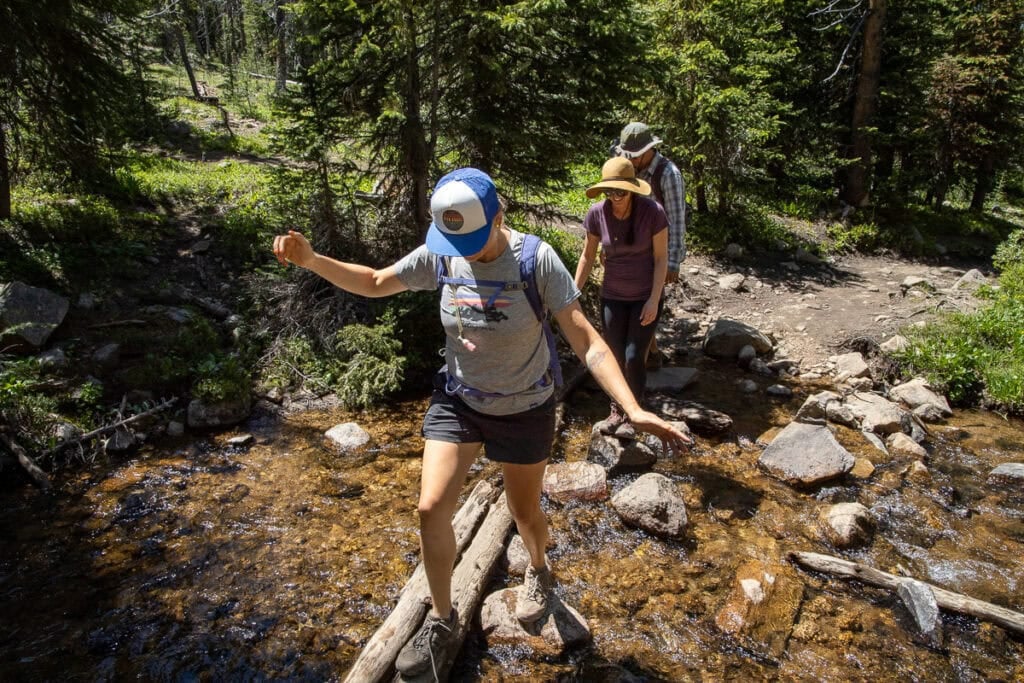
Start with easier trails. Take breaks when you need to. Don’t worry about your pace. And try not to compare yourself to people online tackling huge mountain adventures.
The more you hike, the more comfortable and confident you’ll become outdoors.
Frequently Asked Questions
Yes — light rain doesn’t automatically mean you need to cancel your hike. For short hikes in mild weather, a lightweight rain jacket is usually enough to stay comfortable. However, heavy storms, lightning, or slippery trail conditions can make hiking much more dangerous.
If nature calls while you’re hiking, it’s important to follow Leave No Trace principles, which help minimize human impact outdoors. That means moving away from water sources, burying poop properly, and packing out any used toilet paper rather than leaving it behind on the trail. For peeing on the trail, I’m a big fan of the Kula Cloth, which is an antimicrobial reusable pee cloth designed specifically for hiking and backpacking.
Your first hike should feel manageable and enjoyable, not exhausting. I usually recommend starting with a well-marked trail around 3–5 miles round trip with gradual elevation gain.
Morning is usually the best time to hike, especially in the mountains. Starting early helps you avoid afternoon heat, thunderstorms, crowded trails, and running out of daylight.
Not necessarily. For many beginner day hikes, trail runners or lightweight hiking shoes work great. Comfort, traction, and proper fit matter much more than whether your shoes are technically “hiking boots.”
Slow down, take breaks, eat a snack, and drink water. Hiking is not a race, and most beginners need time to build endurance and confidence on the trail.
Usually, yes. Even on cooler or cloudy days, you can still get a surprising amount of sun exposure while hiking, especially at higher elevations where UV intensity is stronger.
For most hikes, I recommend wearing sunscreen, sunglasses, and some form of sun protection like a hat or lightweight long sleeve shirt. Personally, I often prefer lightweight sun hoodies or UPF clothing because it means I don’t have to constantly reapply sunscreen while hiking.
Final Thoughts
Getting started with hiking is honestly the hardest part. The more you hike, the more confident and comfortable you’ll become outdoors.
Start simple, choose beginner-friendly trails, and focus on enjoying the experience instead of doing everything perfectly right away.
Got questions? Let me know in the comments!
The post Hiking for Beginners: Everything You Need to Know Before Your First Hike appeared first on Bearfoot Theory.