Plug-in hybrids should offer the best of both worlds. They provide enough electric range to cover shorter trips without gasoline, but retain an internal-combustion engine for longer drives. Buyers avoid the range and charging concerns associated with a fully electric vehicle, while still cutting fuel consumption when the car is regularly charged. However, that flexibility does not necessarily translate into stronger resale value. According to iSeeCars’ 2026 resale-value data, BMW’s plug-in hybrids consistently retain less of their original value after five years than their gasoline-powered counterparts. But the gap is perhaps more modest than you might think. What’s more, it’s considerably smaller than the depreciation penalty attached to BMW’s fully electric models. We break all the numbers down and see how PHEVs compare to their more dedicated brethren.
BMW 3 Series PHEV vs. 3 Series
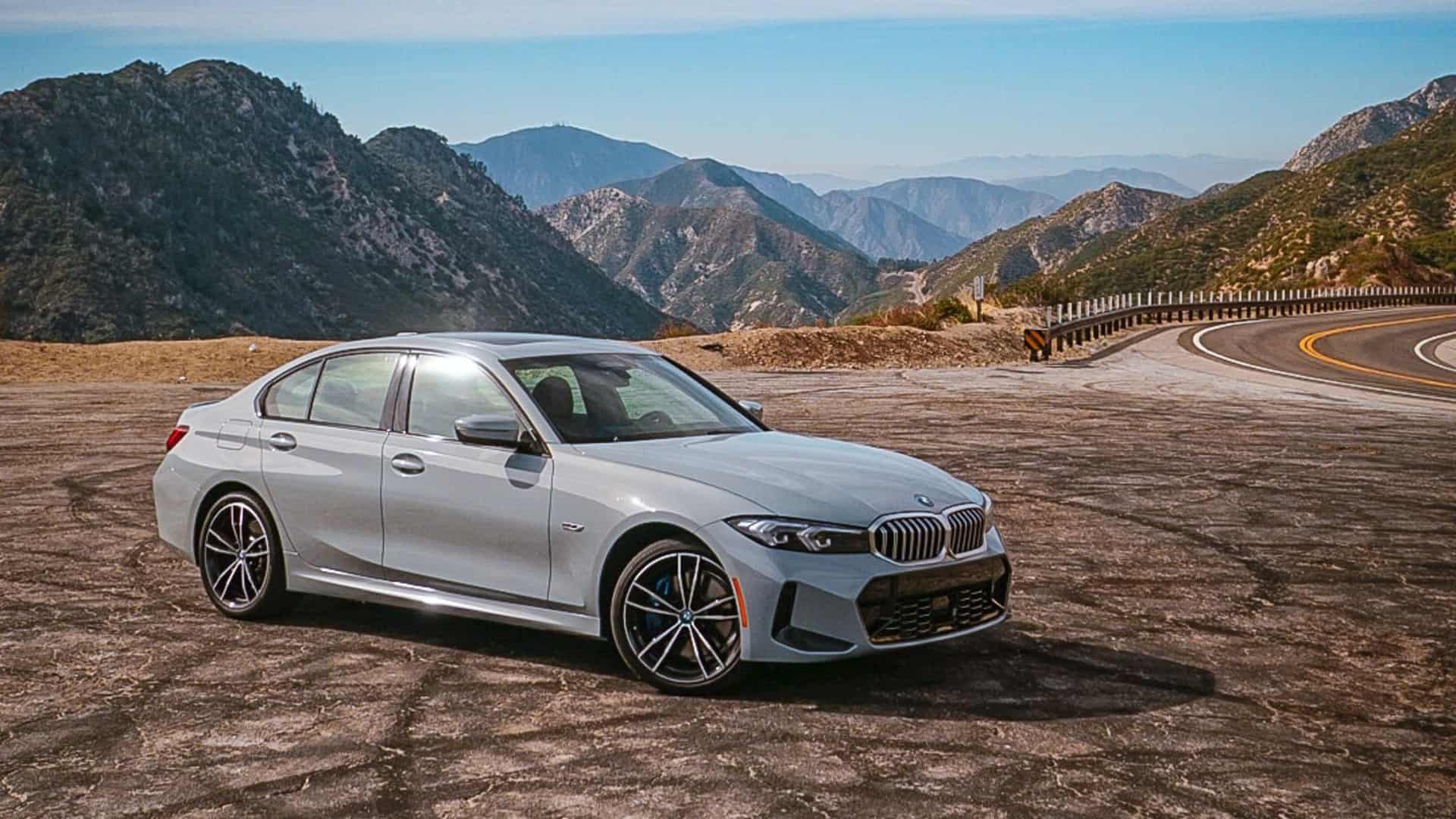
The BMW 3 Series delivers the strongest resale value among the directly comparable models. The conventional 3 Series retains 53.2 percent of its original value after five years, while the plug-in hybrid retains 49.9 percent. That gives the PHEV a 3.3-percentage-point disadvantage. Put another way — in depreciation terms — a regular 3 Series loses 46.8 percent of its original value, compared with 50.1 percent for the plug-in hybrid.
The gap in average used prices is also predictably small. iSeeCars lists the average five-year-old 3 Series at $27,765, compared with $26,163 for the PHEV. That makes the plug-in model potentially compelling on the used market, particularly for buyers who can make regular use of its electric range. It’s more supporting data for why we feel the plug-in 3er remains one of the most underrated hybrid cars out there.
BMW X5 PHEV vs. X5
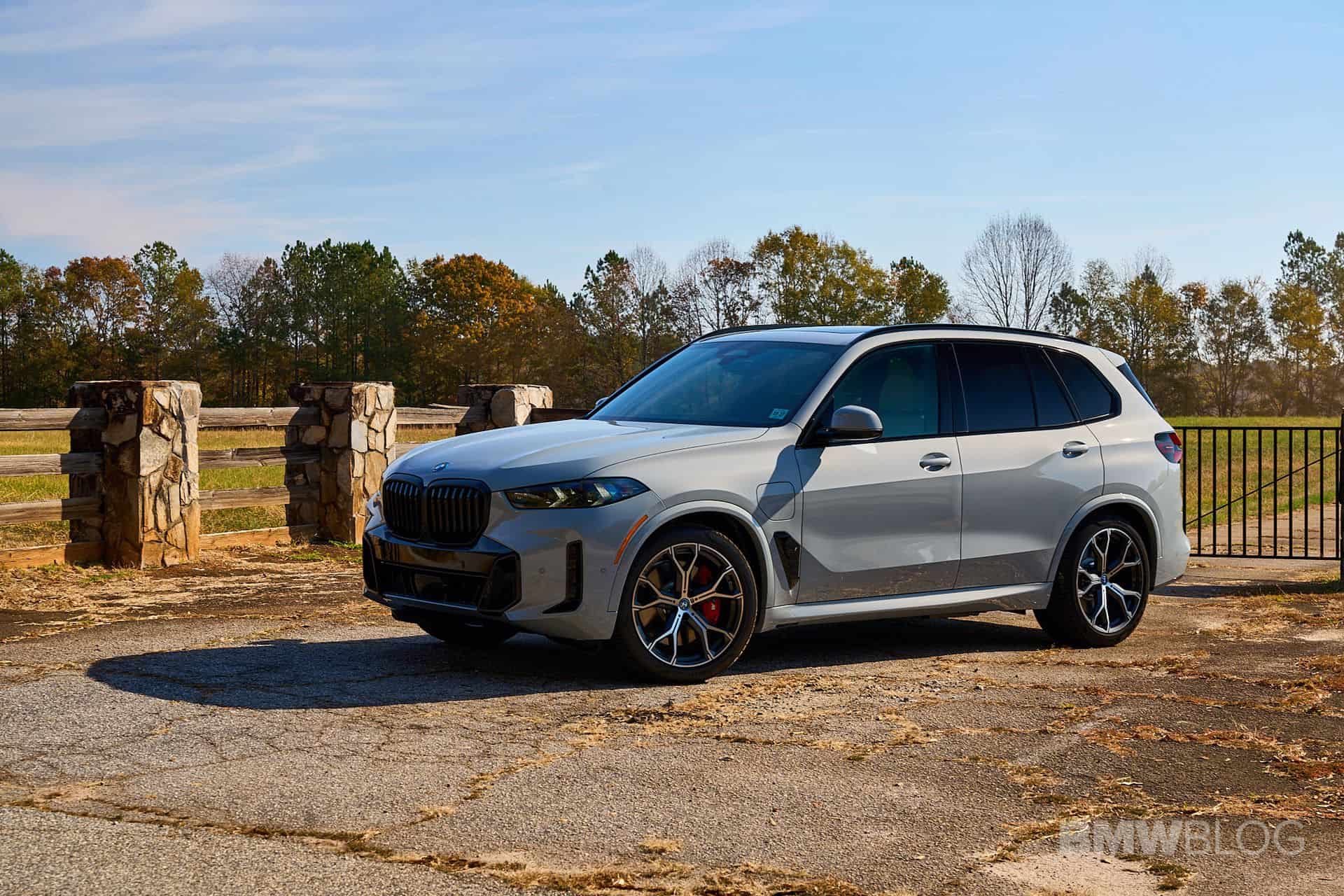
The gasoline-powered X5 retains 46.9 percent of its value after five years, while the X5 plug-in hybrid retains 43.6 percent. In absolute terms, iSeeCars puts the average price of a five-year-old X5 at $38,642. The equivalent PHEV average is $37,667. That’s a much smaller difference than the 3 Series, despite an identical disparity between PHEV and gas value retention. A difference of just $975 despite the plug-in hybrid’s higher original price could make the PHEV especially attractive as a secondhand purchase. Buyers get the more powerful and potentially more efficient powertrain without paying anything close to its original new-car premium. The tradeoff is that the first owner absorbs more of that premium through depreciation.
BMW 5 Series PHEV vs. 5 Series and i5

The 5 Series provides the clearest look at how the market treats all three powertrain types. The gasoline 5 Series retains 44.1 percent of its value after five years. The plug-in hybrid retains 40.8 percent, while the fully electric BMW i5 retains just 30 percent. Once again, the PHEV trails the gasoline model by exactly 3.3 percentage points. The difference between the PHEV and EV is much larger: 10.8 points. Put another way, iSeeCars expects the gasoline 5 Series to lose 55.9 percent of its original value. The PHEV loses 59.2 percent, while the i5 loses 70 percent.
The average five-year-old prices available for the combustion models follow the same hierarchy. The regular 5 Series averages $32,330, compared with $29,189 for the plug-in hybrid. The i5 is too new for a directly comparable five-year-old average, but its projected retention percentage suggests substantially steeper depreciation. For buyers interested in some electric driving, the plug-in hybrid appears to be the financial middle ground. It does not hold its value quite as well as the conventional 5 Series, but it avoids much of the depreciation associated with the i5. In our 550e review, we lauded the car for its efficiency, performance, and practicality. Overall, it looks like a very solid buy on the secondhand market.
BMW 7 Series PHEV vs. 7 Series and i7

All versions of the BMW 7 Series depreciate heavily, but the ordering remains familiar. The gasoline-powered 7 Series retains 38.2 percent of its value after five years. The plug-in hybrid retains 34.9 percent, and the BMW i7 retains 26.4 percent. The PHEV’s disadvantage against the gasoline car is — you guessed it — 3.3 percentage points. But the plug-in hybrid holds an 8.5-point advantage over the i7.
That translates to five-year depreciation of 61.8 percent for the regular 7 Series, 65.1 percent for the PHEV, and 73.6 percent for the electric i7. The i7 therefore loses nearly three-quarters of its original value according to the iSeeCars estimate. While no large luxury sedan is immune to depreciation, the data suggests that adding a plug does not hurt nearly as much as eliminating the combustion engine entirely. For used shoppers, both electrified versions could become significant bargains. For original owners, the gasoline-powered 7 Series remains the least punishing choice.
BMW M5 PHEV vs. the Gas-Powered M5

The M5 comparison requires some context because the current G90 M5 is only available as a plug-in hybrid. A little confusingly, iSeeCars separately lists the previous gasoline-powered M5. Nevertheless, the results fit the same broader pattern. The conventional M5 retains 47.7 percent of its value after five years, compared with 44.4 percent for the plug-in hybrid M5. That is another difference of exactly 3.3 percentage points.
The M5 Touring is the major exception. iSeeCars estimates that the plug-in hybrid wagon will retain 51.1 percent of its value. That’s more than both the PHEV sedan and the older gasoline M5. That makes the M5 Touring the strongest-performing BMW PHEV in the study. Its projected advantage may reflect the enduring desirability and relative scarcity of high-performance wagons, rather than a broader preference for the plug-in powertrain. The Touring retains 6.7 percentage points more than the PHEV sedan despite sharing its basic drivetrain.
What About the BMW XM?

The BMW XM has no gasoline or fully electric equivalent, so it cannot be included in a direct powertrain comparison. Still, its numbers provide useful context. iSeeCars estimates that the plug-in hybrid XM will retain 41.9 percent of its value after five years, meaning it loses 58.1 percent. That puts it below the X5 PHEV but slightly above the 5 Series PHEV. Given the XM’s much higher starting price, however, the depreciation measured in dollars could be substantial.
BMW PHEVs: The Middle Ground
The consistency of the results is striking. In every direct comparison, the BMW plug-in hybrid retains exactly 3.3 percentage points less than the corresponding gasoline model. While notable, it’s hardly the ding to value one might expect — especially considering the heavy depreciation accompanying full EVs. For new-car buyers focused primarily on resale value, the regular gasoline version remains the safer choice in nearly every case. The M5 Touring is the notable exception. For used buyers, however, the situation reverses. A lightly depreciated PHEV can provide more performance, meaningful electric capability, and similar everyday usability for less than its non-hybrid counterpart.
Source: iSeeCars
First published by https://www.bmwblog.com