ixty-eight-year-old John Oakes took the same walk every afternoon circling his small community of Murrells Inlet, South Carolina. On Aug. 1, 2024, as the hot summer sun trickled through Spanish moss, his daughter Chrissy spoke to him on the phone before he embarked on his daily stroll.
Two days later, she signed her father’s Do Not Resuscitate order.
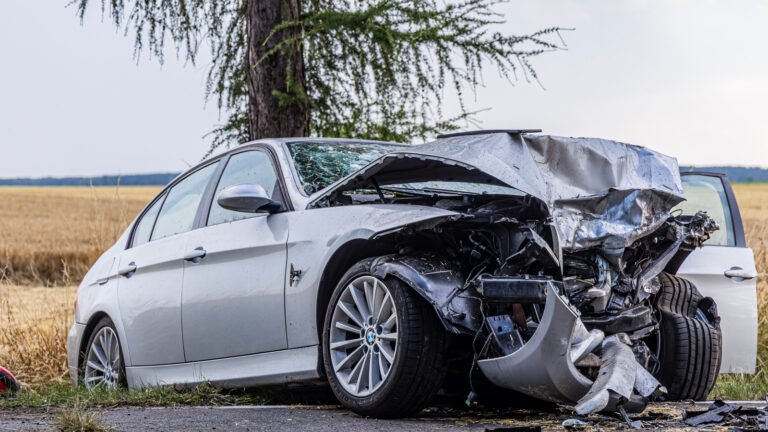
John Oakes had been hit by a Buick going 55 mph on Highway 17 as he was crossing near Wesley Road. He’d been walking along the state-created “Greenway Walkway” that said “use at your own risk”—a path the community has complained about to officials for years.
Charleston, the closest major city to where Oakes’s dad was struck, is ranked 12th on the new edition of Smart Growth America’s new list of the deadliest cities for pedestrians in the United States, published as part of its annual “Dangerous by Design” report on pedestrian deaths and unsafe roads.
“There was not a walkway for my dad to cross within two to three miles,” said Chrissy Oakes, who started Safer 17 to advocate for safety improvements on the highway after her father was killed, at SGA’s press briefing on Tuesday. “Fifty-five miles per hour, guys. Do you know how fast that feels when you’re walking and you feel the wind of the cars?”
In 2024, the most recent year available for final federal data, 7,080 people were hit by a vehicle and killed while walking in the United States. Politicians and government officials have touted the 6% decrease from 2022, with the head of the National Highway Traffic Safety Administration congratulating his agency on a return to pre-pandemic fatality levels.
But the report by SGA researchers Eric Cova, Jaibin Mathew, and Heidi Simon point out that fatalities are still up 72% from 2009—an uptick that outpaces both the growth in population and vehicle miles traveled.
The researchers attribute the slight dip to traffic congestion after the effects of the COVID-19 lockdown subsided. The U.S. largely relies on congestion to slow cars. When traffic disappeared in 2020, speeds rose on roads still full of pedestrian conflict points, and deaths spiked. Now that traffic is back, speeds are down.
“However, if you ask most of our transportation leaders, the only thing they’re trying to solve is congestion and not safety,” SGA president Beth Osborne said at the press briefing. “Celebrating coming down slightly off of record highs is part of the problem.”
At the current pace of decline, the U.S. won’t return to 2009 fatality levels until 2042. And 96,615 more people will die in the meantime, with pedestrians now accounting for nearly one in five roadway fatalities—a new high.
Lessons from Orlando’s pedestrian safety success
SGA’s report ranks Memphis, Tennessee; Albuquerque, New Mexico; Bakersfield, California; Tucson, Arizona; and Baton Rouge, Louisiana, as the most dangerous cities for pedestrians. Osborne says that in most areas, design agencies are applying “pretty much the same standards” on city streets and interstates—where you don’t have pedestrians, driveways, or cross streets.
But SGA’s analysis also highlighted one bright spot that showed significant change is possible.
The City of Orlando dropped from consistently being in the top 20 most dangerous roadways to No. 25—one of the largest reductions in five-year fatality rates. The report listed the changes Orlando made as “being more intentional with funding, adopting best practices, and making hard decisions about changing existing roadways.”
These changes include:
- Increasing the number of crossings
- Ensuring all crosswalks have markers and signals
- Improving visibility and lighting
- Drawing driver attention to activity outside of their own lanes
- Prioritizing projects near schools and known speed-concern areas
- Using data strategically to identify where to deploy resources first
“I think they’ve done a really great job looking at those key locations … to prioritize getting to those urgent spots as quickly as possible,” said Heidi Simon, SGA’s director of thriving communities.
In New Jersey, both Jersey City and Hoboken have experienced zero-fatality years.
Though not examined in the organization’s report, Simon says both of those cities have more traffic. They strategically slimmed roadways on streets full of conflict points like parking, driveways, crosswalks and cross streets. Less room for cars on these high risk roads forces drivers to slow down, see the potential problem, and stop.
Hoboken has recorded zero traffic fatalities for nine straight years, since January 2017. Jersey City achieved the same milestone in 2022, but hasn’t sustained it, likely due to implementation issues. Both cities launched formal “Vision Zero” initiatives, redesigning their most dangerous intersections with curb extensions and bollards to improve sight lines, reducing speed limits to 20 mph and installing leading pedestrian intervals that give walkers a head start before cars can turn. Hoboken’s program, spearheaded by then-Mayor Ravi Bhalla, is now studied by cities from Philadelphia to San Francisco as a model for what deliberate, data-driven street redesign can accomplish.
Still, such changes remain an anomaly. SGA researchers found that more than 80% of states and metropolitan areas have gotten more deadly for pedestrians over time. Just 18 out of more than 100 metro areas saw any decrease in long-term pedestrian fatality rates.
Pedestrian safety advocates repeatedly noted the reality of “doubters” in transportation agencies: Officials often don’t want to deviate from interstate standards, favoring moves to prevent congestion rather than preventing pedestrian fatalities.
“We know that design impacts behavior because we all know the word ‘speed trap,’” Osborne said. “We know on a very visceral level that the design of the roadway can change our behavior, but our agencies will not admit it.”
The research also mentioned racial and income disparities, noting Native and Black Americans only make up 16% of the population but 22% of pedestrian deaths from 2020 to 2024. People in lower-income areas are also disproportionately more likely to be hit and killed.
The report frames this as the product of “decades of transportation investment and design decisions that prioritize moving cars fast through communities” rather than serving the people who live there.
“We know what creates safer streets,” Simon said. “We can’t wait for a crash to happen. We need to be fixing our streets now so that more stories like Chrissy’s don’t occur.”
But even after a life has been lost, changing existing infrastructure remains an uphill battle.
Along with advocates from Families for Safe Streets, Chrissy Oakes has repeatedly called the Georgetown County South Carolina Department of Transportation about the safety of the road where her father was struck. They urged officials to conduct a speed study and assess the safety of the road.
“They designated it to an engineer named Skipper, and Skipper has not contacted me,” Oakes said. “My dad died in 2024. That’s crazy.”
This story was originally published by Next City, a nonprofit news outlet covering solutions for equitable cities. Sign up for Next City’s newsletter for its latest articles and events.