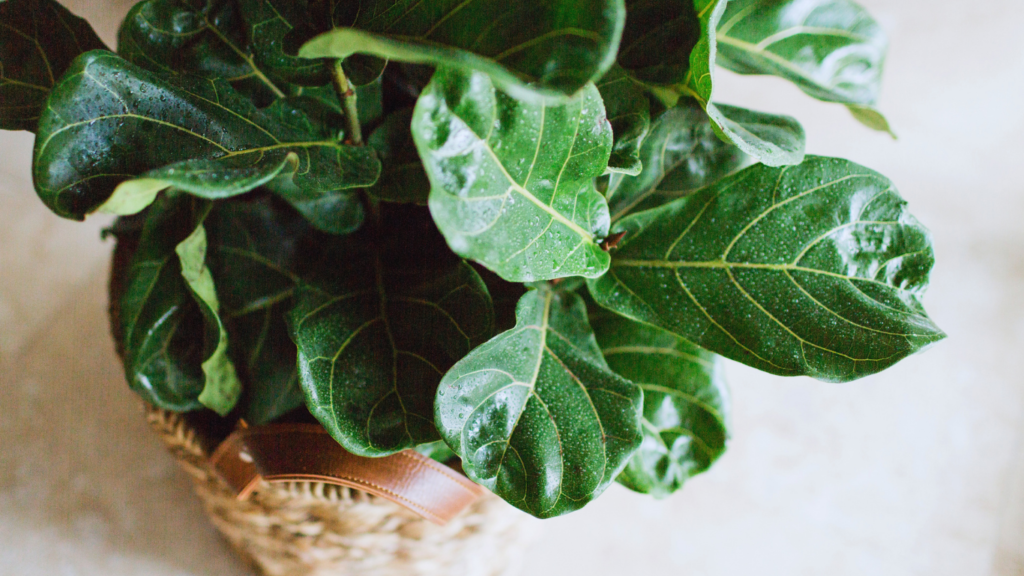
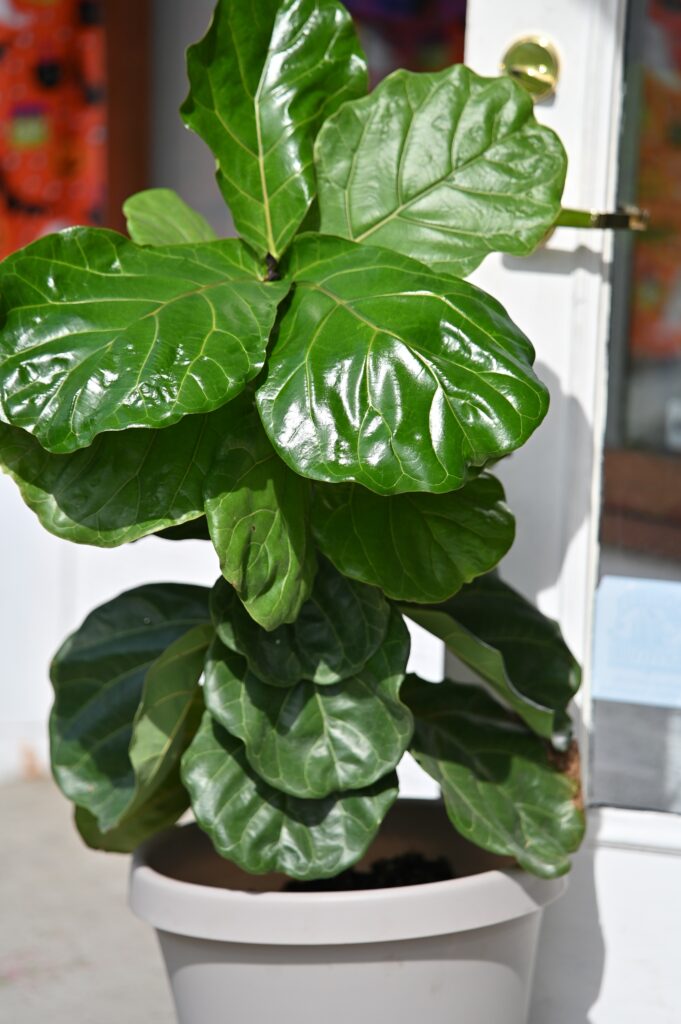
If you’re looking for a beautiful tropical plant to bring fresh color, texture, and life into your home, the fiddle leaf fig may be exactly what you need. With its large, glossy leaves and striking tree-like appearance, this popular houseplant makes a bold statement in any room.
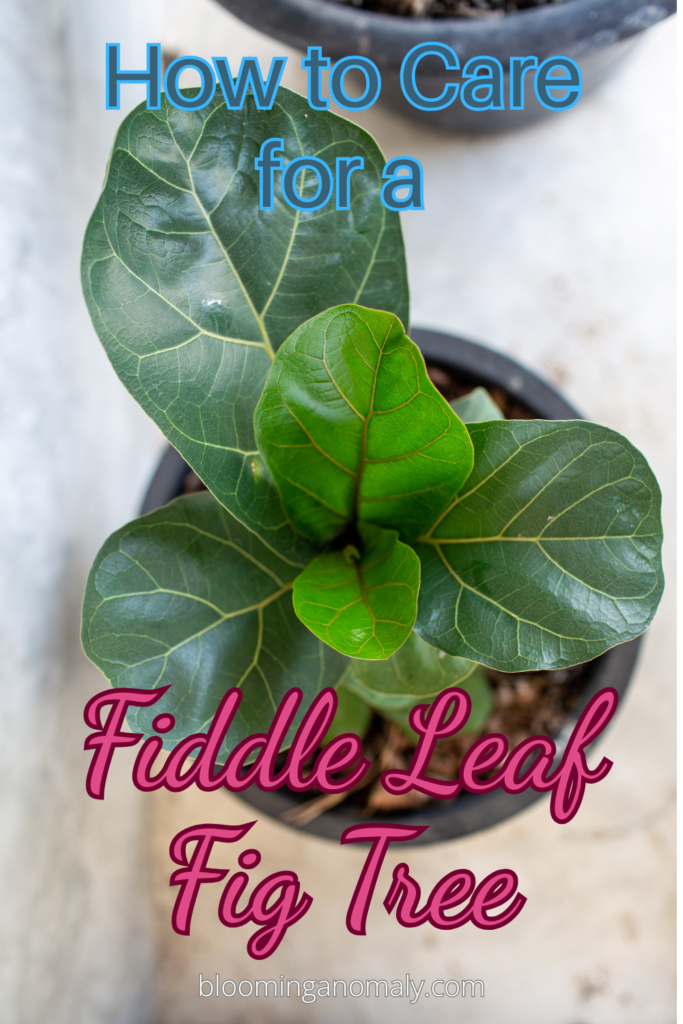
Whether you’re creating a cozy indoor jungle or simply looking for a stunning focal point, the fiddle leaf fig is sure to add natural beauty and a touch of the tropics to your space.
Fiddle Leaf Care
The ficus lyrata, commonly known as the fiddle leaf fig tree, needs a stable environment to thrive in. The right light, soil, water, and other factors will ensure your new house plant will stay in healthy condition for many years!
Light
The fiddle leaf fig tree grows best in bright, indirect sunlight. Bright light from the East is the best direction, but it can grow well in other places, as long as it gets bright indirect light from the sun.
Soil
Purchase a well-draining potting mix so that the roots have plenty of space and room to grow. The soil should be a little acidic, with a pH between 6.0 and 6.5. I use regular potting soil, and my fiddle leaf has been doing fine.
Water
The ficus lyrata needs a good amount of water to grow. Give your house plant plenty of water about once a week. Make sure to water your fiddle leaf deeply so that the roots get the water they need as well.
Temperature and Humidity
The fiddle leaf needs consistent temperatures to remain healthy indoors. Keep the inside of your home around 60°F to 75°F. Cold temperatures can hurt your plant, so try not to get lower than 60°F.
These tropical trees do like humid environments, around 40 to 60%
Fertilizer
Fertilize your fiddle leaf plant in the spring and summer. Use a 3-2-1 ratio so that the plant gets plenty of nitrogen. Ficus lyrata trees do not need to be fertilized in the fall or winter when they are dormant.
Fiddle Leaf Types
House plant enthusiasts might want to add each type of fiddle leaf tree to their home for a tropical feel.
- Ficus lyrata – This is the most common type of of these tropical trees. Large, green leaves grow from a main stem. The plant can reach 6 to 10 feet high indoors.
- Compacta – The compacta looks comparable to the ficus lyrata, except it grows compact with smaller leaves. The compacta can grow about 5 feet tall.
- Bambino – The bambino is a well-known miniature variation of the fiddle leaf. This plant can grow up to 2 to 4 feet high indoors.
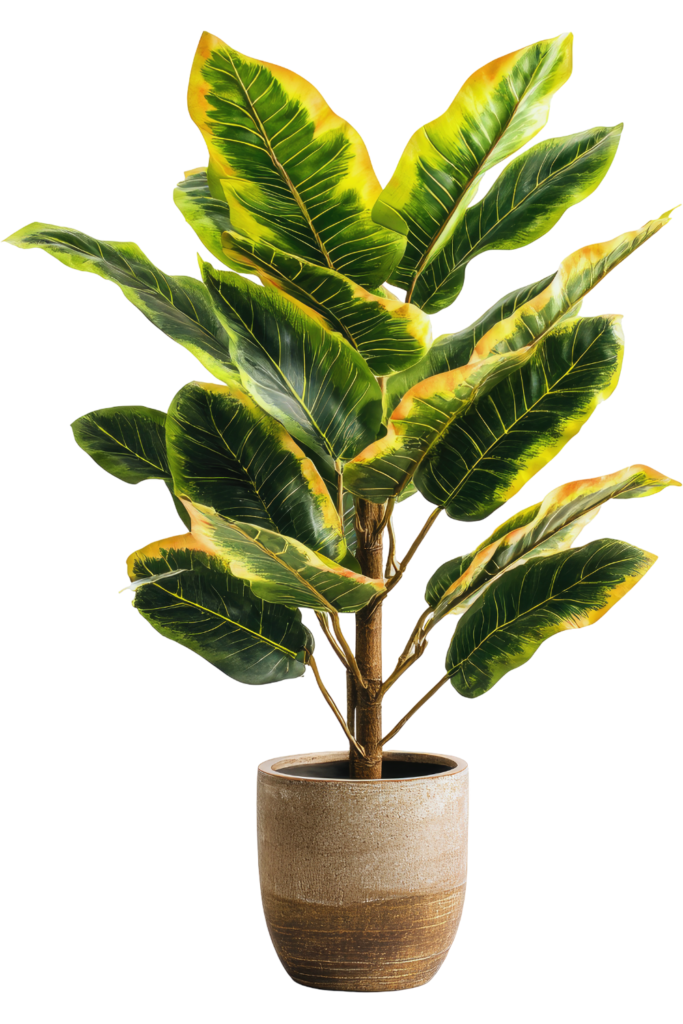
- Variegata – This type of fiddle is rare and sought after by plant collectors. The leaves of this plant are green with cream and yellow throughout, making it a beautiful sight to behold for plant lovers.
How to Prune a Fiddle Leaf
From time to time, you may want to prune your fiddle-leaf fig tree to keep a neat appearance. Get a sharp hand pruner and make a 45-degree cut between leaf nodes.
Some experts say to wait until your tree is 5 feet tall before pruning it. The best time to prune is late spring or summer when the plant is in the midst of its growing season.
Propagating a Fiddle Leaf
Did you know you can propagate a fiddle-leaf fig tree? This is a great way to grow more plants without purchasing them. An easy way to propagate a ficus lyrata is through a stem cutting. You can let the root grow in soil or water, whichever you prefer.
- Cut a branch with 3 or more leaf nodes
- Remove the leaves at the bottom
- Place in water that is at room temperature. If you want to propagate your leaf in soil, place rooting hormone on the part that you cut before putting it in the soil
- Keep the branch in bright, indirect light
- Make sure to change the water each week
- Transplant the cutting in soil once the roots are 1-2 inches long

Growing the Fiddle Leaf in Pots
Since you will be growing your tropical tree in your home, it will need to be grown in a pot. There are many containers to choose from that are plain or with elaborate designs.
Make sure your pot has drainage holes or drill holes in the bottom so that excess water has a place to go. You can get a plastic dish that goes just below the pot to catch the water. That is what I do with my indoor fiddle leaf so that water does not go everywhere.
The pot needs to be a few inches wider than your plant so that it has space to grow. Repot your young plant every spring.
Pests and Diseases
There are some pests and diseases you want to watch out for to keep your ficus lyrata healthy. Root rot is caused when too much water sits at the bottom near the roots. This can be prevented by having well-draining soil and holes at the bottom of your pot.
Brown spots are also another sign of root rot or too much water. You can cut back the leaves to remedy this. A fiddle leaf that is dropping its large leaves is a sign of too little light or too many temperature changes.
Fiddle Leaf Fig Care: FAQs
Below are some common frequently asked questions about caring for a fiddle leaf fig tree.
How long will a fiddle leaf fig live?
A healthy fiddle leaf fig tree can live for many years. They can live indoors for 25 to 50 years or longer. They can live over 100 years in the wild. Take care of your fiddle leaf to enjoy in your home for many years!
Can you put a fiddle leaf fig outside?
Your ficus lyrata can live outside, as long as you are in a tropical or semi-tropical area. USDA Zones 10–12 are great places to grow fiddle leaves outdoors. They do need extra care to grow outside.
How to care for a fiddle leaf fig in winter?
A fiddle-leaf fig tree will go dormant in the winter, which means it doesn’t need as much care as when it grows in the spring and summer. Place in a space that gets more sun and keep out cold drafts.
Is a fiddle leaf fig tree toxic to cats and dogs?
Fiddle leaves are a little toxic to cats and dogs. The sap can be irritating to skin. My cat Tiger has not bothered to try to eat my fiddle leaf tree, but he usually leaves plants that are larger than him alone!
Growing the Fiddle Leaf
This brief guide to growing a fiddle leaf fig can help you get started enjoying this stunning tropical plant in your home. Whether you choose to grow just one as a statement piece or add several to your indoor plant collection as I have, these beautiful plants can bring lasting beauty and greenery to your space.