After a day of Googling why my back hurt (sedentary computer lifestyle, inflamed SI joint), it only made sense that the art fair I attended the same afternoon would contain some element of human-technology body horror.
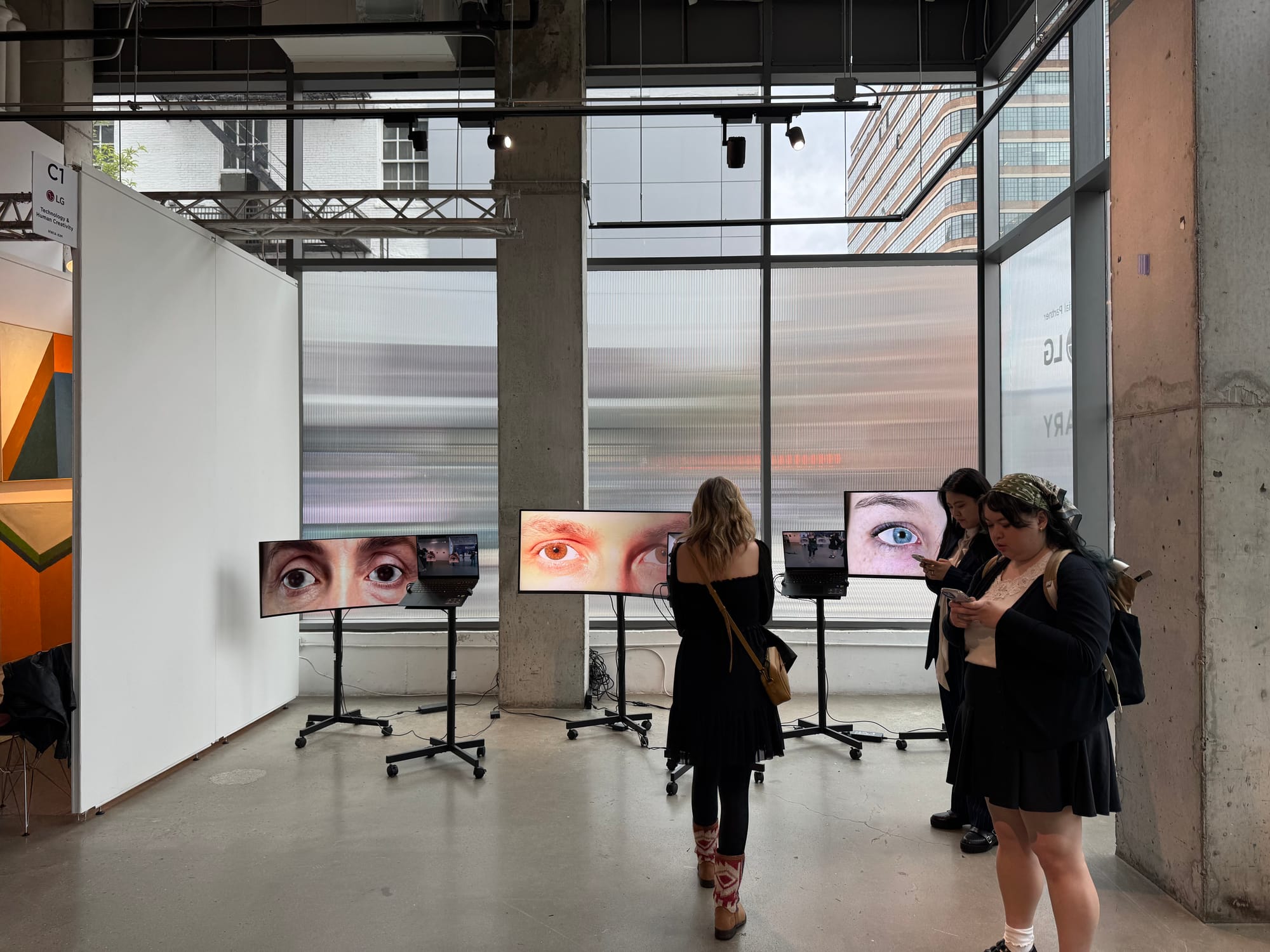
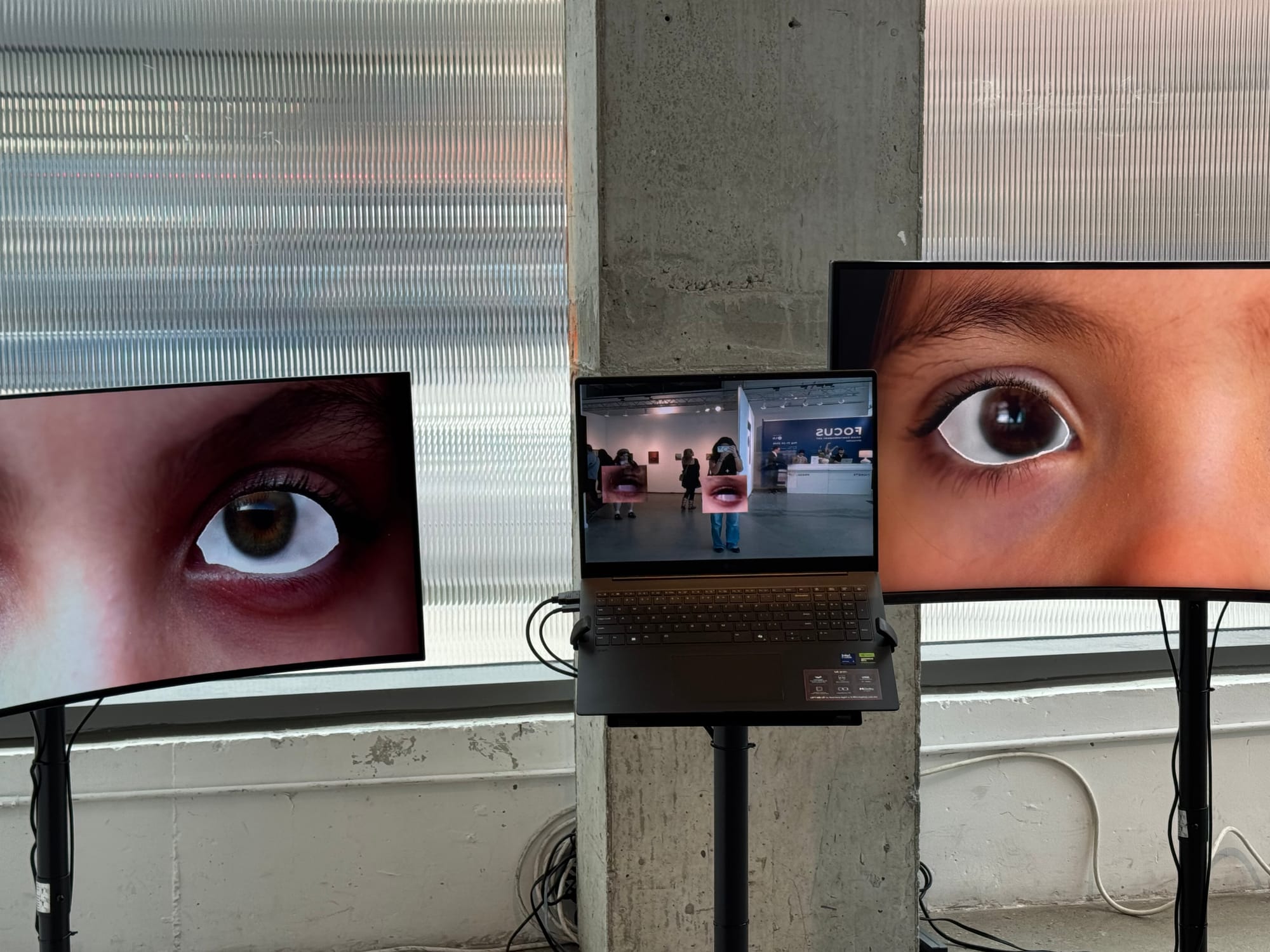
When I arrived at the Thursday press preview for Focus Art Fair, dedicated to Asian art and held at Chelsea Industrial through Sunday, May 24, it seemed fitting that I would walk into a lobby filled with digital elements. I immediately met a recording of myself on a computer screen, but this version of me had a giant eyeball superimposed on her.
The interactive installation, “What if two eyes don’t work together?” by South Korean artist Hwia Kim, is the first taste visitors get of the fair’s fourth edition theme, “human-technology coexistence.” This thematic anchor felt topical, and even corporate, given that one of the fair’s leading sponsors was the technology conglomerate LG Electronics.
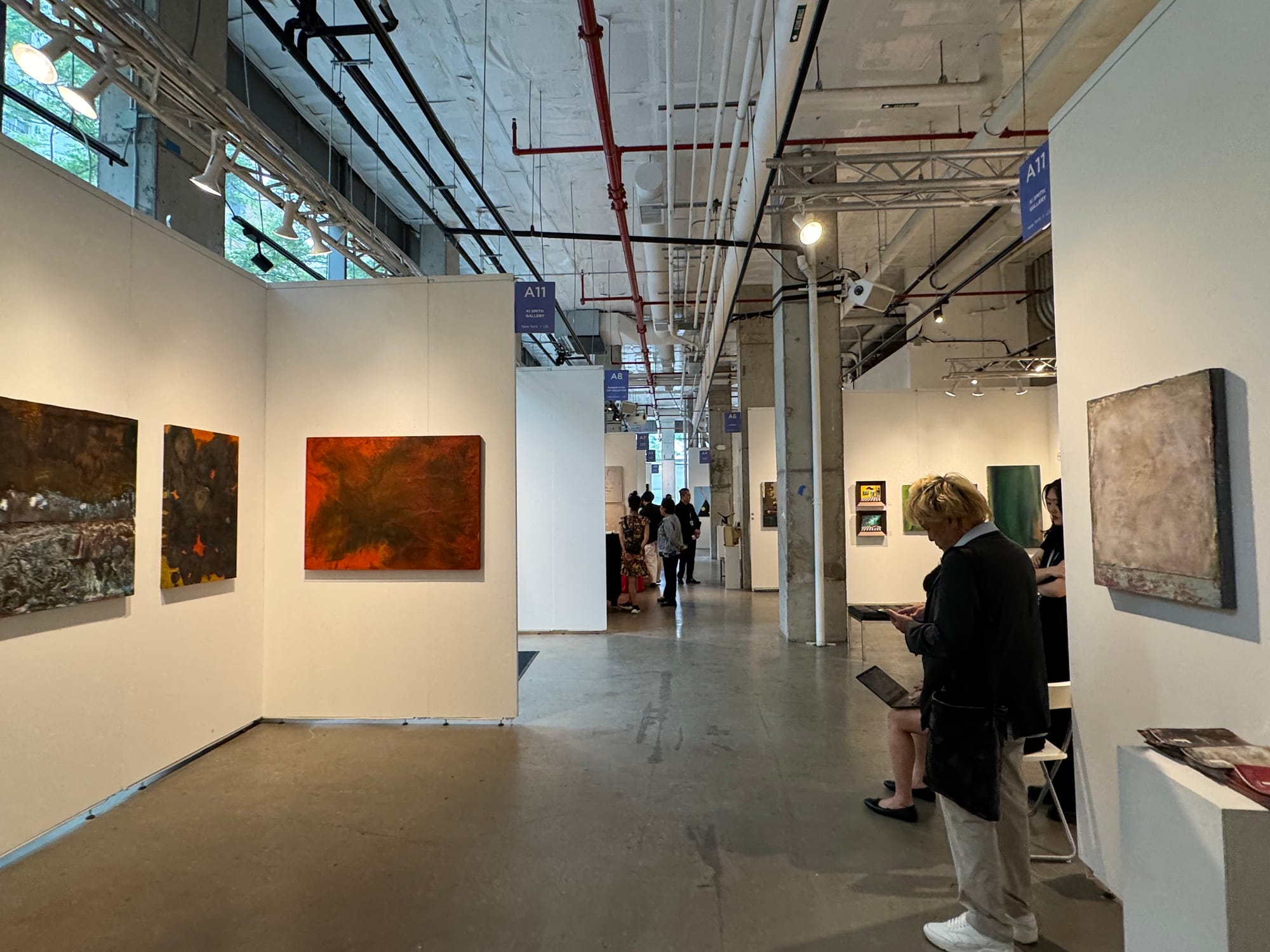
This year, Focus features more than 40 galleries and presenters highlighting artists from Asia and its diaspora, though not all participants fit that description.
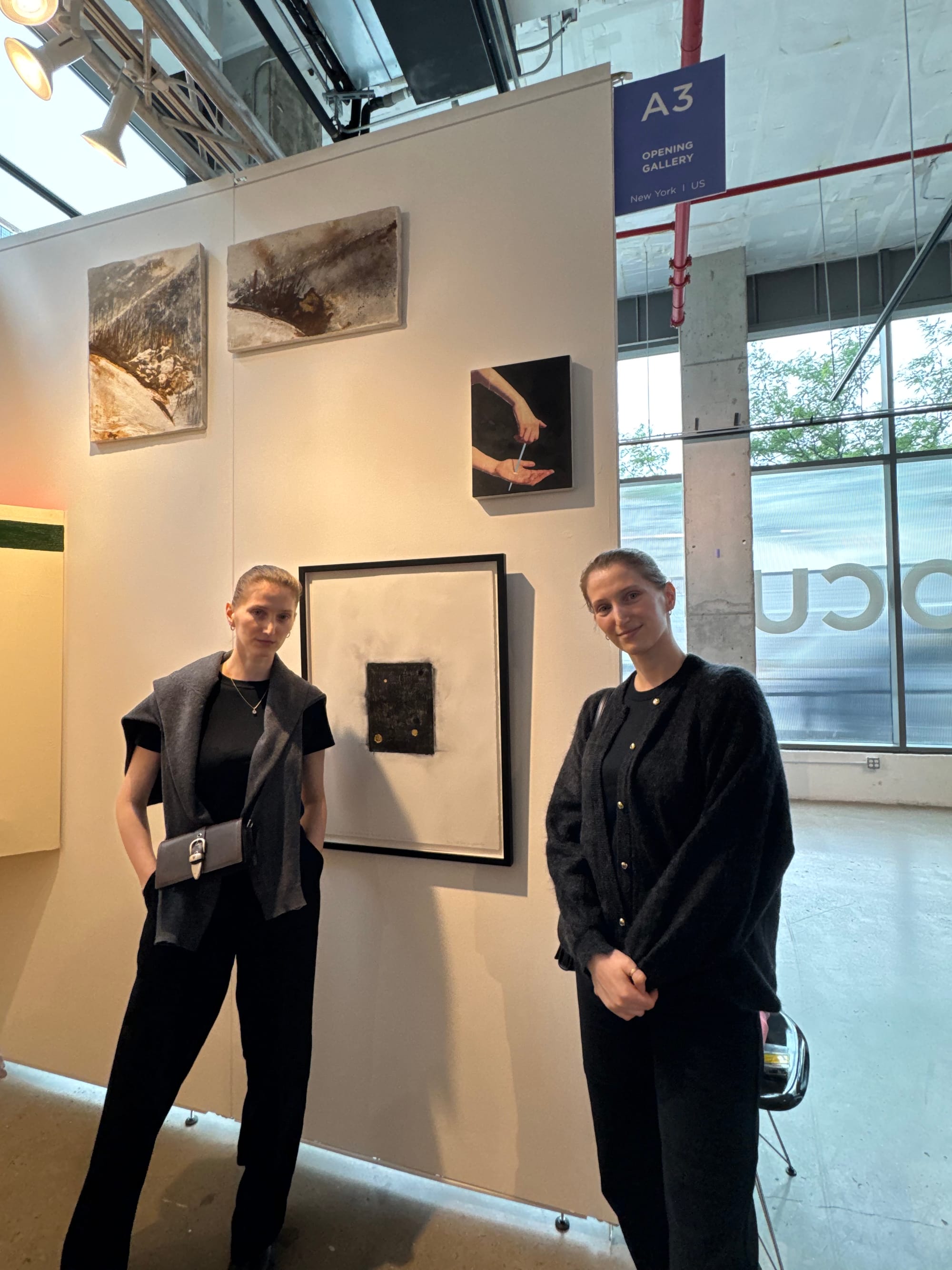
Right after watching my torso turn into a glitching eyeball, I was surprised to encounter the disarmingly warm Ukrainian-born F-Twins (Anna and Valeriia Lyshchenko). The identical twin sisters create together, speak together, and are the founders of the Primarealism art movement together in response to a perceived growing cultural desire to outsource critical thinking to AI.
The sharply intelligent artists talked me through their pieces displayed at the Opening Gallery’s entrance booth: “You Don’t Have To” (2026), a painting portraying a hand removing a blue nail from another in a statement of self-determination over difficult circumstances, and ”To save the first, you have to see the night sky of me” (2026), a black charcoal and gold-leaf on paper work. Their practice, they explained, extends the sense of interconnectedness they feel between themselves as twins to the broader world.
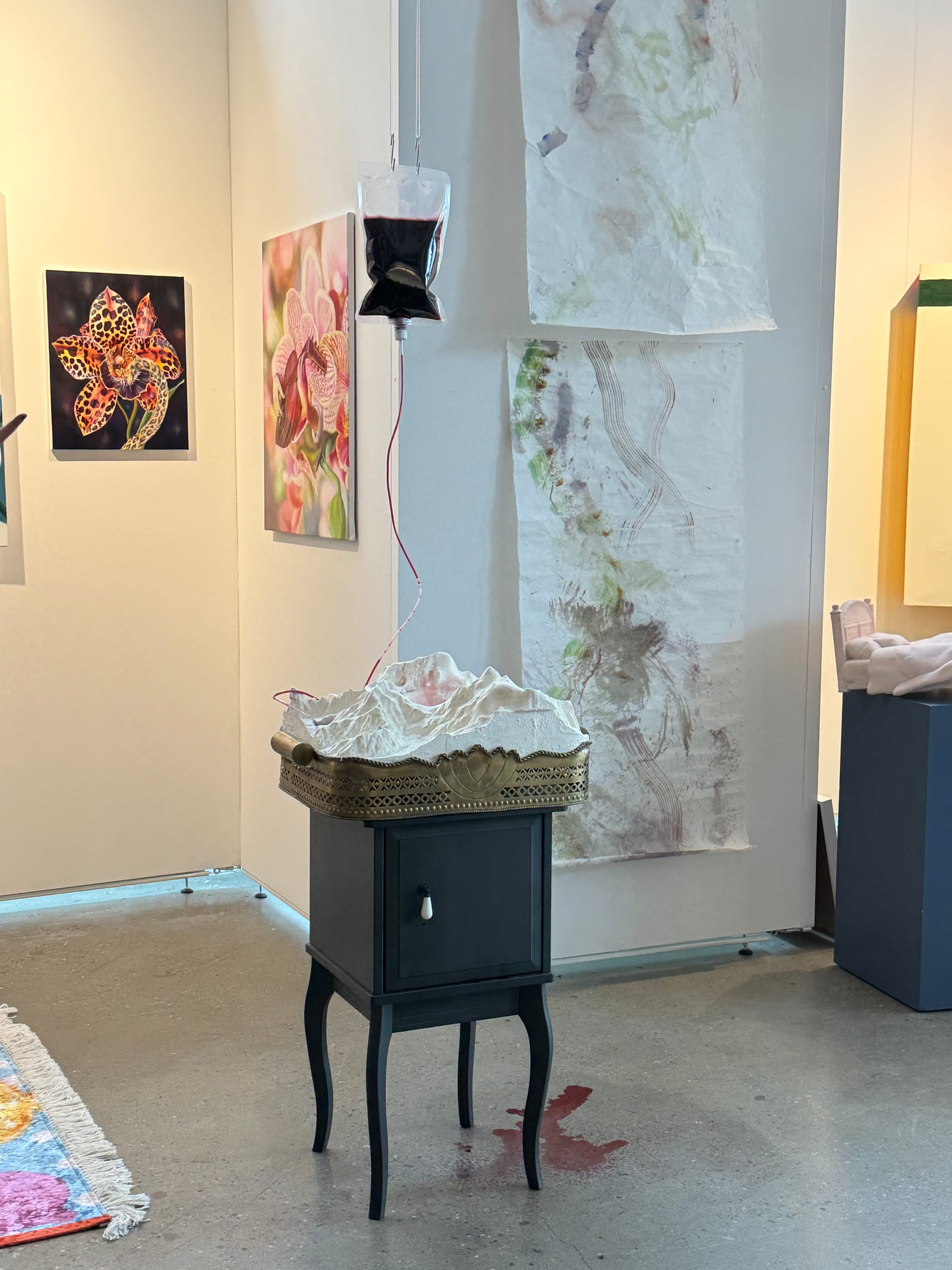
In a more political work at Opening Gallery, an IV-type contraption dripped hibiscus juice over a miniature white model of the Himalayas-born artist Annu Yadav’s installation “This Land is Wounded” (2025), a commentary on the militarized border between India and Pakistan.
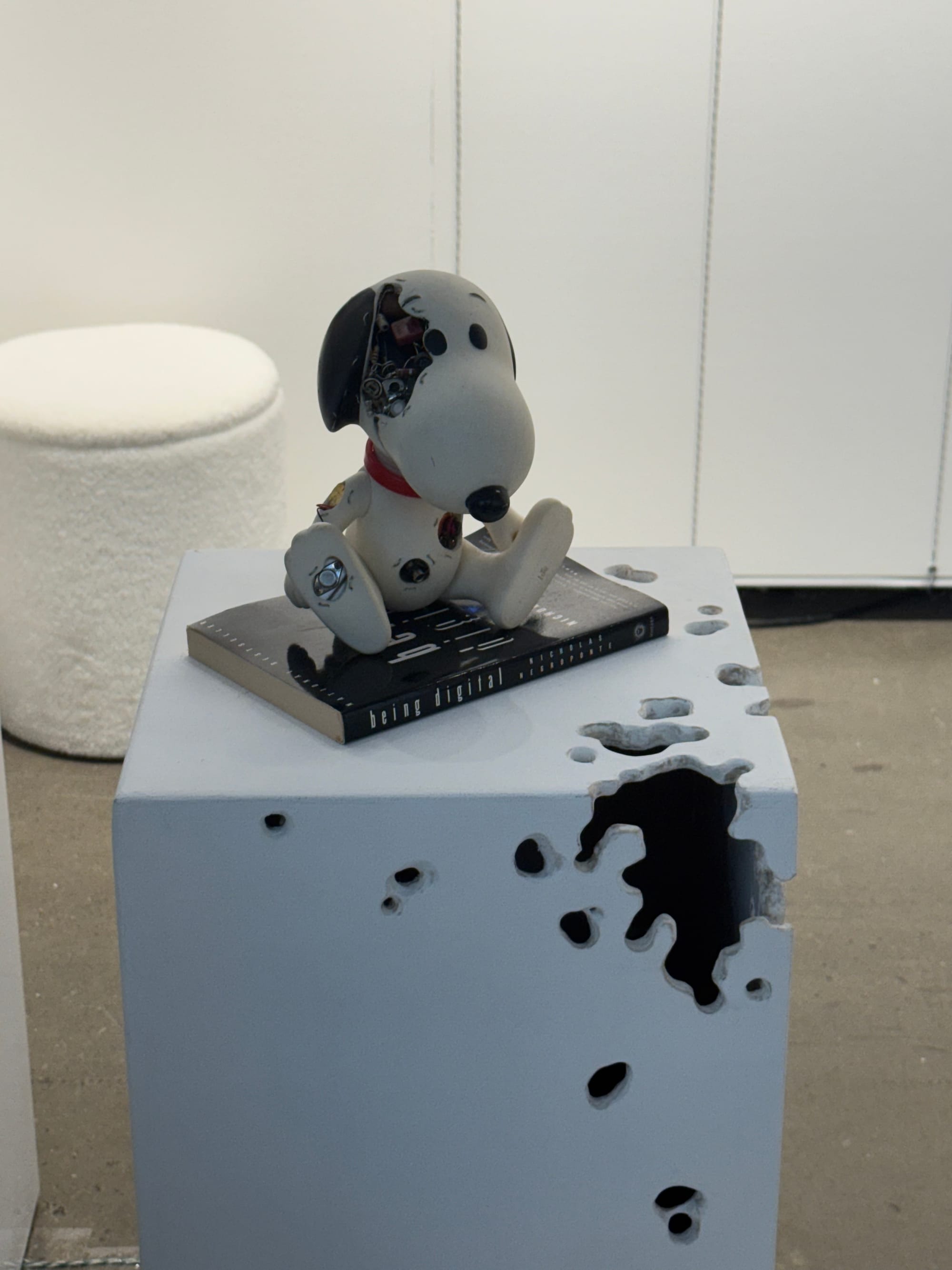
At the nearby Jakupsil’s booth, I found Taezoo Park’s “Hacked Snoopy” (2025), a small-scale sculpture featuring the cartoon dog, embellished with electronic chips, sitting atop a copy of Nicholas Negroponte’s pivotal 1995 book Being Digital.
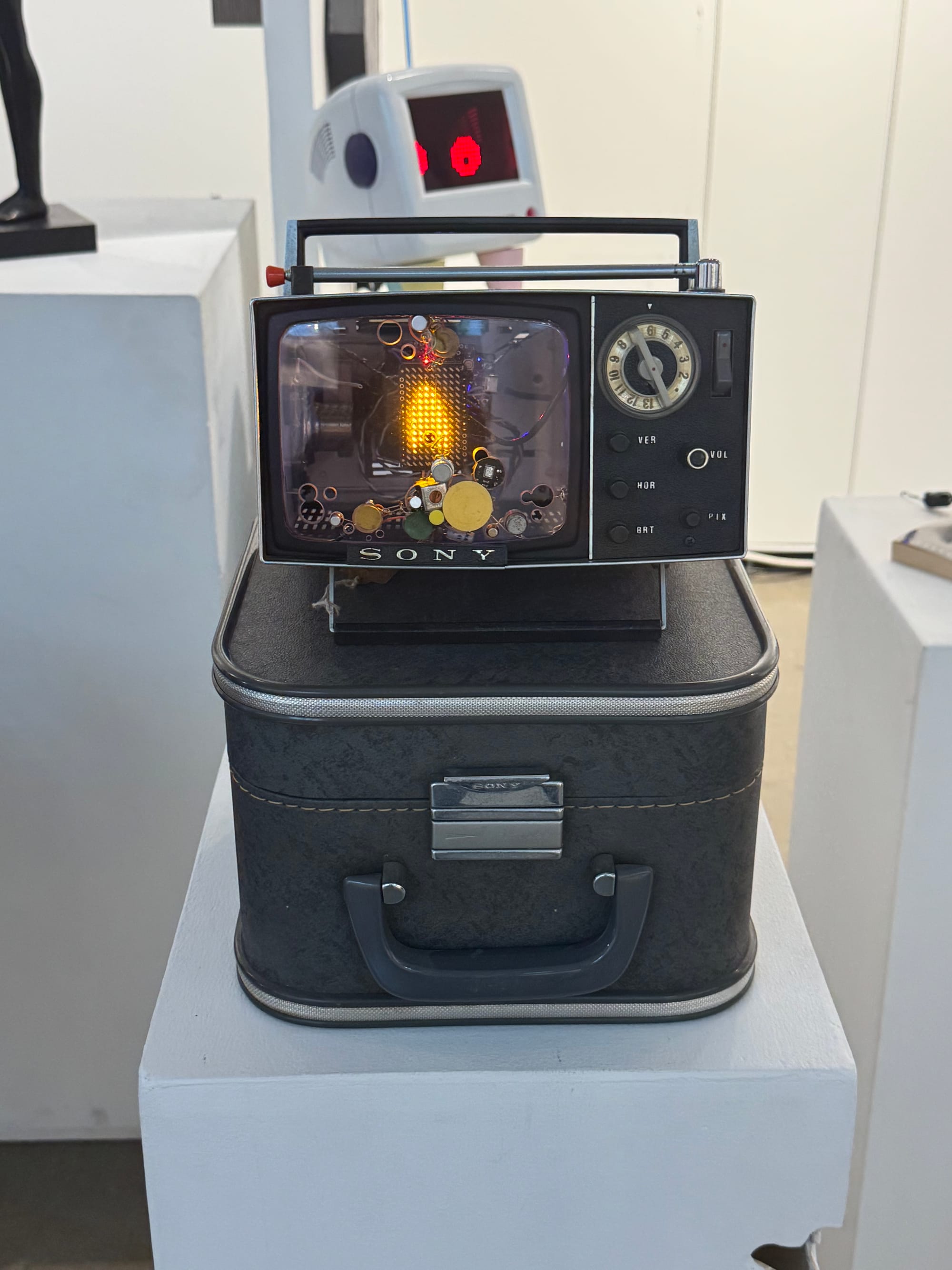
Next to Snoopy, I saw “Yellow Candle with Sony 5-303W” (2024), a vintage television with its naked technological guts exposed to the viewer.
“ These are neglected technologies,” Brett Lee, the gallery’s founder, explained to Hyperallergic. “[Park] is saying that all these digital beings, they live forever; it’s kind of a memorial.”
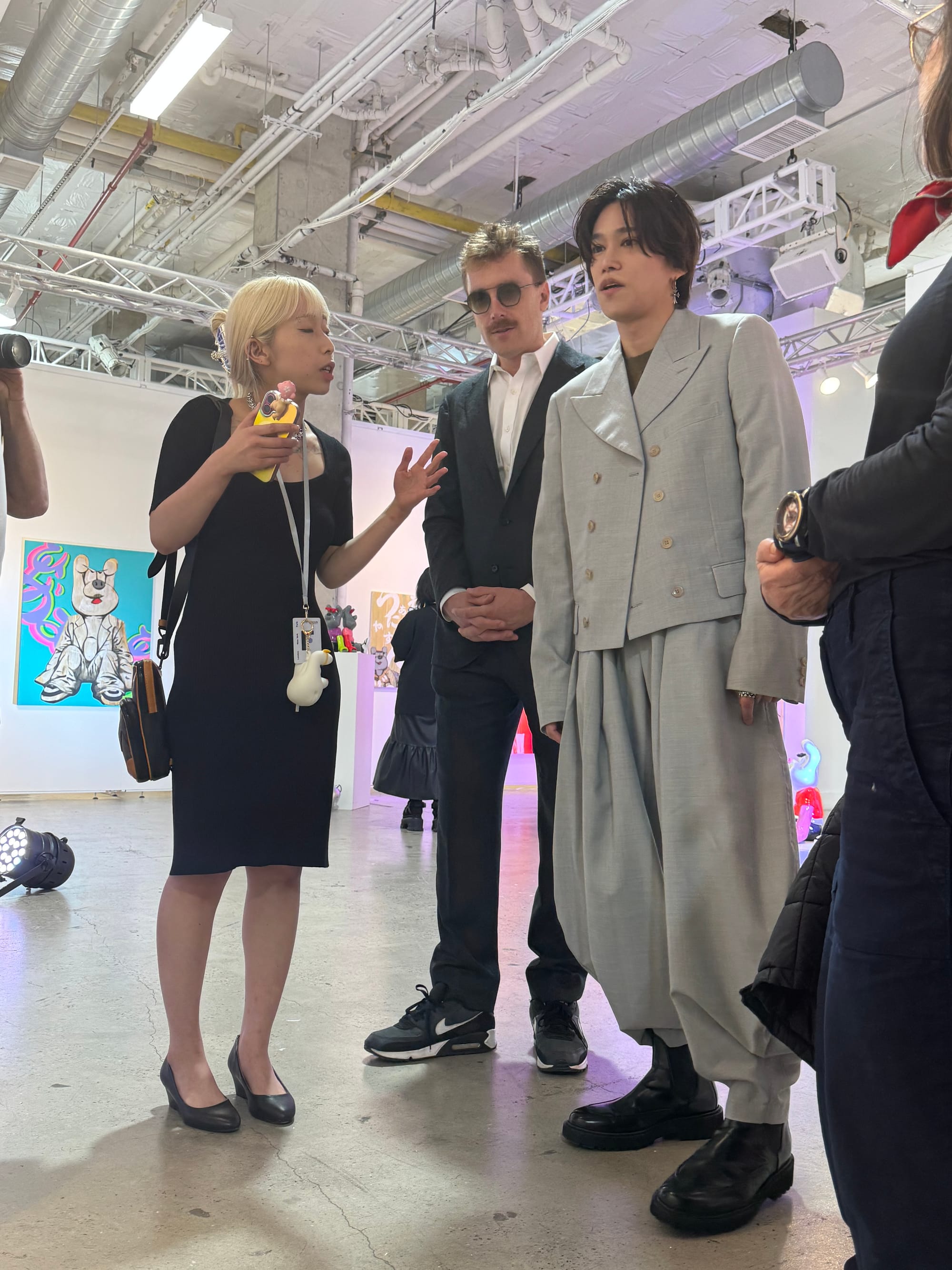
While trying to avoid grating electronic music coming from a flatscreen TV in the middle of the fair, I almost missed Japanese icon Kento Senga, a visual artist and member of the boy group Kis-My-Ft2.
A small crowd gathered around him and his translator as he described FiNGA, his signature character with two fingers for ears. The popstar described sharing his artwork with his grandmother, who suffered from Alzheimer’s, as a way to connect with her.
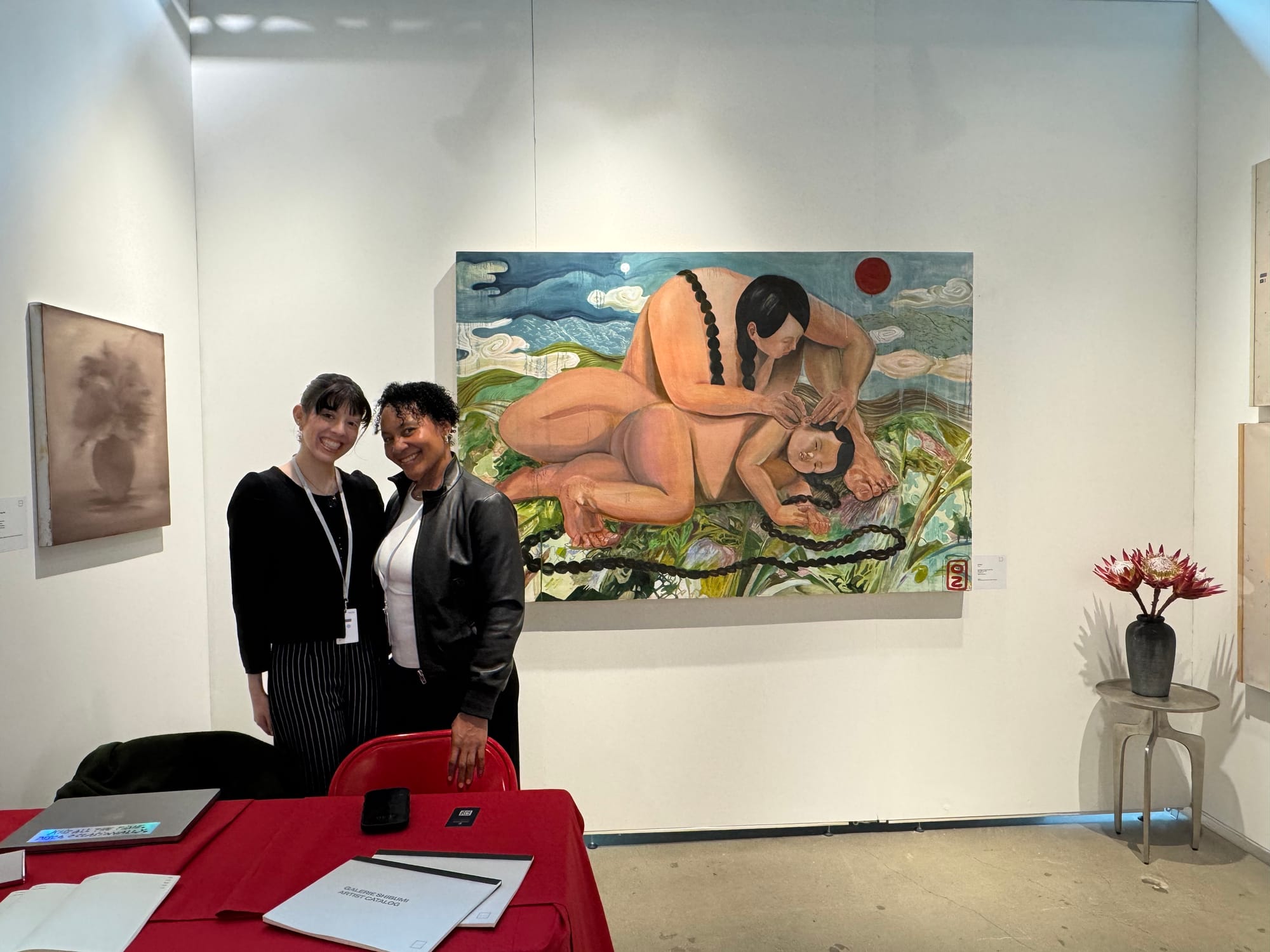
In a quieter part of the venue, I met Folana Miller, director of Galerie Shibumi, seated before Ari Kim’s large-scale painting “Back When the Tiger Smoked” (2025). The oil-and-ink-on-wood composition portrays two long-braided nude figures, the larger of which embraces the other.
”It’s a historical piece that outlines connection,” Miller said of the piece. “It’s obviously a human connection, but these two figures could literally be anything. It could be two men, it could be a mother and a daughter.”
One could not travel far without seeing an oppressive LG screen. Big Tech’s heavy, sponsoring hand was palpable. The further I advanced in the venue, the more skeptical I became of artworks that actively incorporated big screens, rather than critiqued them.
Still, the art on view that honored human or supernatural connections outshone the more technical works as uniquely tender subversions of the very theme that brought them together.
“ ’What is art?’ is always the question that we’re trying to answer,” said Galerie Shibumi manager Marina Zeballos, “and I think art is anything that a human makes.”
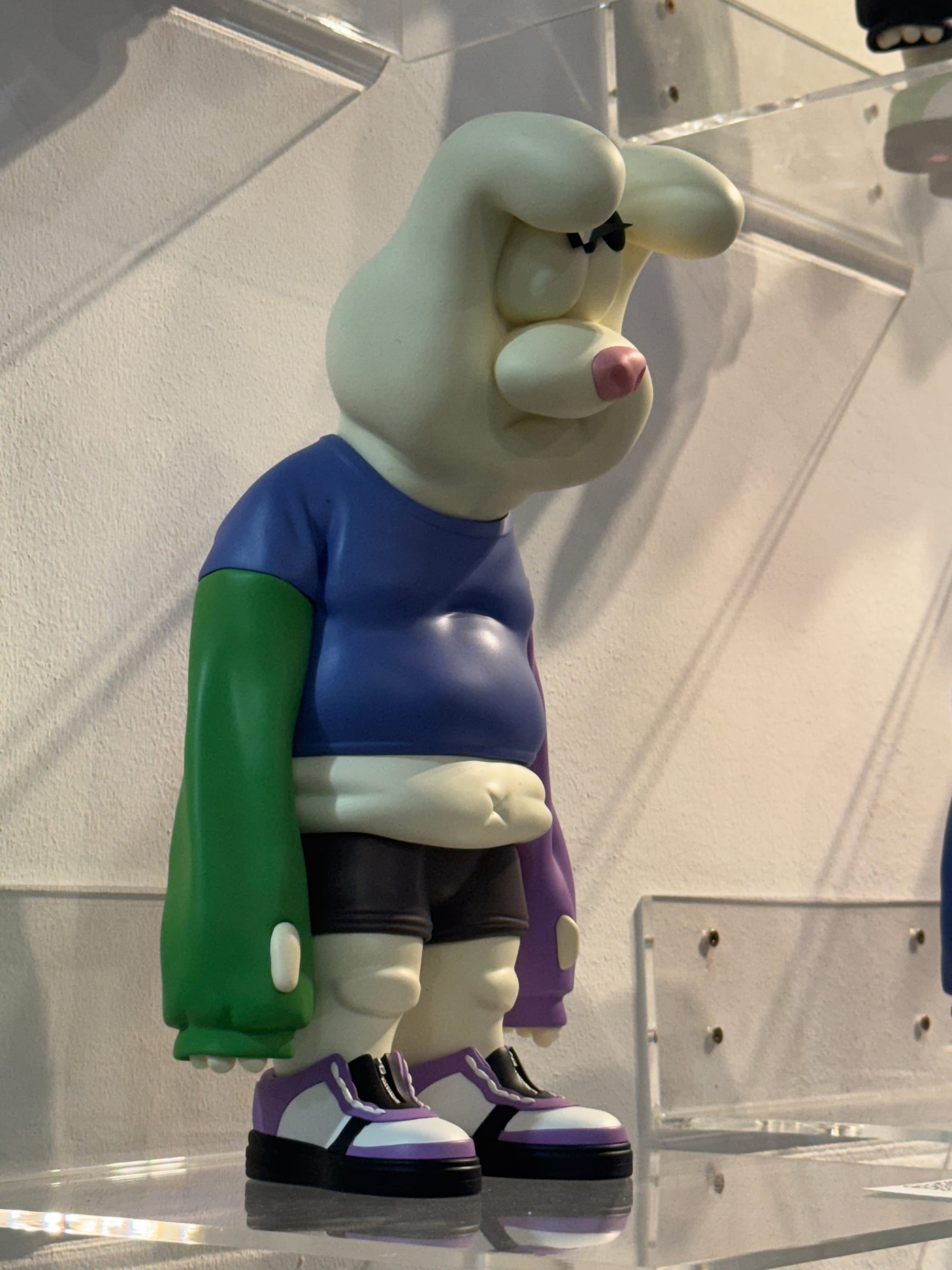
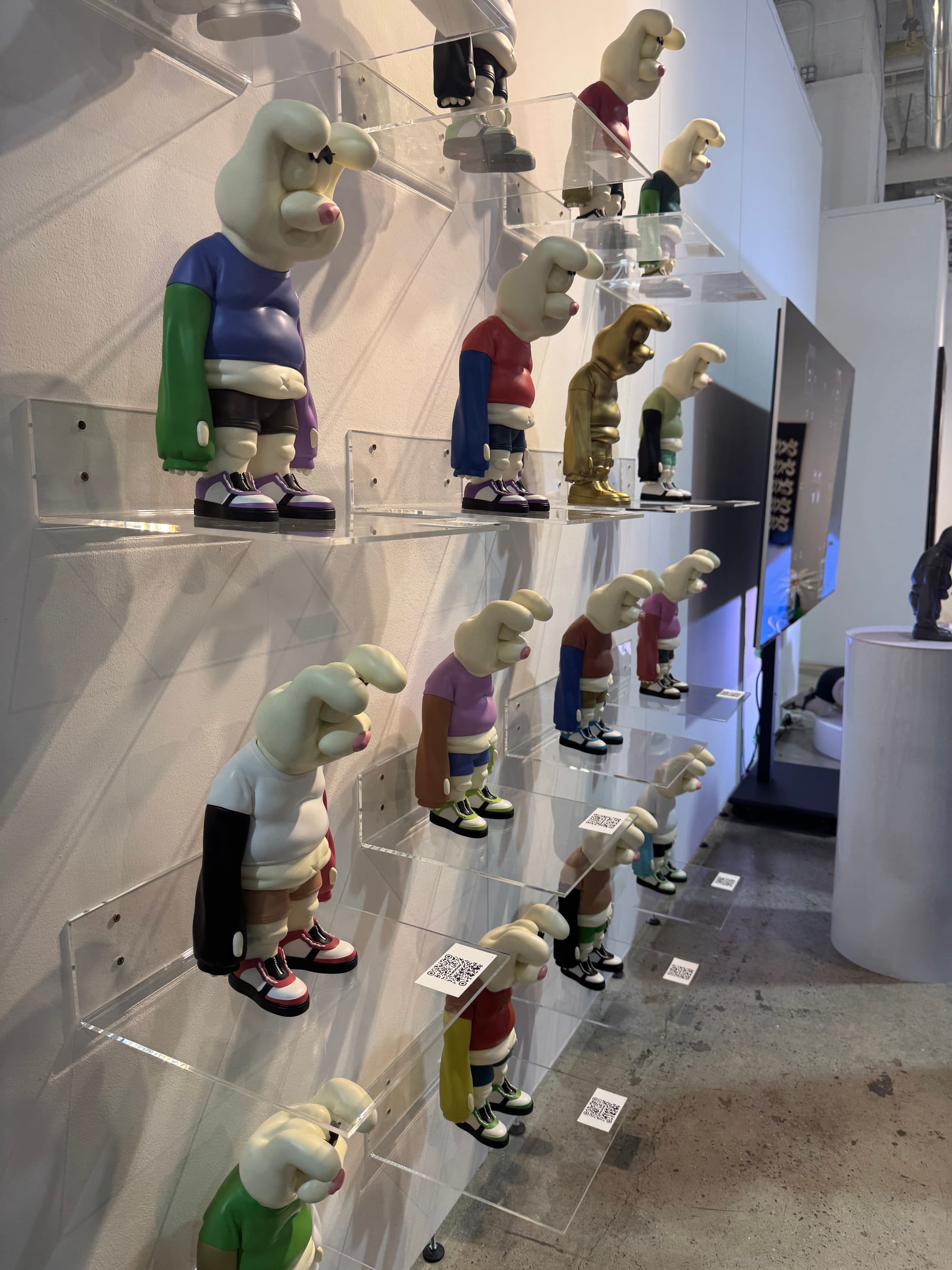
Kento Senga’s FiNGA characters