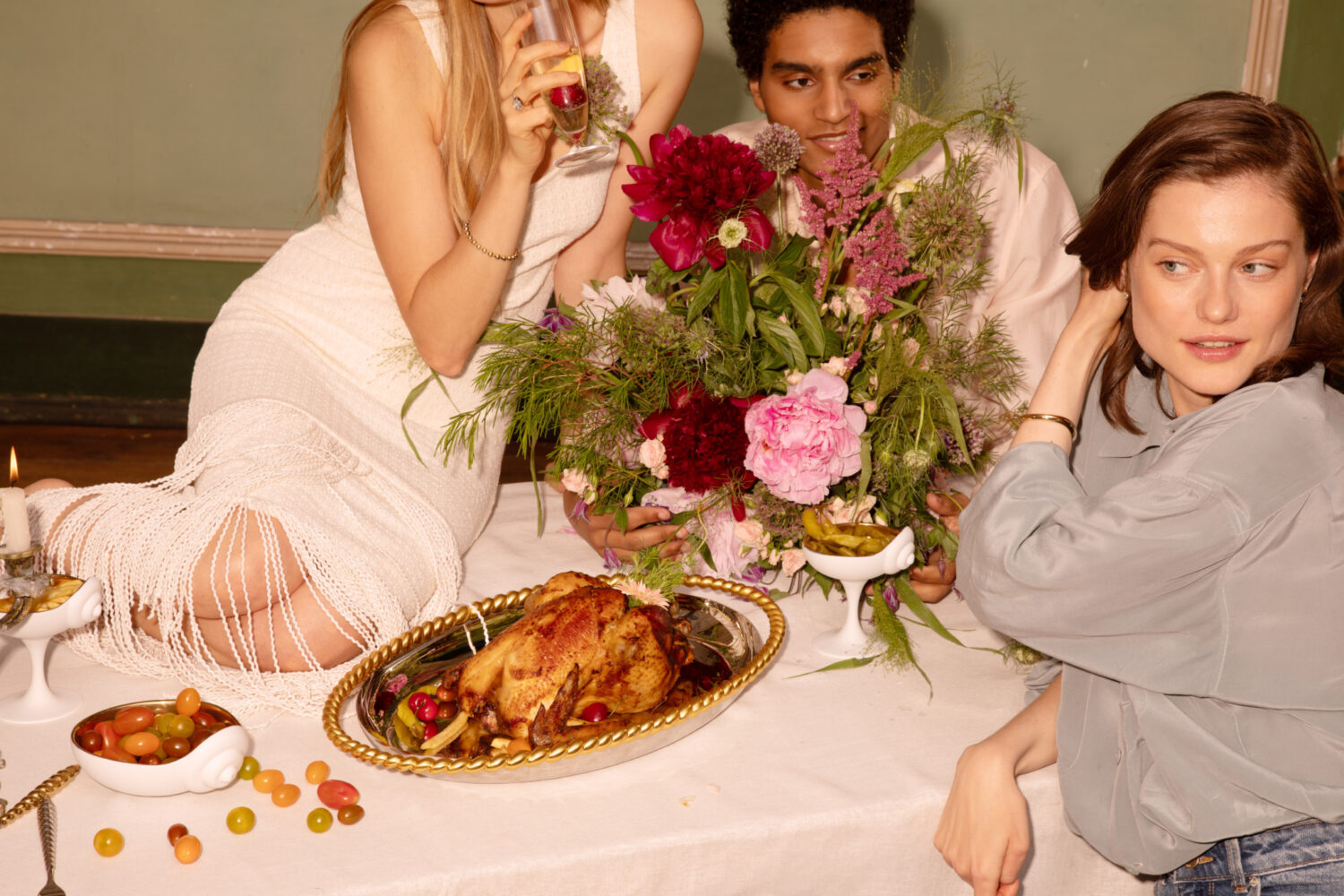
Shells, spirals, and ropes are familiar territory for objects inspired by the sea—but in L’OBJET x Jessica McCormack, the first collaboration between the luxury brand and the London-based jewelry designer, those motifs are treated less as decoration and more as building blocks, translating the precision and detail of fine jewelry into objects for the table and home.
Photography courtesy of L’OBJET
“The danger with shells and spirals is that they can tip into souvenir territory very quickly,” says L’OBJET founder and creative director Elad Yifrach. “What kept us honest was treating them as structure rather than ornament.”
That distinction is on display throughout the collection, which includes champagne and ice buckets, platters, bowls, mirrors, a sculptural caviar dish, and L’OBJET’s first-ever cutlery. Rather than applying marine motifs to otherwise conventional objects, the designers worked them into the forms themselves: a shell becomes a dish or a spiral forms a mirror stand.

Photography courtesy of L’OBJET
“When a form is doing something functional, it earns its place,” Yifrach says. “That’s always been true across L’OBJET’s work, and here, with Jessica, it meant the sea stayed a sensibility rather than a theme.”
The sea was a shared reference point for the two designers, who had admired one another’s work for years before collaborating. McCormack previously explored the subject in her 2023 Beaches jewelry collection, while marine references have long existed within L’OBJET’s own design language. But Yifrach says the collaboration began with something less tangible than a particular motif.

Photography courtesy of L’OBJET
“It started with a feeling, not a sketch—the intimacy and precision that jewelry carries, and how rarely we let objects for the home hold that same quality,” he explains.
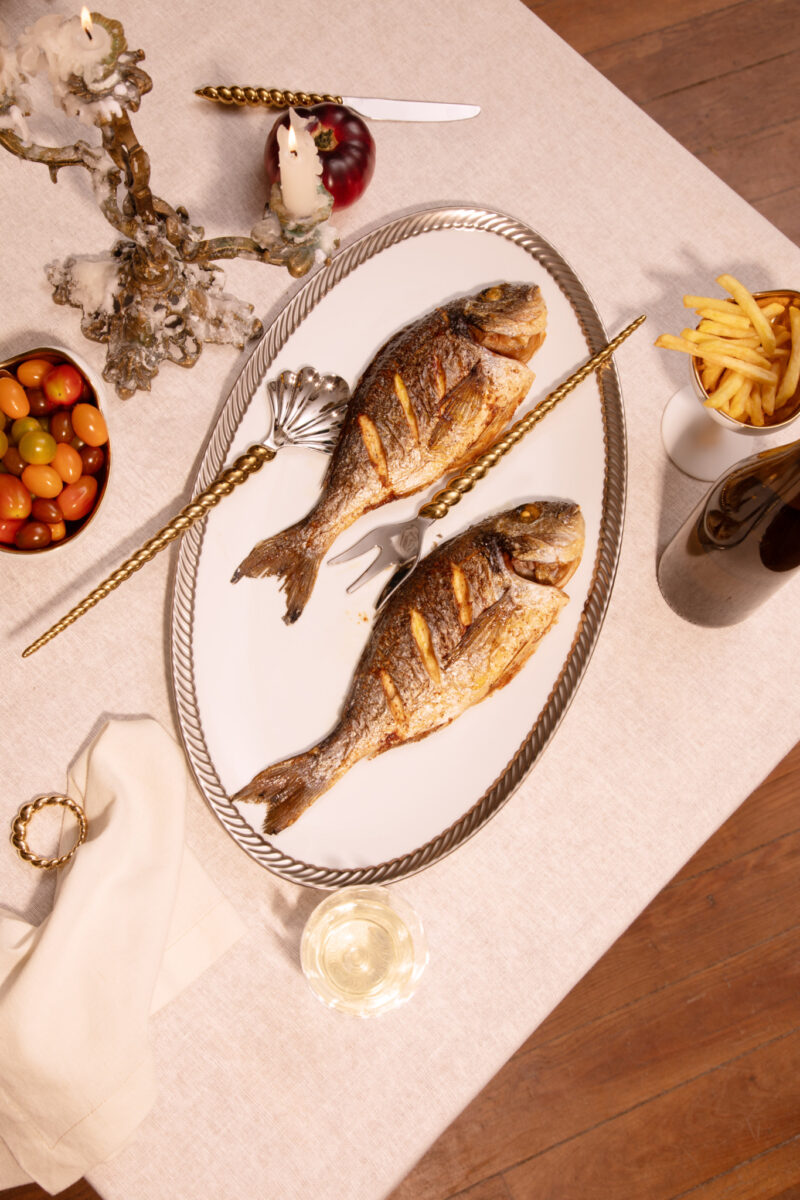
One of the earliest ideas to emerge was a twisted corde motif, borrowed from fine jewelry-making and used as a visual thread across objects with very different functions. Inspired by the way a chain, twist, or clasp can create a continuous line through a piece of jewelry, the detail traces the edge of a platter or forms the handle of an ice bucket.

Photography courtesy of L’OBJET
Materials reinforce that connection to jewelry. Fine bisque porcelain is paired with hand-painted 24K gold, while detailed hand-sculpting and metalwork bring a level of intricacy more commonly associated with something worn on the body than placed on a dining table.
Perhaps the most direct translation comes in the cutlery, a new category for L’OBJET. For Yifrach, working with a jewelry designer made the move feel particularly fitting.

Photography courtesy of L’OBJET
“I didn’t want our first set to be an obvious one—I wanted it to feel like jewelry you’d pick up at the table,” he says. “Flatware is essentially wearable-scale object design: It has to sit beautifully in the hand, catch light the way a ring does, hold detail at a very small size.”
The flatware handles combine several of the collection’s recurring ideas, moving from corde to shell before twisting into a spiral at the tip. It’s in details like these that the collaboration moves beyond simply enlarging McCormack’s jewelry motifs for the home.

Photography courtesy of L’OBJET
“Jewelry has always been a source of inspiration for me—its intimacy, its precision,” Yifrach says. “With Jessica, we wanted to bring that sensibility into the home, to create objects that feel both personal and essential.”
For McCormack, that shift offered a chance to bring familiar ideas into an entirely different context. “This collection brings together some of my favorite design motifs and perfectly translates the intimacy and craftsmanship of jewelry into everyday pieces for the home,” she says.
Across the collection, the scale may change—from a piece of cutlery held between the fingers to a champagne bucket placed at the center of a table—but the attention remains on the details, allowing shells, spirals, and ropes to become more than familiar symbols of the sea.

Photography courtesy of L’OBJET
Editorial Transparency: This article was developed with the assistance of AI tools, which may have been used for research, outlining, editing, or copy refinement. Reporting, fact-checking, and editorial decisions were made by the Design Milk editorial team.