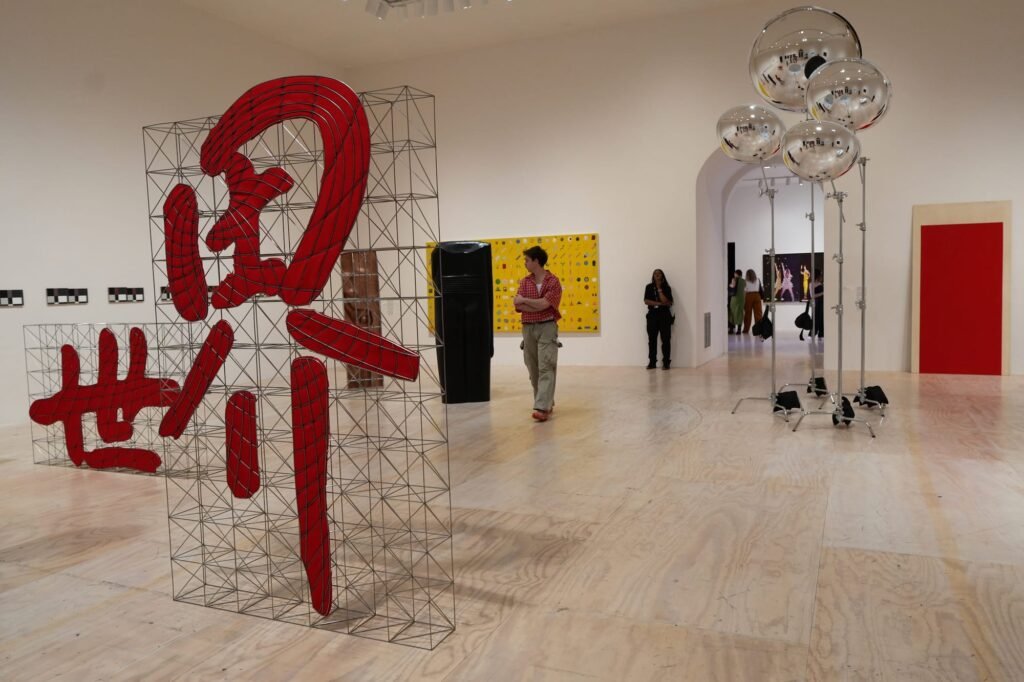
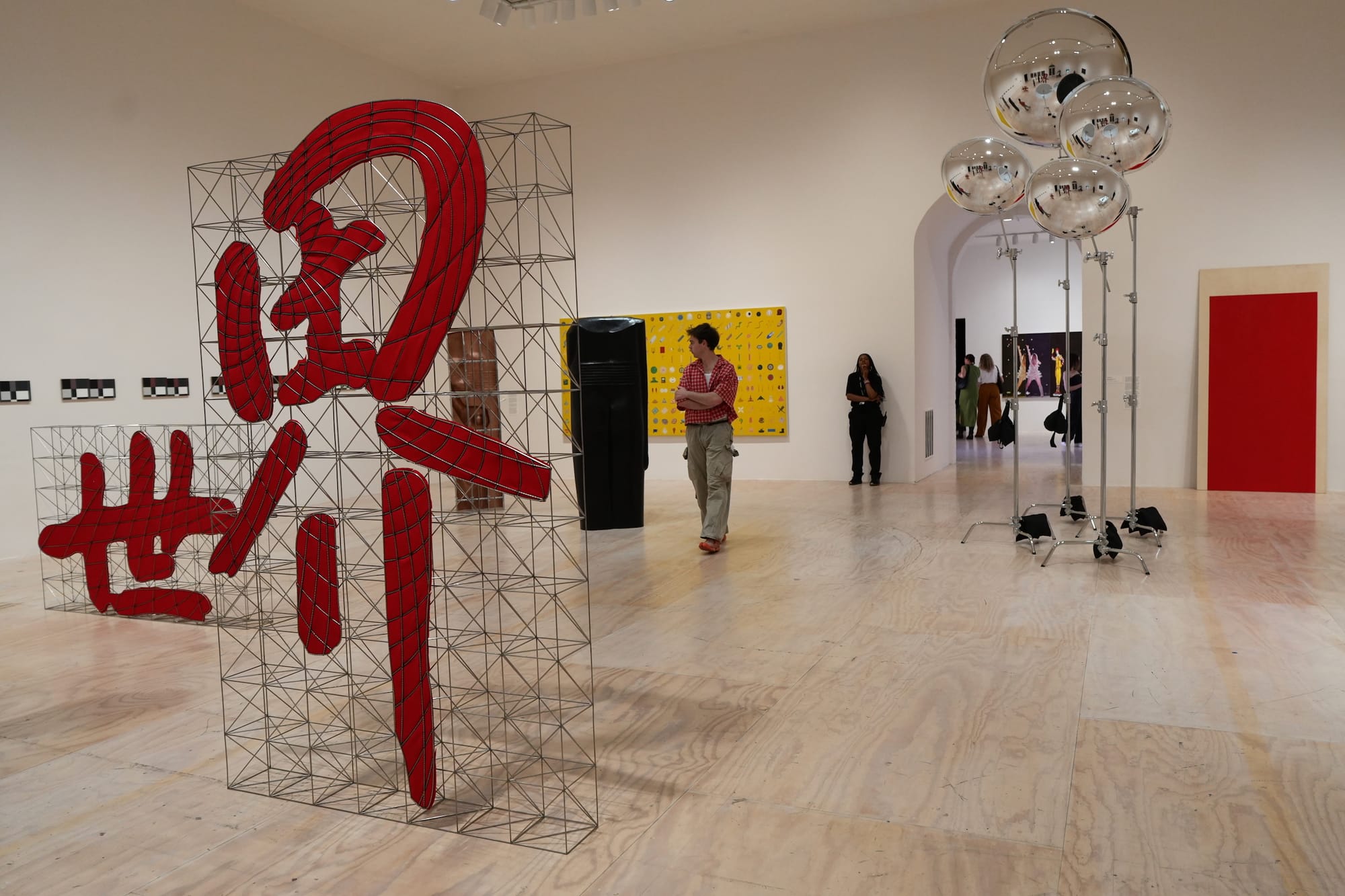
Yesterday, on a gorgeous, unseasonably hot spring afternoon, a squad of us descended on MoMA PS1 in Queens for the press preview of Greater New York, which opens today, April 16. A survey of artists working and living in New York City, the quinquennial (that’s every five years) is back for the sixth time since its inception in 2000 — just in time for the museum’s 50th anniversary.
This iteration includes the work of more than 50 artists who are currently in what the museum calls the “formative years of their career.” It’s a snapshot not only of their individual trajectories, but of our great city as it continues to evolve in a time of deep anxiety and cautious hope. Read some of our first impressions of Greater New York 2026 below.
Hrag Vartanian, editor-at-large
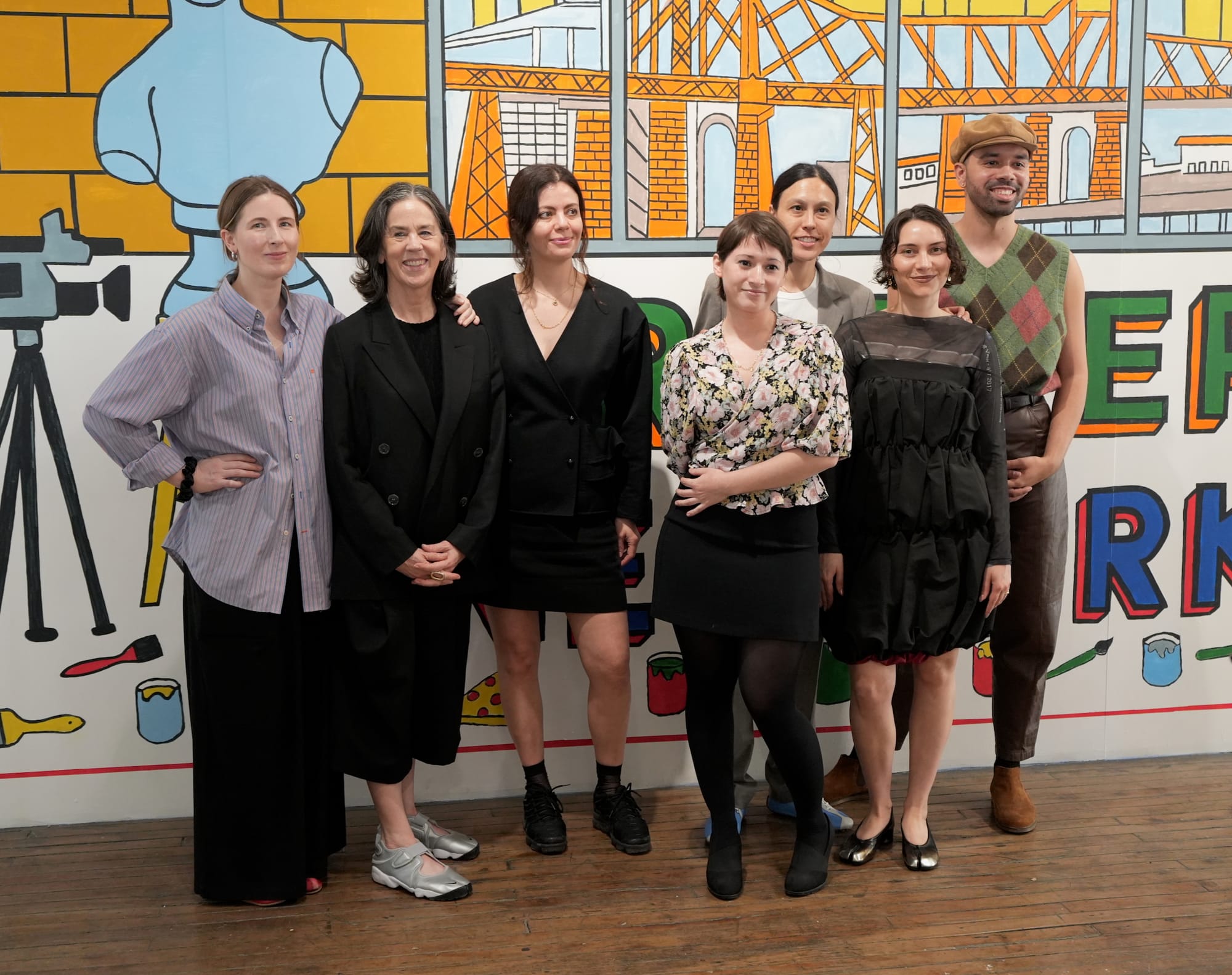
I thought the curators of Greater New York really captured the energy of the city well — not the out-of-towner’s New York with its glossy surfaces, brands, and trendy fare, but the gritty New York that’s always in the process of formation, that rejects surface in favor of rawness. They really got it. This is a city that is ugly, stunning, energized, and gutting — all these things at once, and no one ever gets the same city. Like all great metropolises throughout history, NYC is too many things for any one mind to comprehend.
Connie Butler, Ruba Katrib, and their team understood that, and they even delivered an optimistic take on this moment. I keep wondering whether the success stems from the show being curated in-house: We didn’t get an outside curator trying to prove themselves; instead we got curators who clearly care about the place they live.
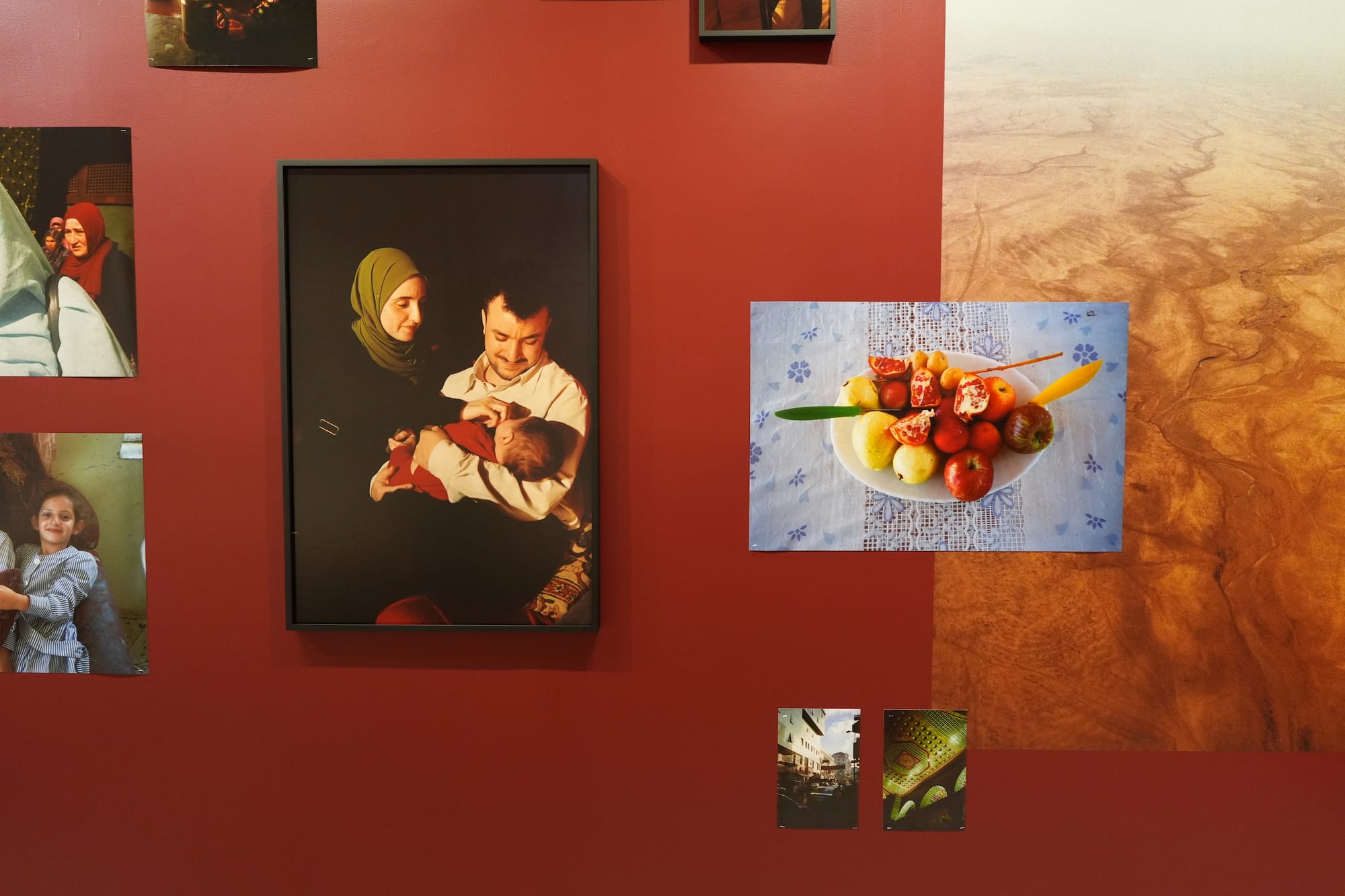
I enjoyed the varied registers of work on display, and as a veteran art viewer I still found things that pushed me toward new ways of thinking about art. This wasn’t a market-friendly show — it poked its fingers into many things, and that was welcome. It was overall a strong survey for photography, though less so for painting. It was as multicultural and multidimensional as the city itself, and far better than the Whitney Biennial, which felt like work made for conventional art galleries that had strayed into museum space.
The immigrant and migrant dimensions of the art were also very much present, and I loved that — because the assimilationist narrative people often associate with immigration doesn’t really apply here, at least not in NYC. It’s more about recreating and refashioning the world anew, using the dialects and reimaginings that come with the dissonance of migratory experience. Some might mistake this for quoting or citing, but here it runs far deeper: stranger, more confident, and at its best, genuinely generative.
Lisa Yin Zhang, associate editor
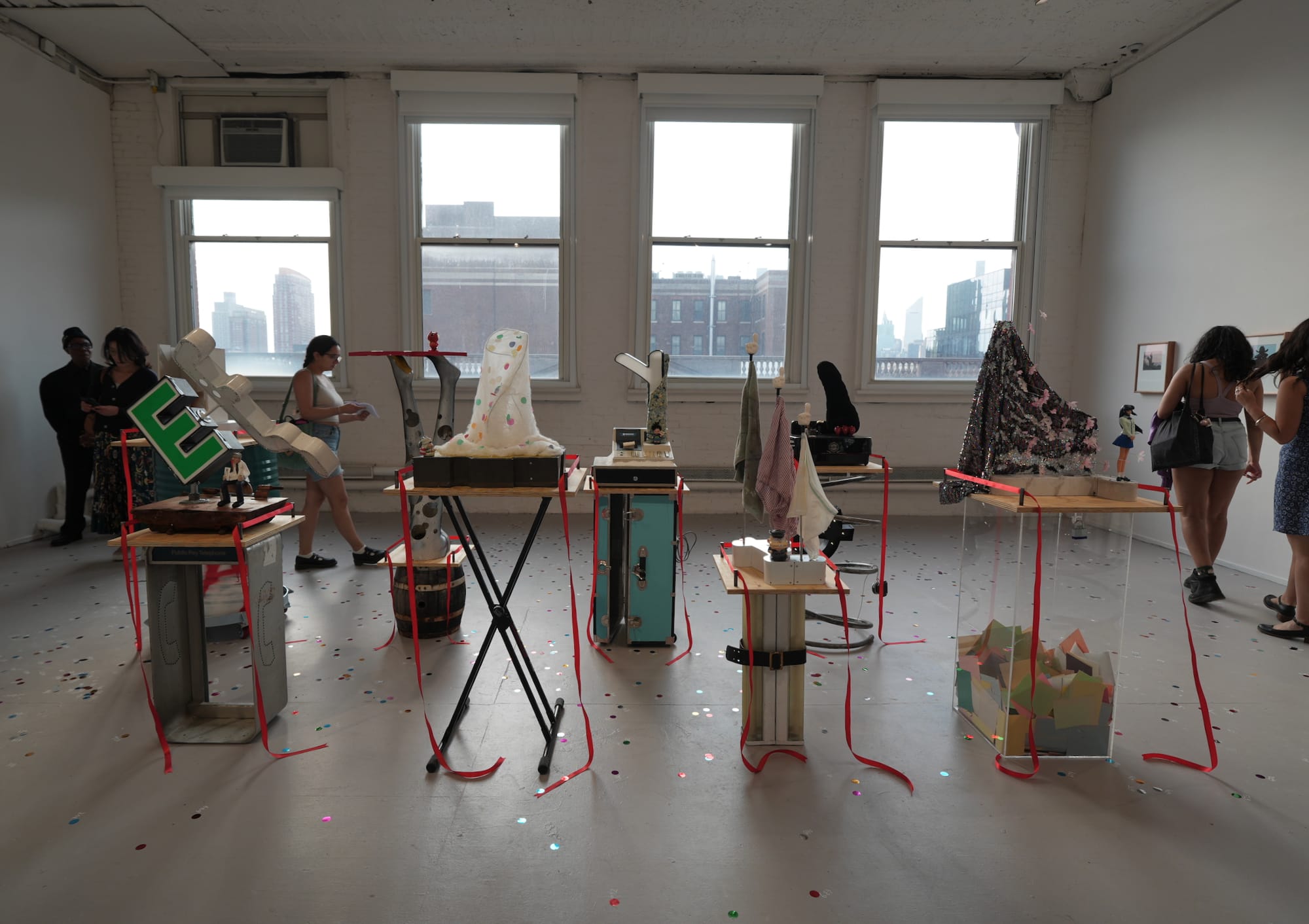
As I was walking through the exhibition, I thought to myself, “Wow. I’m really enjoying this.” Now that I’ve sat with it a little bit, some of its minor flaws are beginning to show, but that doesn’t discount that initial feeling. Rather than the inert, anesthetized vibe of the Whitney Biennial, I feel like this show allowed for a wider range of feeling. It felt human (looking at you, New Museum).
It captured the texture of actually living in New York — in particular, a kind of immigrant aesthetics. And there were some real wackjob pieces that didn’t feel like they were working backward from a critical lens — art that felt like it was made for the love of making, you know? Shout-out to you, Tom Thayer.
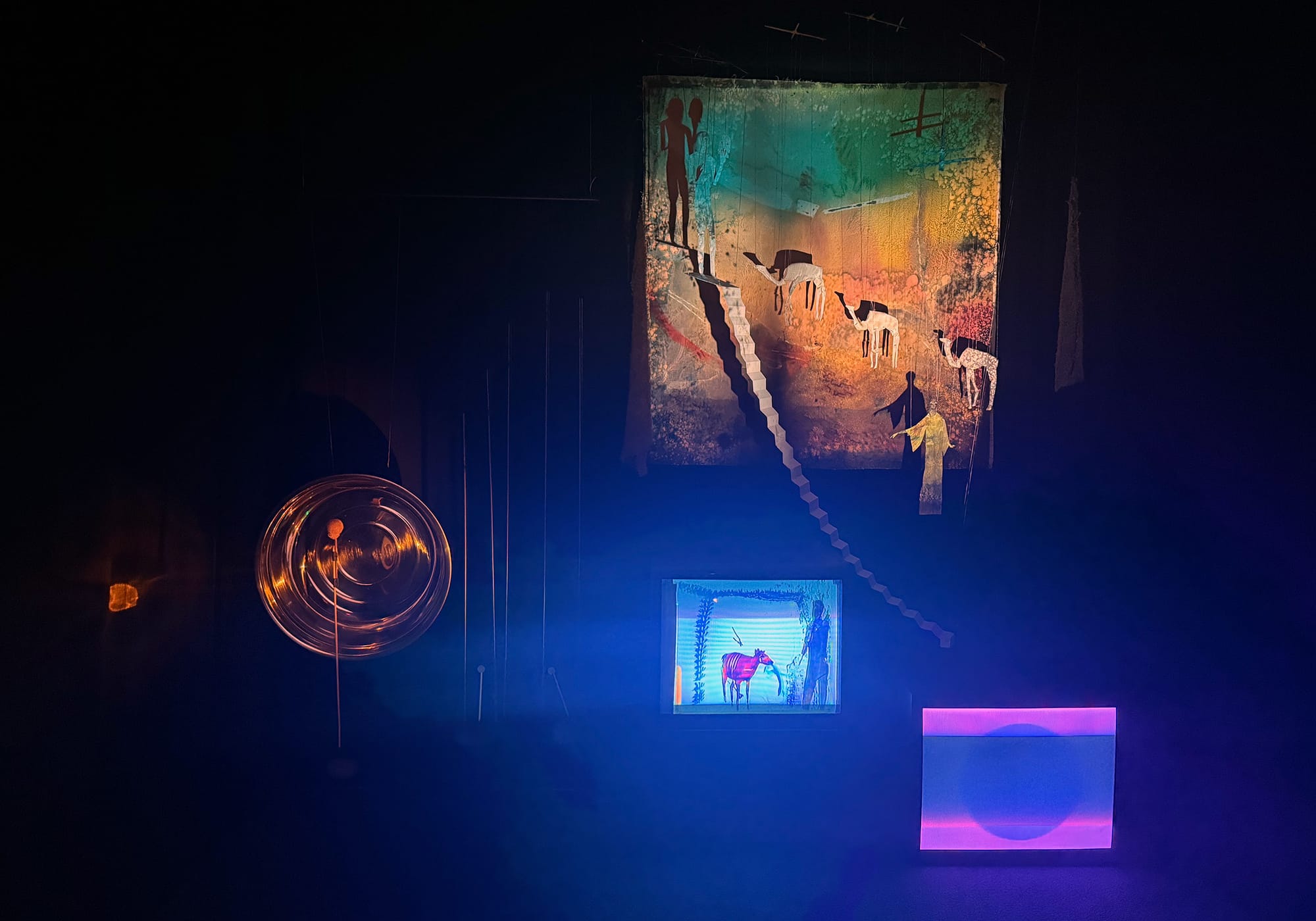
I did take issue with some of the installation — there were works that didn’t belong in the same room, in my opinion. And why split up the works of certain artists? It didn’t give us a fair shot at appreciating them. I generally liked the wall text — one paragraph each! Great! — but it wouldn’t be a museum show if some weren’t just doing too much.
There was a certain scrappiness to this exhibition (or as one or two of us in the office might argue, a shoddiness): work pinned or pasted directly on the walls, a defiantly handmade quality. A couple of us independently arrived at the word “MFA” (in one case, “BFA” 😬). But I don’t wield that as an insult. I’d rather a work try, and fail, than be too afraid to be seen trying in the first place. This is New York, now — a work in progress.
Rhea Nayyar, staff writer
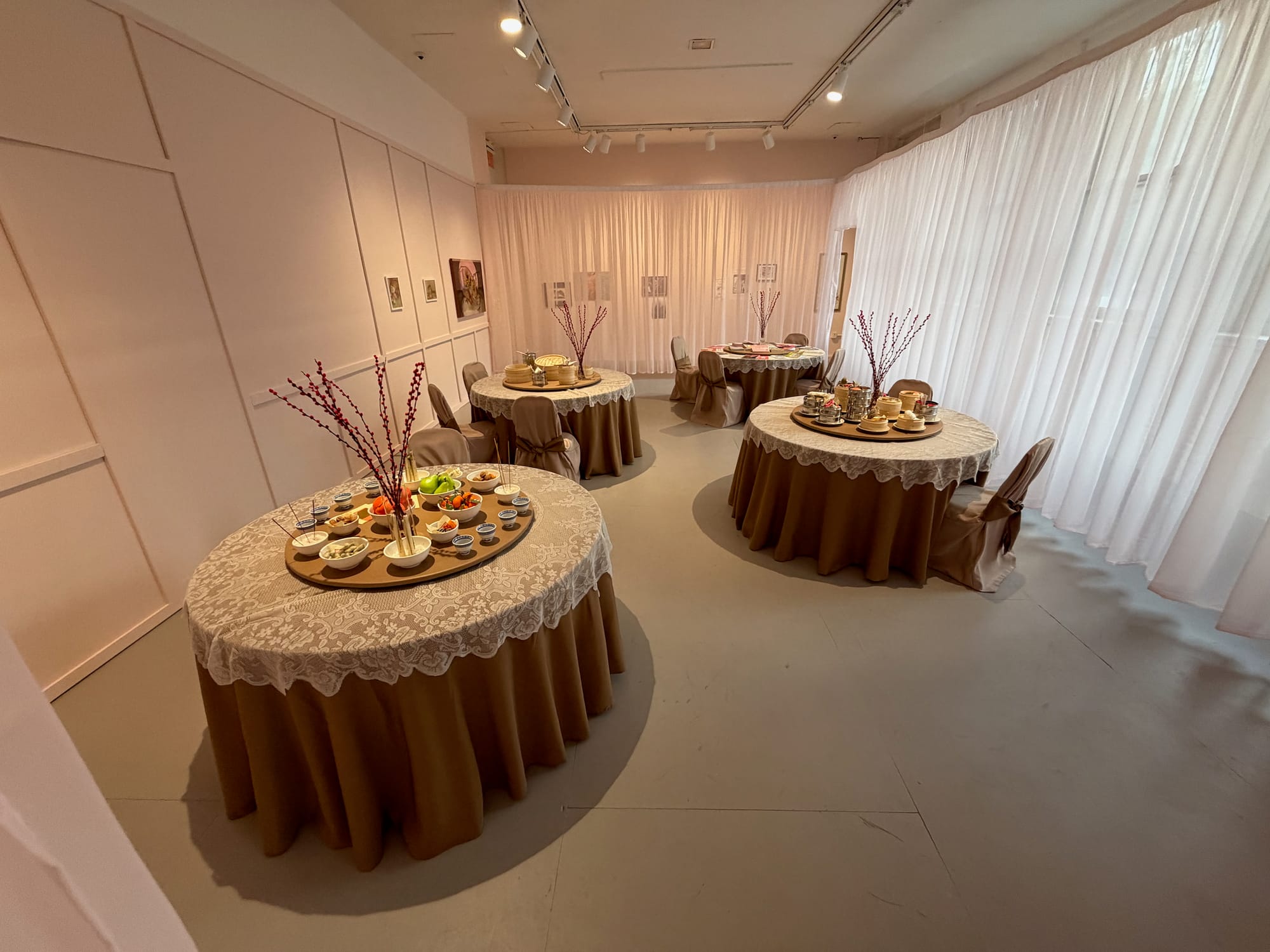
A palpable but grounded optimism for the city’s present and future carried my spirit as I ambled through the show. It kept me curious enough to spend more time than I had on a weeknight after a workday. Greater New York lives up to its name in its devotion to the convergence of visual, material, historical, and diasporic culture that defines life in and around the city.
That being said, I ended up missing a shit-ton of work due to a lack of directional signage across the venue. And I know I’m not the only one either, since my coworkers and I had no idea what each other was talking about during some parts of the post-walkthrough debrief.
I gladly shelved the New York I do know — a minuscule, self-curated environment of familiarity, routine, and convenience — in order to hold the parts of it that I don’t. It was a much-needed reminder to take off my blinders and make more of an effort to explore, research, enjoy, and simply experience such a layered place that I’m lucky enough to call home.