As personal devices continue to advance, more and more consumers are craving the opposite: a way to dumb down their smartphones back to the simple tech of yesteryear.
According to the latest Pew Research surveys, over half of American adults (53%) self-identify as spending too much time on their phone, with one in four adults saying they’re on their smartphones “almost constantly.” Those figures increase among younger demographics, with 70% of Americans ages 18–29 saying they spend too much time on their phone and 42% saying they’re near constantly using it.
Those who feel like they’re overusing their phones aren’t just sitting idly by. Nearly half of American adults (45%) have tried to cut back on their smartphone usage in the past 12 months—but that’s easier said than done. Only a quarter of those who’d tried to cut back on their smartphone screen time said they felt they were extremely or very successful in doing so. With social media and other popular phone apps notorious for keeping users in a dopamine-fueled feedback loop, it’s no surprise that breaking a smartphone habit might require outside intervention.
That’s why a growing cohort of consumers are fighting fire with fire, turning to a trendy device that forces them to get off their phones and be in the moment.
Meet Brick
In 2023, lifelong friends TJ Driver and Zach Nasgowitz co-founded Brick, a tech company with a flagship product designed to break bad smartphone habits once and for all.
Brick looks unassuming: It’s a small, gray plastic cube just two inches long on each side. But it contains NFC technology that connects to an app on users’ phones, where they can pick and choose which apps they want to block themselves from using.
To enable those blocks, users must tap their phones on the Brick device. To turn them off and access the apps, users have to tap Brick again, adding a physical component that makes all the difference when it comes to screen time.
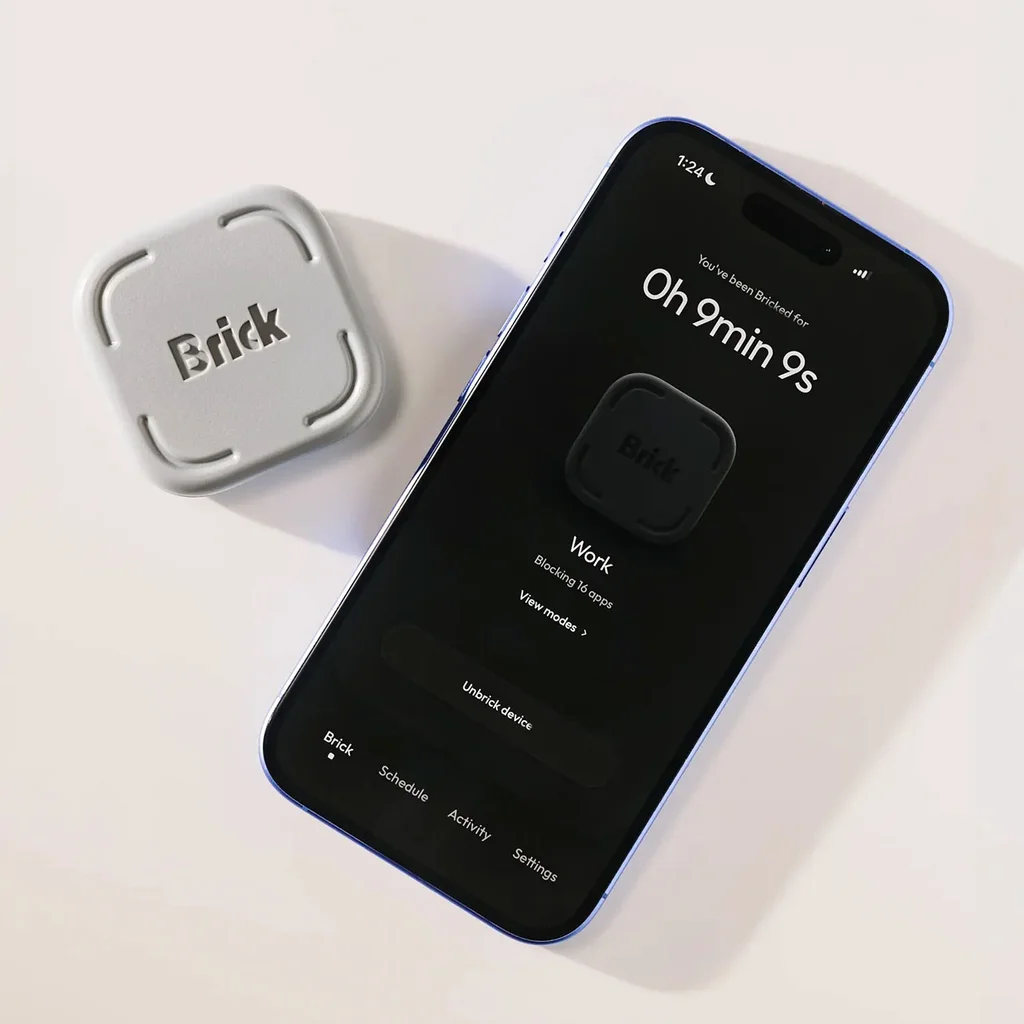
Though smartphones have built-in features to limit screen time, they mean almost nothing in the face of active addition to social media. The iPhone’s Screen Time limits, for example, can be bypassed with the tap of a button that pops up when you try to access a blocked app.
Brick solves that problem by moving the bypass button into the physical world. Even when Brick is nearby, it adds another hurdle to accessing apps that you want to stop yourself from using. And if you leave Brick at home while you’re out of the house, you’re guaranteed to stop yourself from doomscrolling, checking social media, or doing any other activity that would distract from your real-world tasks.
According to an internal survey of more than 3,500 customers, Brick says 95% of its users say they feel less distracted, 93% say they’re more focused, and 99% report reduced screen time. The Brick device retails for $59.
Since its release in 2023, Brick has blown up in popularity. Though the company is tight-lipped on its sales figures, its app is downloaded tens of thousands of times each month according to data from digital market intelligence company SimilarWeb.
Making bricks from scratch
Though Brick is the leader in the dumbing-down space, some savvy social media users have found ways to recreate its effects with easily accessible materials.
Combing NFC stickers (which go for less than $10 on online marketplaces) and free apps like Foqos, some users are DIY-ing their own Brick-esque devices, customized to their aesthetics. One TikTok user showed the process of turning a small wooden applique into her own take on an app-blocker, garnering 13,000 likes. Another user made what she called “the pebble” by surrounding an NFC tag with air-dry clay and paint.
Brick, meanwhile, recently released cases to make their simple gray devices more aesthetically pleasing.