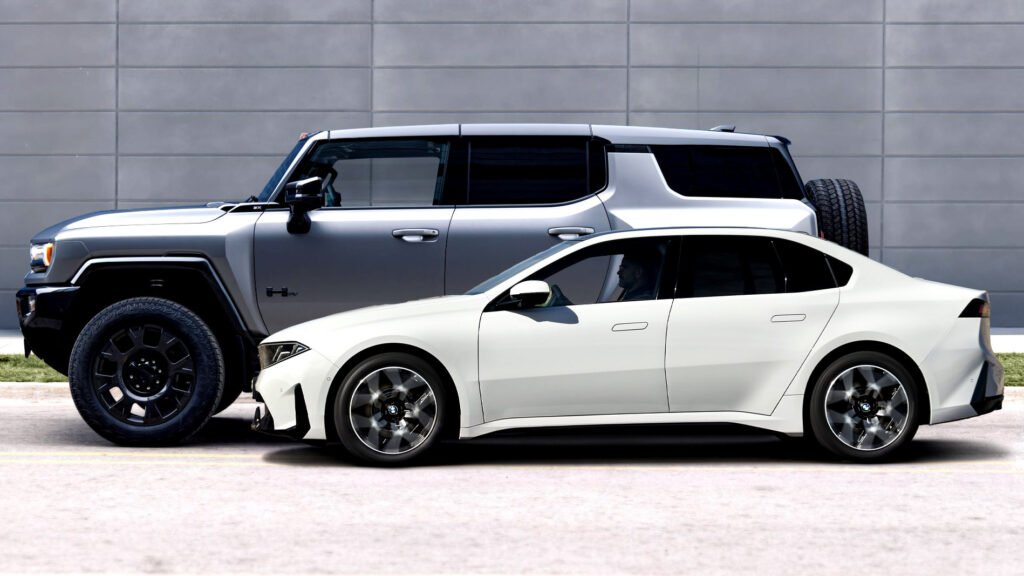
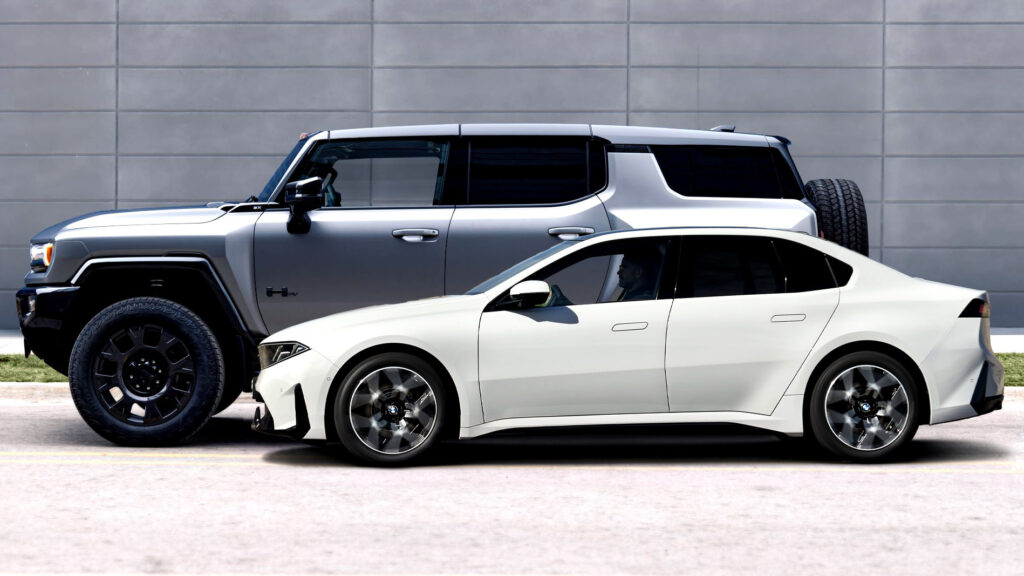
- New cars continue growing longer, wider, taller, and higher off the ground.
- Researchers say larger vehicles could worsen safety and parking shortages.
- The report proposes taxes and regulations aimed at shrinking future vehicles.
It’ll shock nobody to hear that cars are getting bigger every year. Love or hate the trend, a new study says that the extra size comes with some gnarly consequences. Researchers claim that if today’s growth trajectory continues through 2040, cities could lose parking spaces, vulnerable road users could face greater risks, and drivers could ultimately pay more to keep their vehicles moving.
The bigger question is whether policymakers will actually try to put the brakes on car growth before consumers do.
Read: After A Point, Bigger Vehicles Aren’t Safer, But They Could Hurt Others
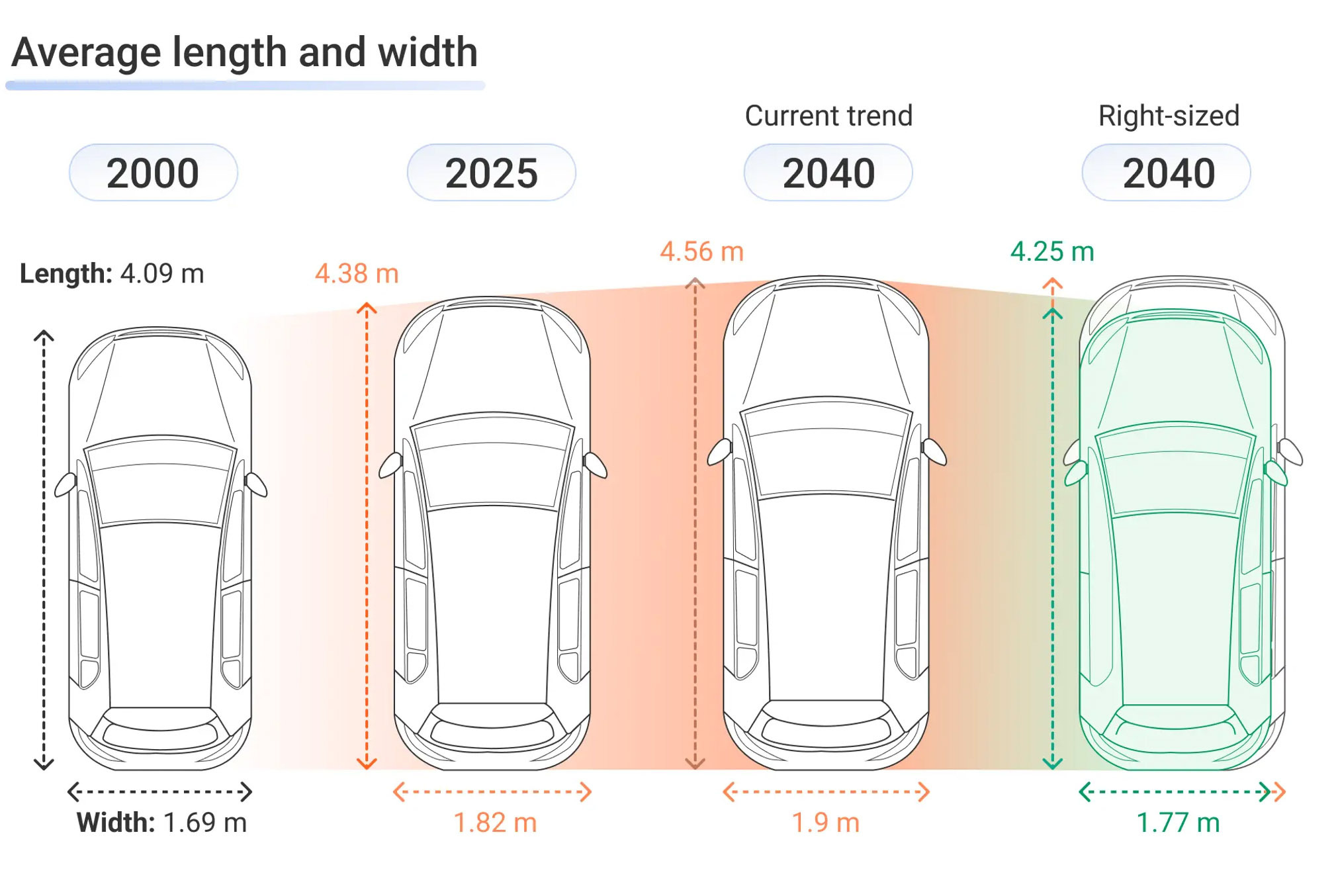
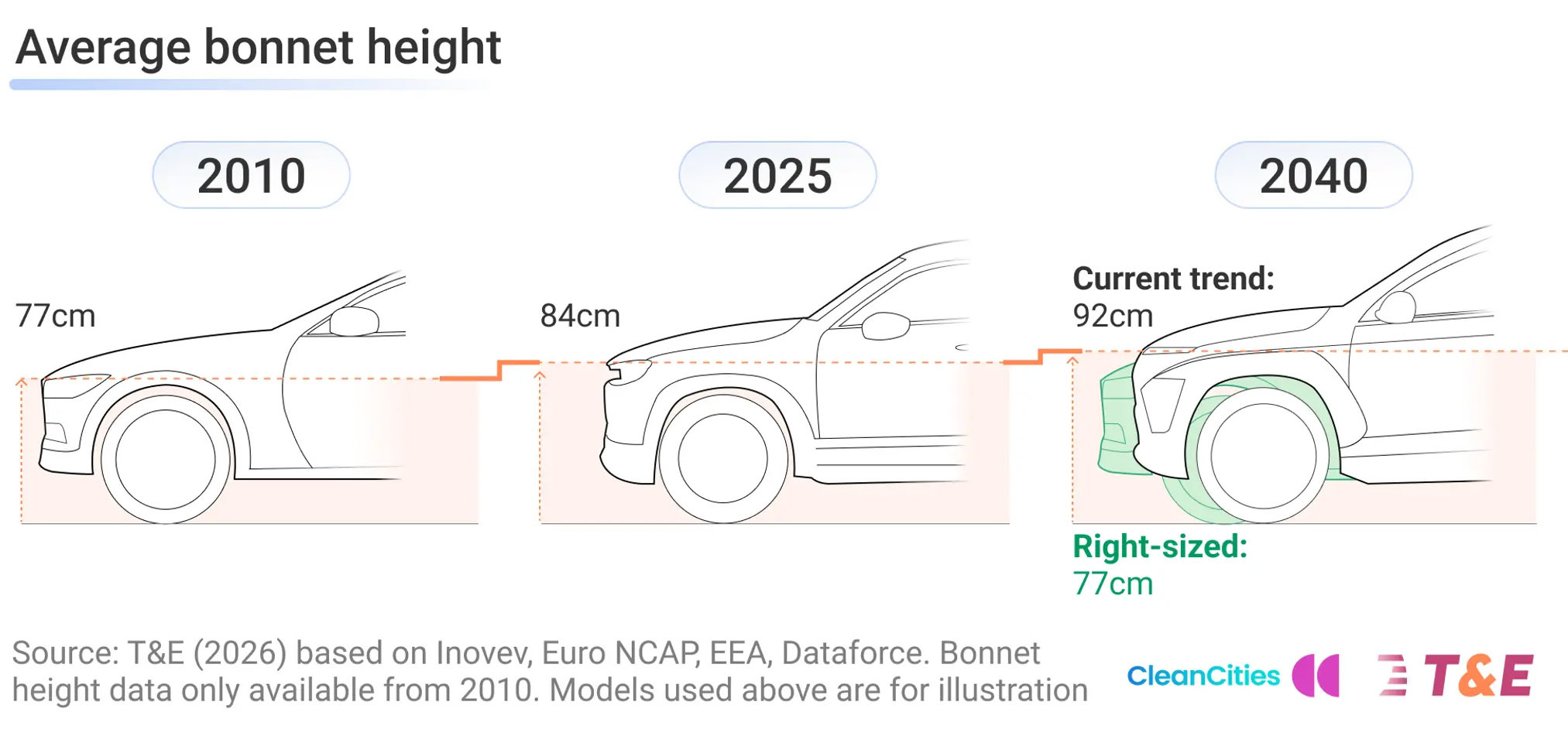
A new report from the Europe’s Transport & Environment (T&E) and Clean Cities examines what it calls “carspreading,” the steady expansion of vehicle dimensions across Europe. According to the study, newly sold cars have grown an average of 1.2 cm (0.47 inches) longer and 0.5 cm (0.2 inches) taller every year, while previous T&E research found widths and bonnet heights have also been increasing by roughly 0.5 cm annually.
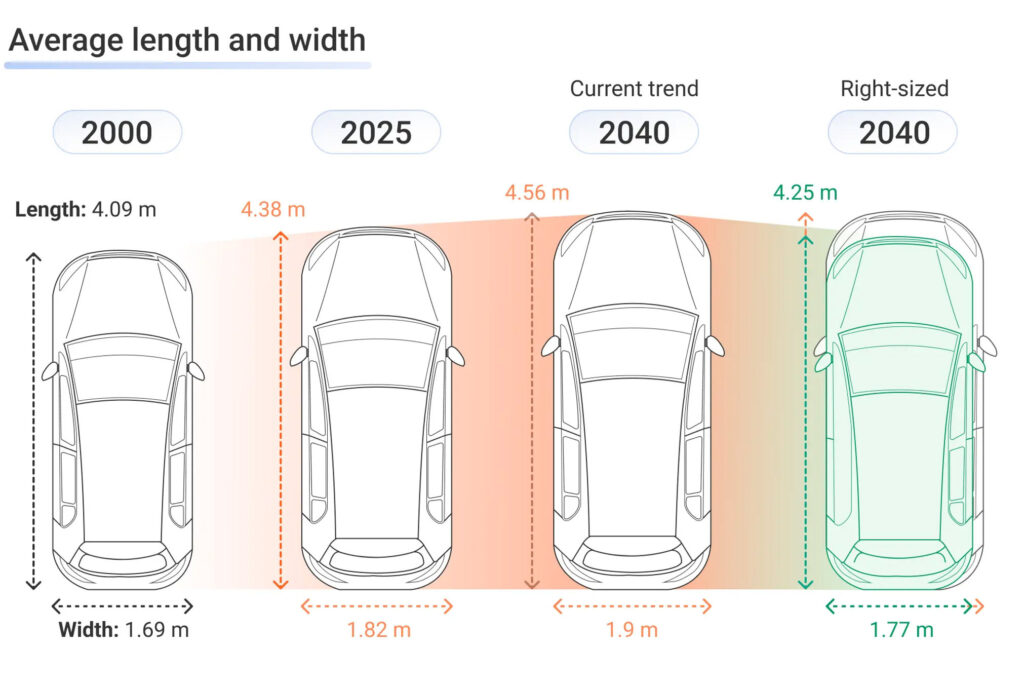
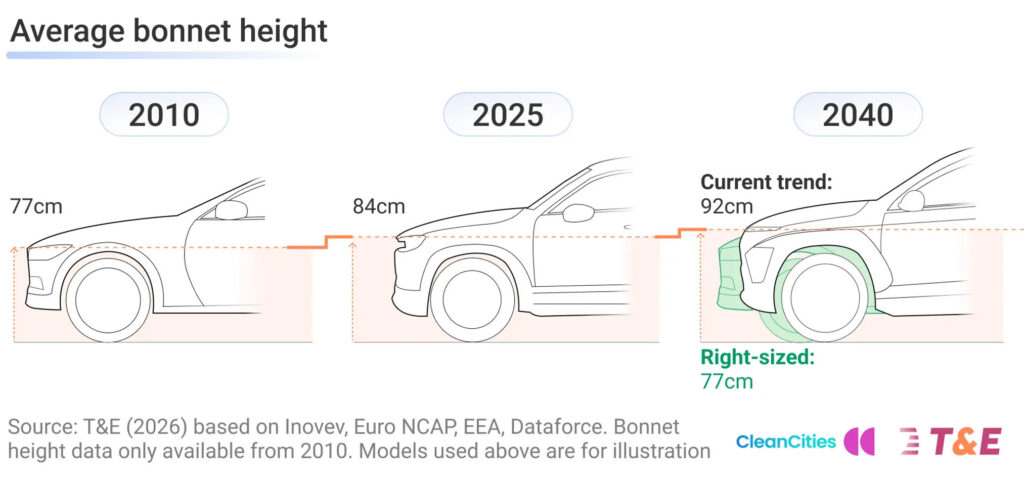
The pattern runs back to 2000, a quarter-century of uninterrupted growth that held steady even as the families buying these cars got smaller.
The report compares two possible futures. In one scenario, automakers continue following current market trends, with larger vehicles and more SUVs making up an increasing share of sales. In the other, policymakers encourage what researchers describe as “right-sizing,” gradually returning average vehicle dimensions to roughly 2010-2015 levels.
The Multi-Dimensional Impact
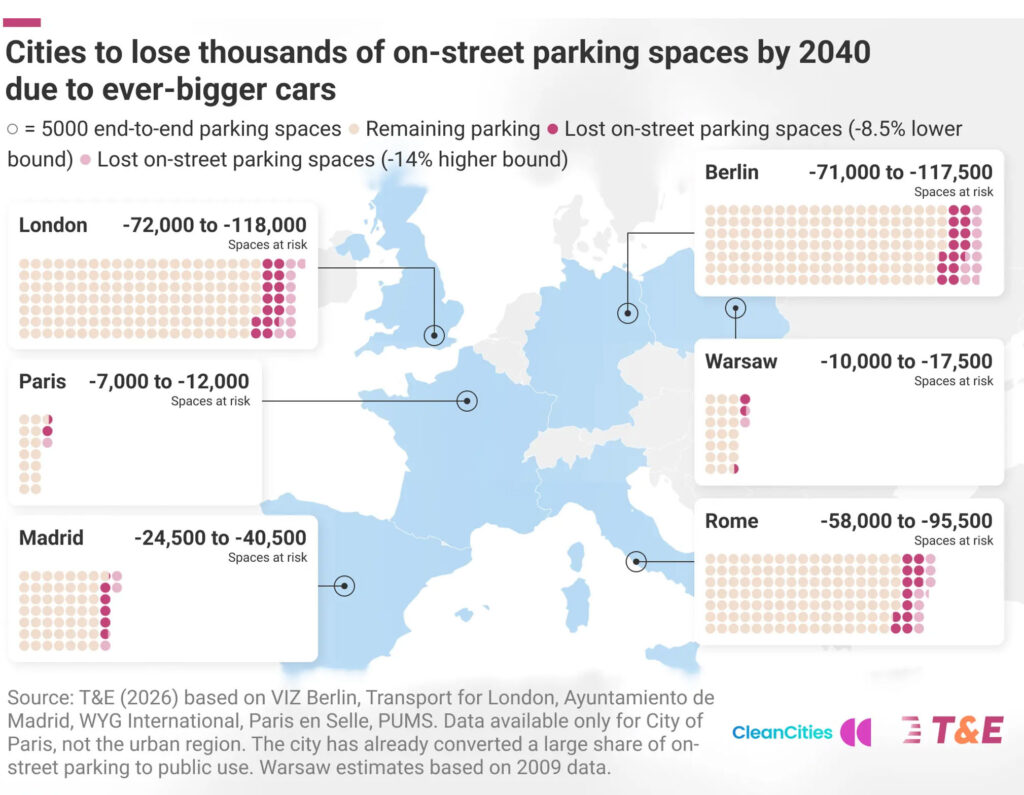
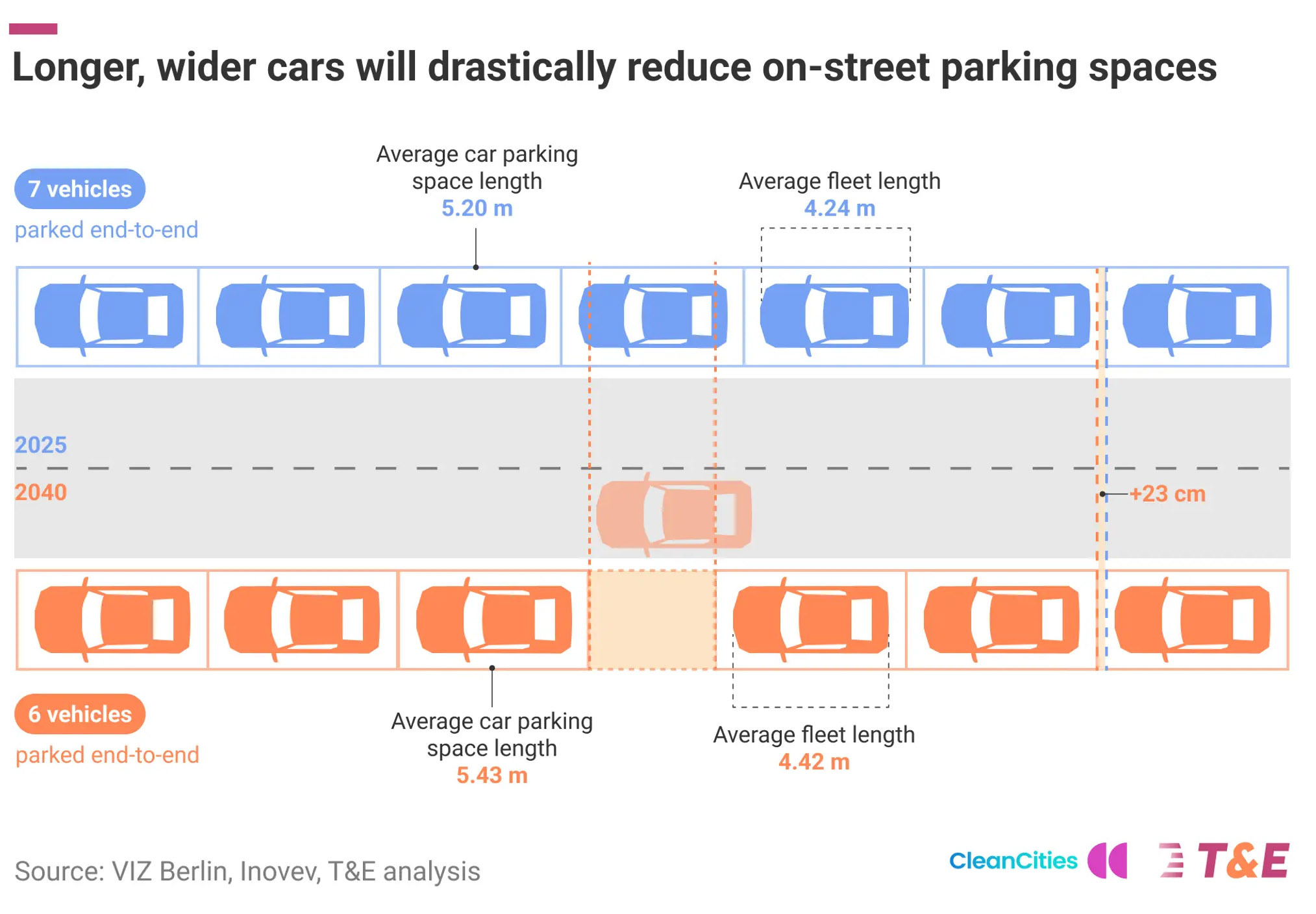
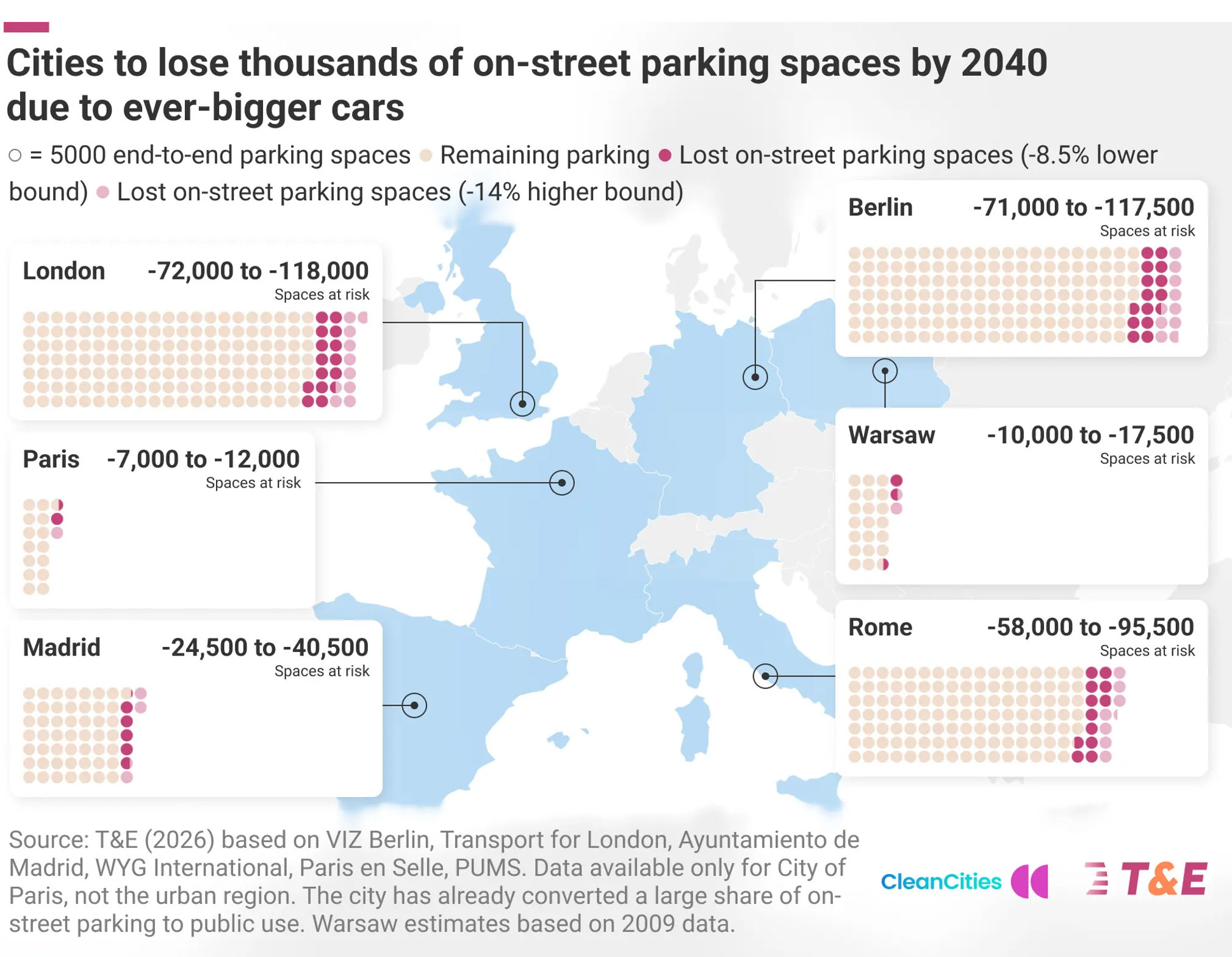
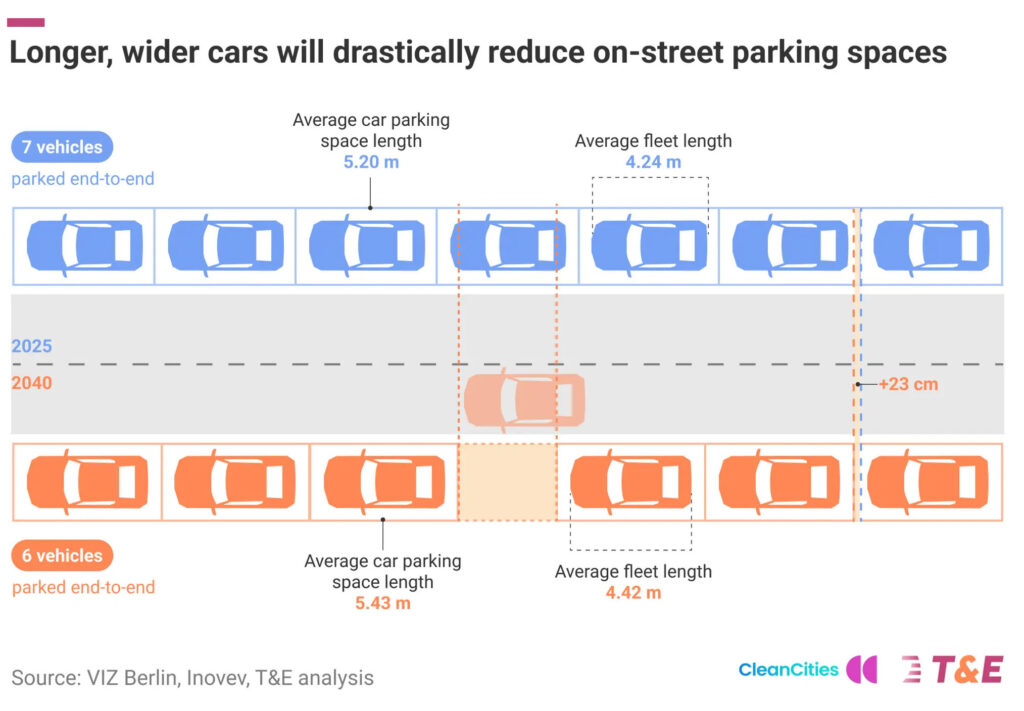
Researchers estimate that if vehicles keep swelling, the fallout will reach well beyond one corner of society. Cities could lose between 8.5 and 14 percent of their on-street parking capacity by 2040. London and Berlin alone are each projected to shed around 100,000 spaces, according to The Guardian. In some places, that’s not a giant concern, but in densely packed cities, it’s a major issue worldwide.
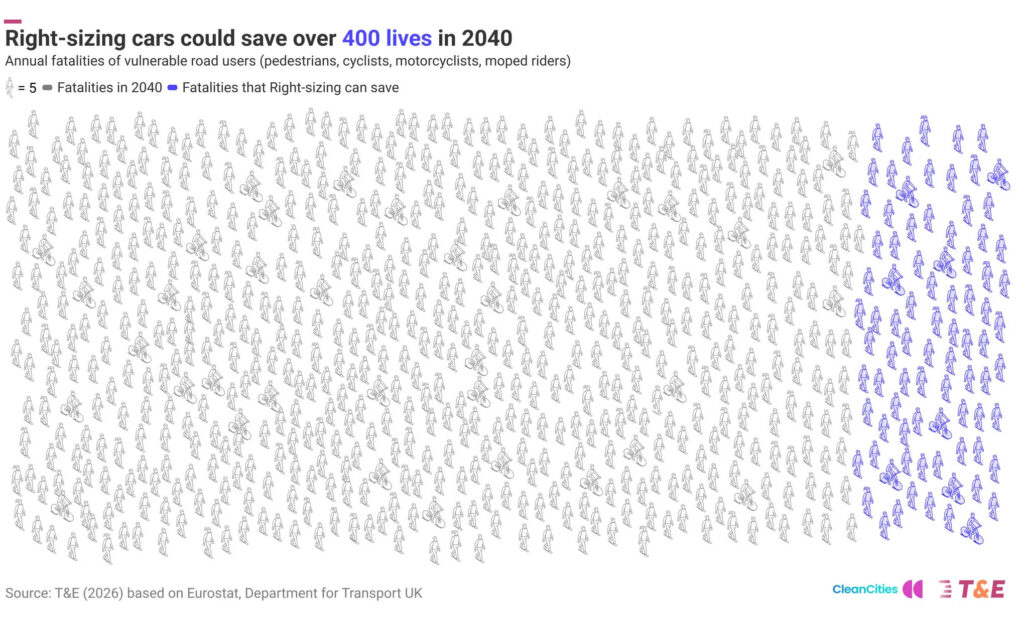
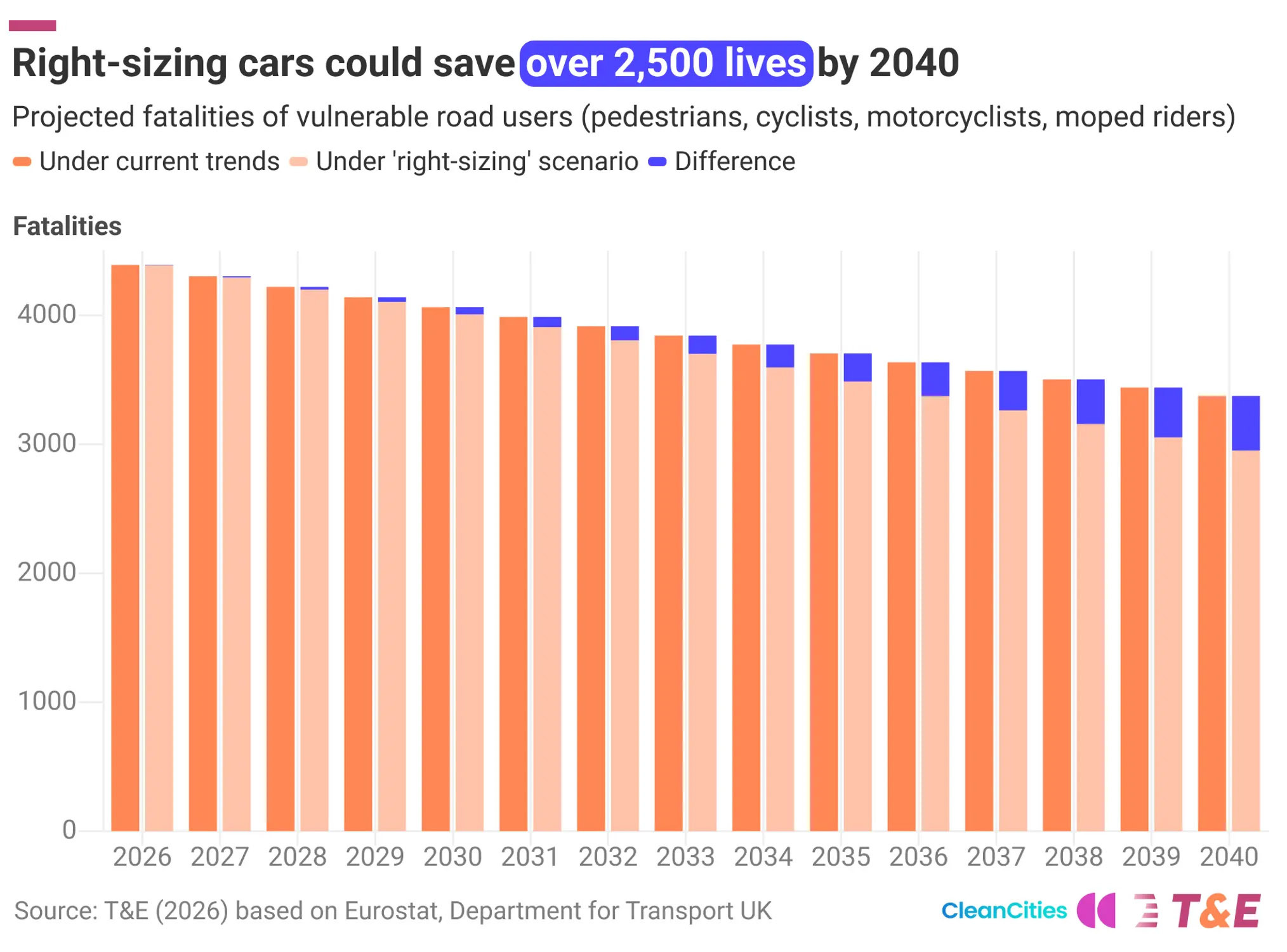
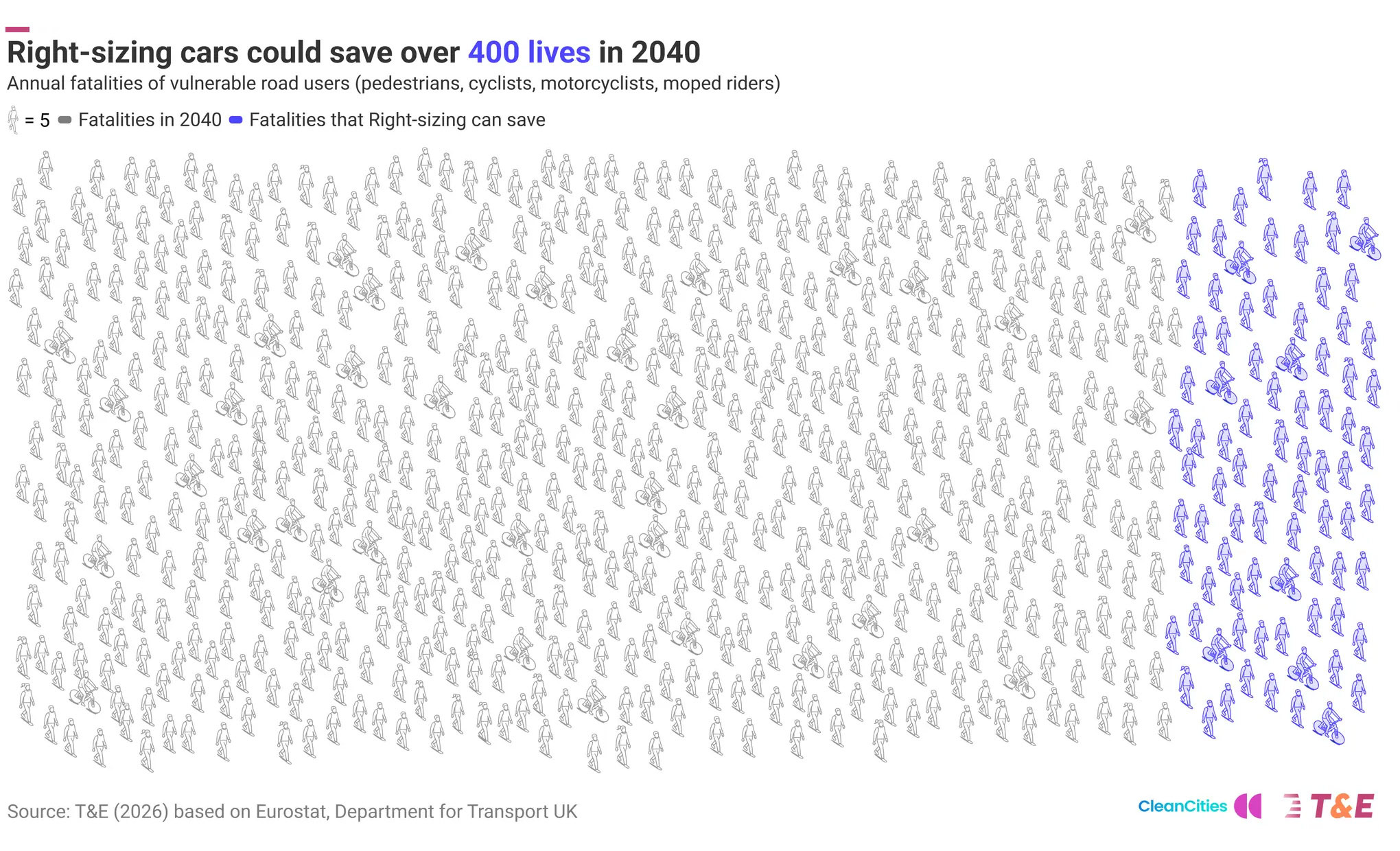
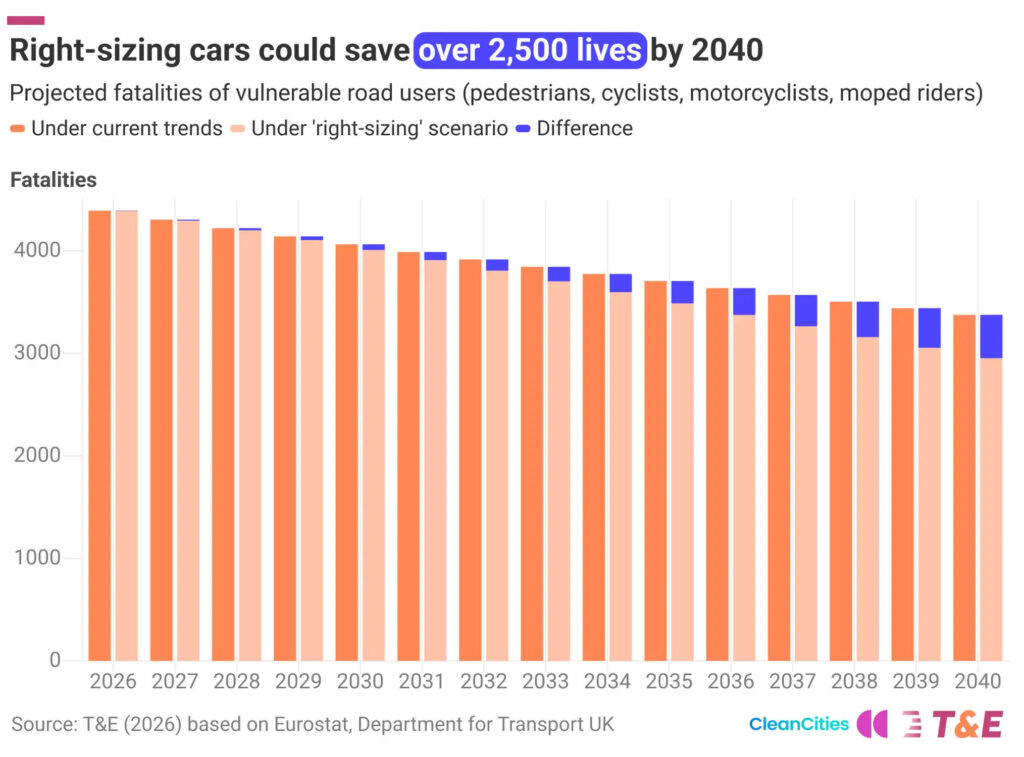
Safety is another major focus. T&E points to previous studies linking higher hood heights with more severe outcomes for pedestrians and cyclists. Using those findings, researchers estimate that continuing current trends could result in roughly 2,570 additional vulnerable road user deaths between now and 2040 compared to a right-sizing scenario. The report also projects higher risks for child pedestrians, though those calculations rely partly on U.S.-based research.
Study: The Average New Truck Hood Can Floor Anyone Under 5-Foot-6, Which Is Half The Country
Energy consumption plays a role, too. Larger vehicles generally weigh more and consume more energy, whether powered by gasoline or electricity. T&E estimates that Europe’s EV fleet would require an additional 22.5 terawatt-hours of electricity annually by 2040 under the current trend, equivalent to the output of roughly 1,500 onshore wind turbines. It also predicts more than 100 million additional barrels of imported oil consumption over the same period as combustion vehicles remain in service.
Recommendations
Not surprisingly, the proposed solutions are what some will view as aggressive. The report calls for hood height caps of 85 cm (33.5 inches), width limits of 192 cm (75.6 inches), taxes tied to vehicle dimensions, parking fees based on size, and regulatory incentives reserved for smaller EVs measuring less than 4.2 meters (165.4 inches) long.
Whether those ideas gain traction is another matter entirely. Consumers have spent the last two decades voting with their wallets in favor of SUVs and crossovers. Automakers are probably more to blame for that than most folks realize.
Also: Neuroscientist Finds Driving A Manual Lights Up A Brain Region Automatics Let Sleep
After all, larger cars, trucks, and SUVs generate more profit and aren’t typically held to the same safety and fuel economy standards. So while they didn’t create that demand in a vacuum, they’re certainly profiting from it. That means the real battle may not be about engineering smaller vehicles. It may be about convincing automakers to build them again.