About a dozen years ago, I happened to be simultaneously writing two different essays about two of the most influential artists of the 20th century who are almost exact contemporaries: Simone Forti (born in Italy in 1935) and Yoko Ono (born in Japan in 1933). Only two years apart, these women had many other things in common besides age: They were both transcultural migrants whose early lives were shaped by the deprivations of fascism and war. Both experienced discrimination — Forti’s Jewish family left Italy as a result of Mussolini’s Racial Laws, while Ono was (and still is) by turns exoticized and vilified as an Asian woman.
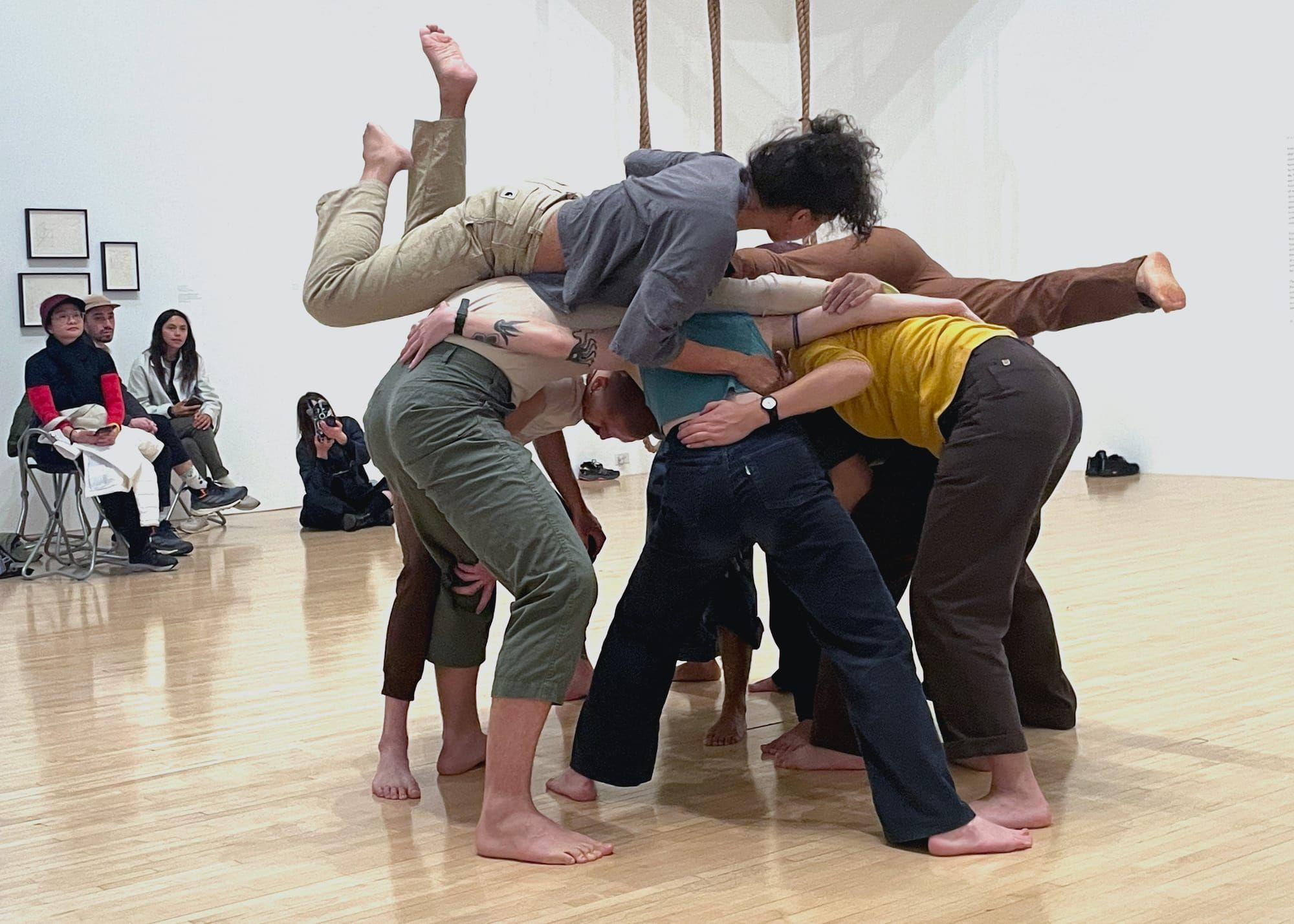
As cross-disciplinary groundbreakers, both Forti and Ono transgress the boundaries between sound, drawing, poetry, participation, movement, new media, and sculpture. They continually invoked touch as mode of connection, and they both incorporated everyday objects as charged collaborators. Often, their art manifests a sly irreverence towards physical decorum, from Forti’s seething mound of limbs in Huddle (1961) to Ono’s satirical 1971 Museum of Modern (F)Art. Ono radically shifted the terrain of art and music through works like her conceptual instruction paintings; likewise, Forti’s works based on captive animals — the subject of my 2015 essay “Simone Forti Goes to the Zoo” — forever reshaped how we think bodies should be and move.
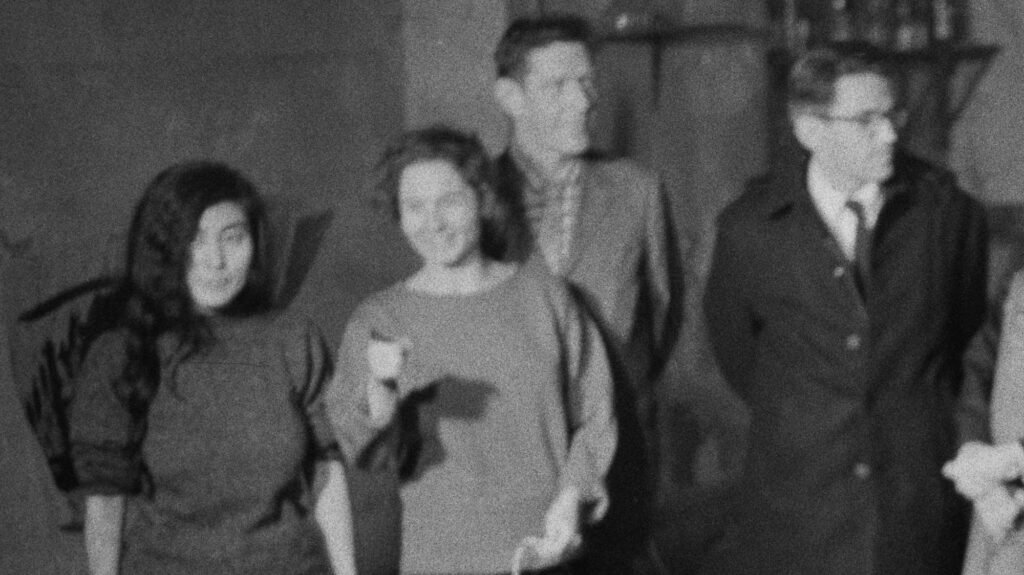
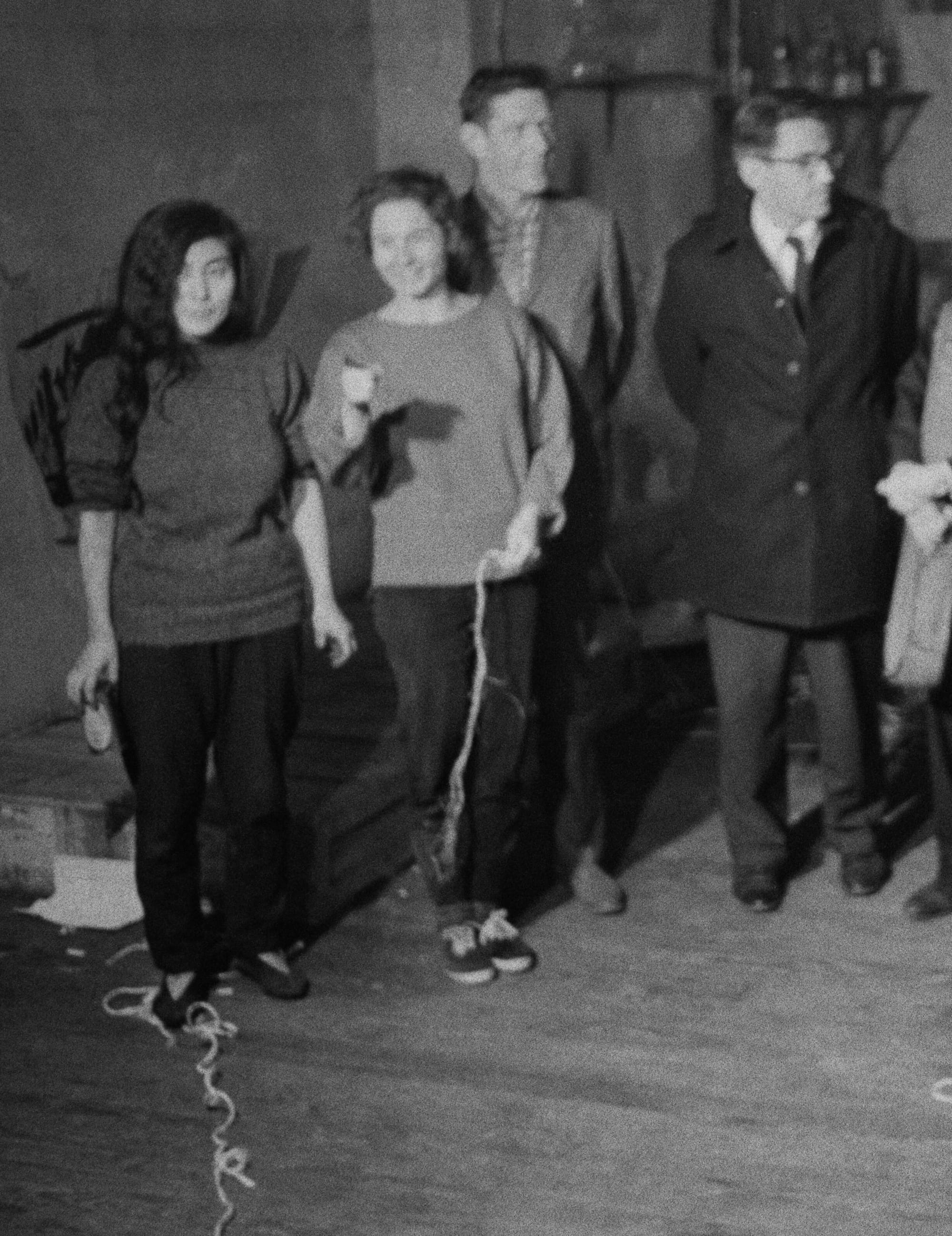
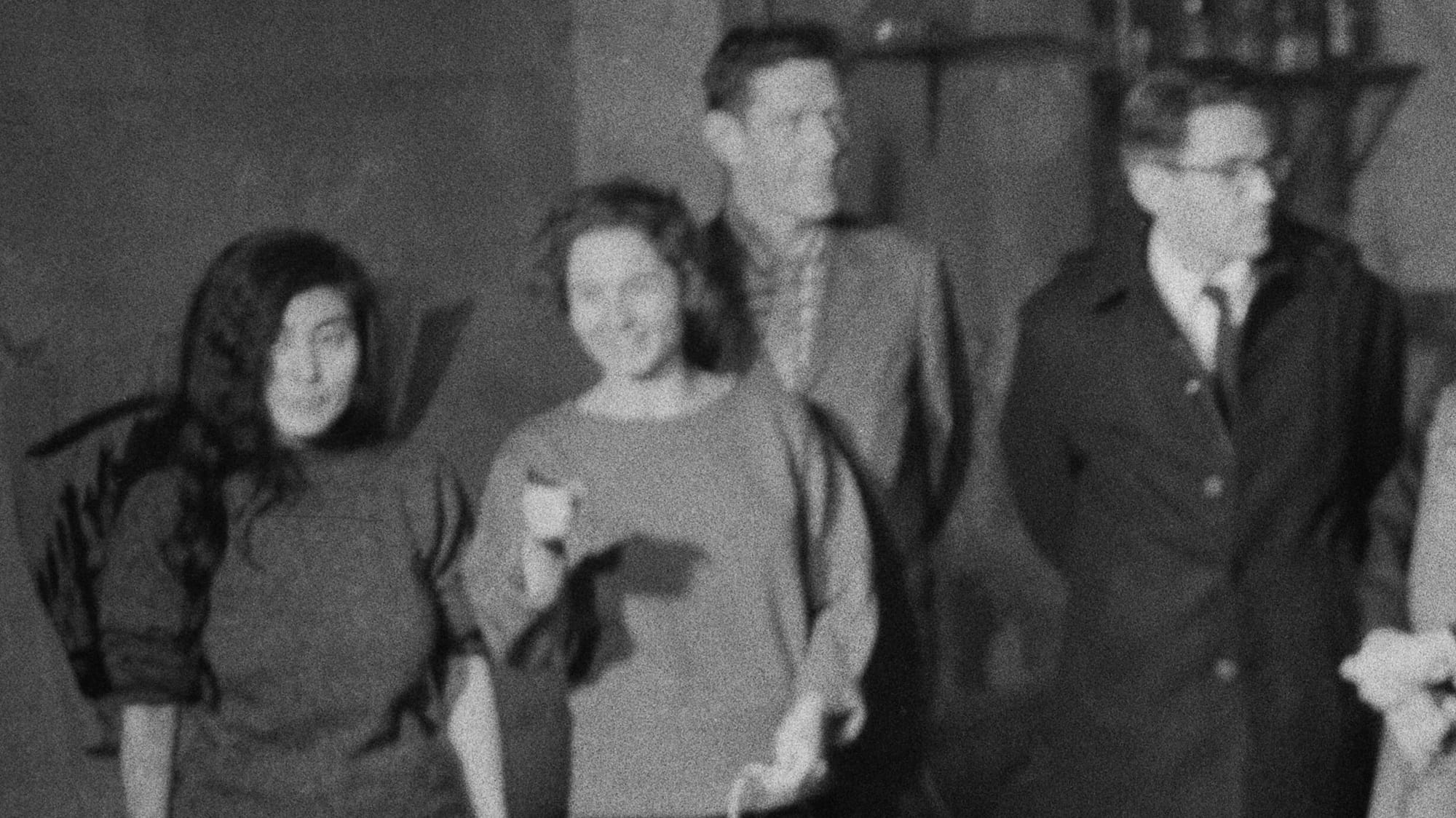
I had long been intrigued by a 1961 Ono screaming piece dedicated to Simone — “Voice Piece for Soprano, to Simone Morris” (Forti was then married to Robert Morris). At that time, no one had yet asked Forti about her reactions to this, nor specifically about her encounters with Ono in the 1960s and beyond. There is photo-documentation of them standing together in Ono’s legendary Chambers Street Loft, with John Cage in the background, possibly chatting. Forti’s Five Dance Constructions and Some Other Things debuted in Ono’s loft that same year. Maybe a brief interview would illuminate new aspects of what I perceived as their kinship?
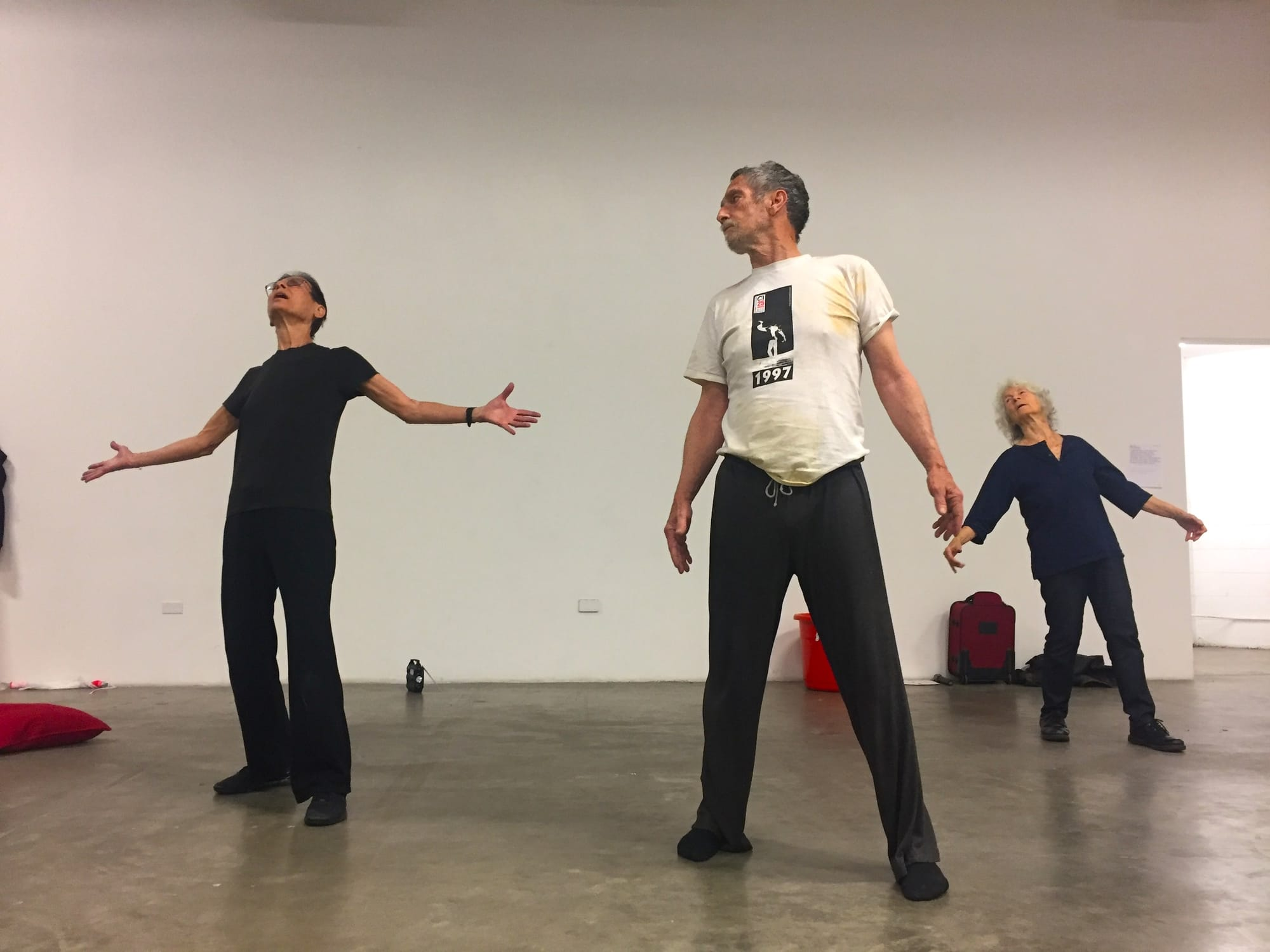
So along with having her perform her delightful elephant walk, in 2014 I asked Forti directly. She confessed to not having the best memory, but her recollections are still valuable. In honor of Forti’s passing last week at 91, which has prompted an outpouring of admiration for her decades of innovation, I unearthed this never-before-published exchange from my archives.
Simone Forti performing her elephant dance in 2014 (courtesy Julia Bryan-Wilson)
Julia Bryan-Wilson: When did you first meet Yoko Ono? What were some of your initial impressions of her?
Simone Forti: I must have started hearing Yoko’s name around 1960. I knew that she was married to Toshi Ichiyanagi and that they both were doing interesting work in the larger artistic community that I shared with La Monte Young.
JBW: Your Dance Constructions were first seen at Yoko’s Chambers Street loft. How did this event come about?
SF: I became aware that she had a loft studio and that she was very generous with it, letting dancers sometimes use it. I have memories of working in a loft with Trisha Brown and Steve Paxton, and in a different loft with Bob Morris and Yvonne Rainer, and one of these lofts may well have been Yoko’s loft. La Monte Young is the person who invited me to participate in the series, and with whom I was in touch for practical matters. And Bob Morris is the person who helped me set up.
JBW: We’ve all seen pictures, but can you describe more about what the Chambers Street loft was like, architecturally as well as socially?
SF: The loft was a large raw rectangular space with a very rough wood floor and windows at one end. The entrance was along one of the longer walls and closer to the windows than to the “deep” end. My memory of it is that, like many of the lofts at that time, nothing had been painted. The walls, the floor, all had been left pretty much as they had been found, abandoned after decades of industrial use, just swept “clean” with a broom.
In terms of who frequented Yoko’s loft, I saw some of the performers in that series, Jackson Mac Low, Henry Flint, of course Bob Morris. And La Monte. I know that Merce Cunningham came to one of my evenings, because someone told me that he had liked it. I don’t think any of the artists from the Reuben Gallery frequented that series. I may be wrong, but I think that the conceptual and the imagistic theater (happenings) folks didn’t follow each other’s work. In fact, when I had performed at the Reuben Gallery a few months earlier, Lucas Samaras complained to me that my work was not poetic.
JBW: Did you have room to practice where you lived, or were other people’s lofts a central space where you made and performed your work?
SF: When Bob Morris and I came to New York, we lived for a time in a small loft on 1st Street and 1st Avenue. There was some space to move in, and I did things like placing a milk carton on the floor, a roll of toilet paper elsewhere on the floor, and myself in a third place on the floor, and occasionally moving one of the objects, or myself, to a new floor location. At some point Bob and I moved to an apartment on the Upper West Side. By that time I was in touch, through Bob Dunn’s classes, with Yvonne, Trisha, Steve and others. And we were meeting in lofts below Canal St. and maybe in what is now SoHo. I don’t remember performing much until my pieces at the Reuben Gallery 1960 show, except for showing pieces in Dunn’s class. But I’ve heard that Trisha remembered a showing of what I call the Rule Games (I think she calls them something like Structured Improvisations), that Trisha, Steve, and I did. This would have been in one of those lofts.
JBW: Was Chambers Street a difficult space to dance in? Did the rough wood floors hurt, or give you splinters?
SF: We would get pretty dirty, and sometimes a splinter or two, but I think we were proud to be rough and tough. Maybe it was part of our raw material aesthetic.
JBW: Who typed up and photocopied the programs for such events, and how were they advertised? I’m interested in how these small logistical gestures helped facilitate performances, and how those seemingly minor, secretarial, or ephemeral acts are actually fundamental as artworld infrastructure.
SF: I can only imagine that we made the announcements and xeroxed and addressed them ourselves. I do have a memory from the time of my Chambers Street concert, of standing at a mailbox, with the announcements in a bag, hesitating to drop them in the slot. So I actually remember that there were announcements.
JBW: Some of your Dance Constructions use the word “instruction.” Had you known of Yoko’s Instruction Paintings, which are also from this time period?
SF: It’s possible that the “instructions” idea came to me from Yoko, through intermediaries, such as La Monte Young and Jackson Mac Low. But certainly the concept also came from John Cage, through Bob Dunn’s class. And I had probably worked with instructions with Anna Halprin, but I don’t remember if she used that term.
JBW: Did you ever see any of Yoko’s performances?
SF: I did see Charlotte Mormon perform Yoko’s piece where the audience members are invited to cut pieces of her dress right off of her [“Cut Piece,” first performed by Ono in 1964]. I think Charlotte had already been fighting cancer for some time, and the performance was very moving.
JBW: Did you participate in the cutting, and did you save the scrap?
SF: Yes, I cut a very small piece. I think it was red satin. I kept it for years in one of those little special containers we all have, but I’ve lost track of it.
JBW: Were you aware of Yoko’s 1961 “Voice Piece for Soprano, to Simone Morris,” in which she instructs us to scream “against the wind, against the wall, against the sky?” It is dedicated to you using your married full name. Do you have any idea why she might have specifically invoked you here?
SF: I’m thrilled to learn, or relearn, that Yoko made that piece and dedicated it to me. I tend to forget really important things. Maybe she dedicated the screaming piece to me because of my piece “Censor” that I performed in my spring 1961 concert in her loft. In that performance, one person vigorously shook a pan full of nails while the other sang an Italian folk song as loud as she could.
JBW: It’s interesting because, along with your use of loud noise, in the piece Slant Board you send bodies scrambling “against the wall…” It’s a written score that has dancerly implications, existential implications, and gendered implications. And Yoko later engaged in primal therapy, which involved the emotional release of screaming. Did you stay in touch with her throughout the 1970s and later?
SF: Strangely enough, I have not crossed paths with Yoko very much, other than sharing a distant mutual respect. One memory I have is from around 1976, when I made a performance, Planet, at PS1. I remember sitting with Yoko on a ledge on the PS1 roof and talking together comfortably. It was restful. Decades later, in 2011, I received the Yoko Ono Lennon Award for Courage in the Arts. Yoko, of course, was at the reception, handing out the awards. I’m now 79. I think Yoko is one or two years older than me. Well, she was looking very sharp in her cap and high heels and her blouse that revealed her cleavage. Very quick on her feet and smiling.
JBW: Can you reflect on getting older, particularly as a woman artist who has made so much work with your body, as has Yoko? From your perspective, what is it like to be in this larger cohort of female artists who have been so pioneering within these interlocking but somewhat separate spheres of artistic practice?
SF: I think that, basically, I don’t feel different from how I’ve always felt, even though there hasn’t been a way I’ve always felt. I mean, there have been times when I was on to something and times when I felt pretty lost. Physically, I never had much in the way of technical skills, so I’m still working with what I’ve got. Of course I’m enjoying all the attention, but I’ve always had enough recognition. I think my generation of “avant garde” artists had it easier than the young ones now, in that it was more clear what to do. When I see old New York colleagues such as Steve Paxton or Alison Knowles, we understand each other pretty well. It’s strange living in LA where I didn’t have the same youthful experiences as the artists here of my generation, like Barbara Smith or Paul McCarthy. Here it was more the wild west.