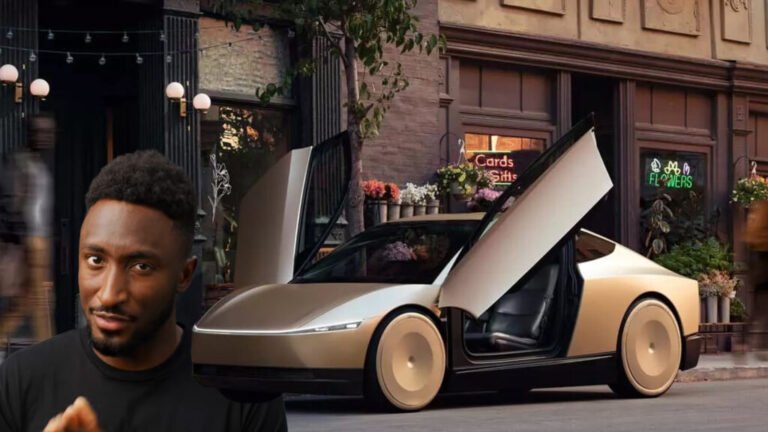
The newest addition to Tesla’s fleet of robotaxis is now on the road. Previously, Tesla’s driverless taxi service offered only one make of vehicle, called the Model Y. Now, it’s adding the Cybercab, a golden car with butterfly doors, interactive touchscreens, and no steering wheel.
So far, the Cybercab is only available in Austin, Texas, but a viral advertisement for the new vehicles has social media users everywhere raising their eyebrows.
A maybe not-so-accessible ride
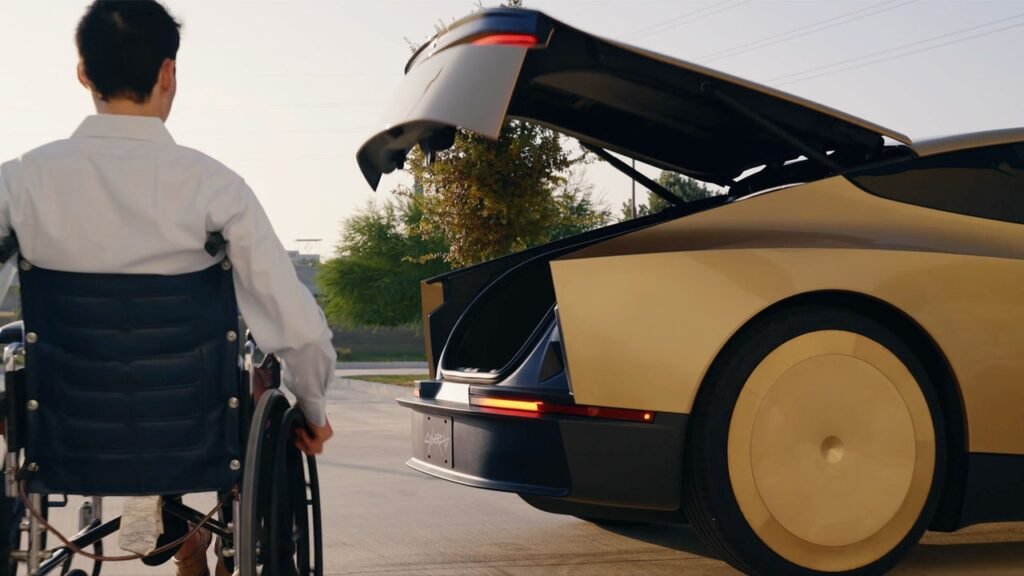
Tesla posted its now-viral advertisement to social media with the caption, “Cybercab is designed to be a great experience for every rider.” The video sees riders with mobility aids storing them in the Cybercab’s spacious trunk: One man rolls up to the car in a wheelchair, and another approaches on crutches.
But those scenarios raise one glaring question. If a solo rider requires a mobility aid to get around, how could they get into the car after placing their wheelchair, crutches, cane, or other accessibility device in the trunk?
Social media users were quick to call out the obvious issue. “Just pick up your wheelchair and place it in the trunk, and walk over to the door,” reads one sarcastic post. “Makes perfect sense.”
“DID THE CYBERCAB JUST HEAL THAT WHEELCHAIR USER?!?!” joked another user.
Other users alleged that the ad is meant to promote an image of accessibility without providing an actually accessible product. “This is not the real world. It’s slop meant to tug at the wallets of able bodied investors,” one user wrote.
“You can just tell not a single disabled person was consulted for this,” commented another.
Of course, some users of mobility aids are able to walk unassisted or would be taking a Cybercab with another passenger who’d be able to help them into the vehicle. But the ad doesn’t paint such a nuanced picture, instead letting its message of being for “every rider” fall flat for many viewers on social media.
Is the Cybercab actually accessible?
Though Cybercab isn’t the magically accessible vehicle it appears to be in the advertisement, it does have some accessibility features.
According to Tesla’s FAQ page for the Cybercab, its built-in accessibility features include audio and visual supplements, bench-style seating at wheelchair height, trunk space for wheelchairs and other accessibility devices, room in the cab for service animals, and braille on the doors and buttons inside the vehicle.
Solo riders who are wheelchair-bound, however, don’t seem to be accounted for by the Cybercab’s design. They aren’t addressed on the vehicle’s FAQ page, while Tesla’s broader support section for all its robotaxis says that customers in need of wheelchair-accessible vehicle rides can access third-party providers through the home screen of the Robotaxi app.
“We are actively developing accessible ride options tailored to the Robotaxi fleet to enhance our inclusive transportation solutions for all passengers,” the section continues.
Tesla has not responded to Fast Company’s request for comment.