Courtesy of the author
- Caring for my mother through dementia changed my understanding of grief.
- Some of my hardest memories remain as vivid as the happy ones.
- I’ve learned to acknowledge painful memories without letting them define her life.
“Where are all the people?”
My mother, Roberta, was standing in the doorway of the guest bedroom in her house, a bedroom I occupied when I visited. Her short frame was visible in the dark of night, and she wore an almost gossamer nightgown, casting an eerie image of gently floating in place.
It was 3 a.m., and she stood shining a flashlight in my eyes, rousing me from a deep sleep.
“What people?” I asked.
Despite her being more than 80 years old, she looked young, if not angelic, as I tried to wake myself from a deep sleep.
I went through the list of who wasn’t there — dad was in the hospital, her son/my brother didn’t live nearby, so he was home, her brother Joe was down the street at his house.
Then she said, “It’s getting late in the summer now. We have to go to the cottage and close it up before winter.” This cottage was no longer in the family, but I nodded and reassured her that we would handle it very soon.
She noticed I had tears in my eyes. I was upset that her memory was failing her. I can’t recall whether she went back to her bedroom then or stayed with me.
I became my parents’ caretaker
My father had been admitted to the hospital and, without him there in the house, she was clearly lost. I had known that she was showing signs of dementia, but I never thought it was this bad.
So when I heard that my father had fallen and was hospitalized, I packed up and headed to Northeast Pennsylvania to try to help them both. That day, I became the long-distance caretaker of my parents, who lived about a five-hour drive from DC. And over many years, I learned what the rest stops along Routes 83 and 81 had to offer as I went up and back, and up and back, sometimes planned and sometimes not. I was a missile waiting for my next assignment.
A few years after this all started, at about 85 years old, my mother’s condition had worsened, and she was living in a home solely for people with dementia. When I would appear at the front reception desk, she would run forward to meet me with glee. She knew I was her “person.” And I would hug her and say how wonderful she looked, even though she was often wearing clothes that weren’t hers, and her hair was usually askew.
I would sit with her on the very long porch where residents met with family. She wouldn’t stay put for long; often she roamed the halls inside, going to her room, then back out again, then looked into the dining hall, calling it “the classroom.” She was hard to keep up with. But thankfully, for some spell of time, she would sit when I visited, and we would talk.
If my father were with me, she would pull me aside and say, “Why did you bring that old man?” Thankfully, his hearing was quite poor, so he never heard this or any other insult she might toss in his direction.
She started to forget who I was
But during one visit, I could tell that she was a little more uneasy than usual. We were sitting on the porch, and I reminded her of my name; she remembered it for the entire visit, but at one point she looked into the distance and said, “I am starting to forget who you are.”
“It’s OK because I will remember for both of us,” I spoke very quickly and choked my way through the sentence.
People told me that in time, I would just remember the good things. That just isn’t true. While I do smile when I think of something Roberta may have said many years ago, or even find myself quoting her without attribution because I have personally adopted her view on something, the actual events of the final few years of her life are still in my head: the good and the bad.
When I think of how she asked me where “all the people were” in my first full exposure of her mental state, my throat still tightens up.
When I think of how she said she was starting to forget who I was, a surreal, haunted feeling emerges.
When I think of her small frame running to me with joy, even though at that point she still remembered that I was her “person,” I try to push the image away to stop the jab in my gut that reminds me that soon after, I would be no one to her.
I remember the good and the bad
Time does heal wounds. Some wounds. But I don’t believe that we just eventually remember only the good stuff after someone dies. Believing that the “good stuff” idea made me have unreasonable expectations about the grieving process. I kept hoping the bad would fade into oblivion, but it never did. It was easy enough to conjure up if I allowed it entrée.
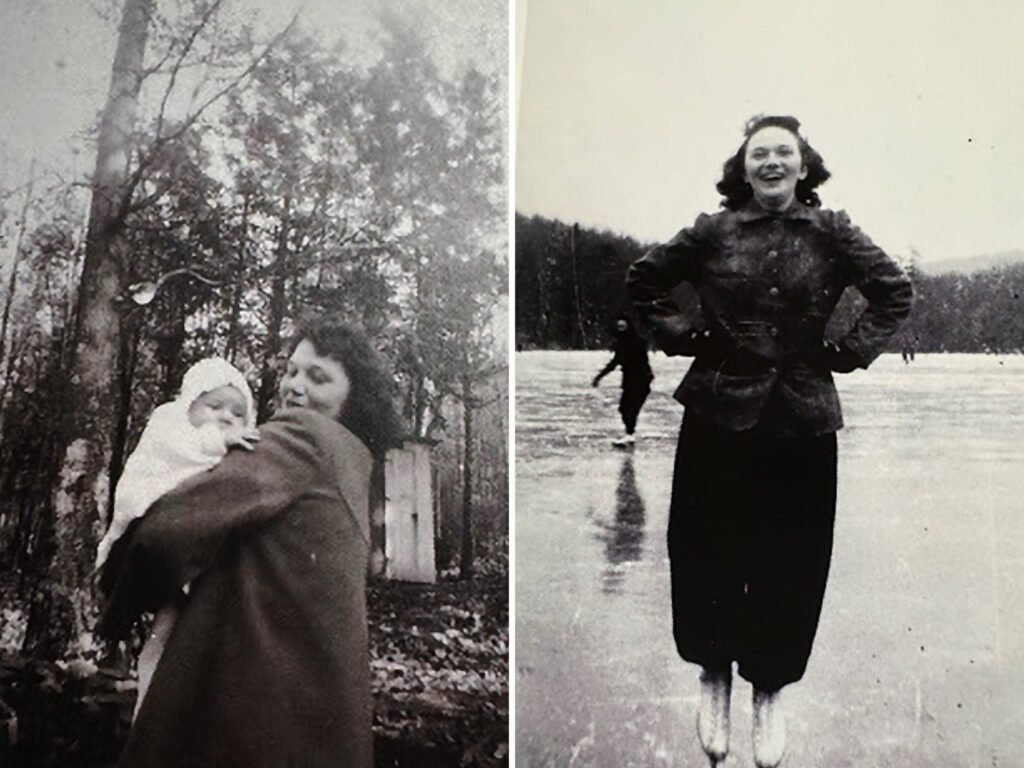
Now, when my mother comes to mind, I focus on the earlier decades of her life when she was whole, growing up, and then later as an adult with her own children. Then I am able to remember the funny, wise, and even poignant moments we shared and feel comforted. As for the difficult memories, those engendering guilt and pain, I try to matter-of-factly acknowledge them when they appear. I then allow them to almost float over me, waiting for them to move on, hoping it won’t take long to pass.
It took me a long time to learn that, and, of course, I sometimes fail miserably at this practice. But when it works, I’m able to stay in the present with good memories and go on with my day.