In 1846, the Smithsonian Institution was established, in the words of its benefactor and namesake, British scientist James Smithson, “for the increase & diffusion of Knowledge among men.” Today, the 21 museums centered in Washington, DC, and more than 200 affiliates throughout the United States, have indeed increased and diffused knowledge in the maintenance of an astounding 157 million objects. Along with the preservation and distribution of knowledge — never a neutral term — these museums have been the site of discourse and debate, conversation and controversy, as any indispensable cultural institution should be. Over their long history, museums have “evolved to become institutions in which objects and learning are associated to help human beings understand the world around them,” writes John E. Simmons in Museums: A History (2022). Even while such institutions have always bolstered official narratives and aggrandized governments, in an ostensibly democratic country, the Smithsonian has embodied Simmons’s observation with its legacy of being administered in a spirit of expertise rather than just by politics.
During its nearly two-century history, the Smithsonian has had its share of controversies, especially during the recent battle of attrition that is the Culture Wars. Right-wing critics accused the 1991 exhibition The West as America, Reinterpreting Images of the Frontier, 1820-1920 at the Smithsonian American Art Museum of being anti-American. A 1995 exhibition at the National Air and Space Museum about the bombing of Hiroshima and Nagasaki, which included the actual Enola Gay B-29 bomber that dropped the atomic bomb, drew criticism from veterans’ groups. Hide/Seek: Difference and Desire in American Portraiture, a 2010 exhibition of LGBTQ+ artists at the National Portrait Gallery, was denounced by conservatives as being “anti-Christian” because of a video art piece that featured 10 seconds of ants crawling on a crucifix. In all of these instances, the predictable occurred: Republican politicians fulminated and threatened to cancel federal funding, reactionary pundits bloviated and encouraged protest, and public debates (sometimes healthy and sometimes not) were waged around what the function of a museum should be. To varying degrees, such responses, and the responses to those responses, are expected markers of the discourse that defines democracy — though all of those exhibitions admirably served the institution’s original purpose outlined by Smithson.
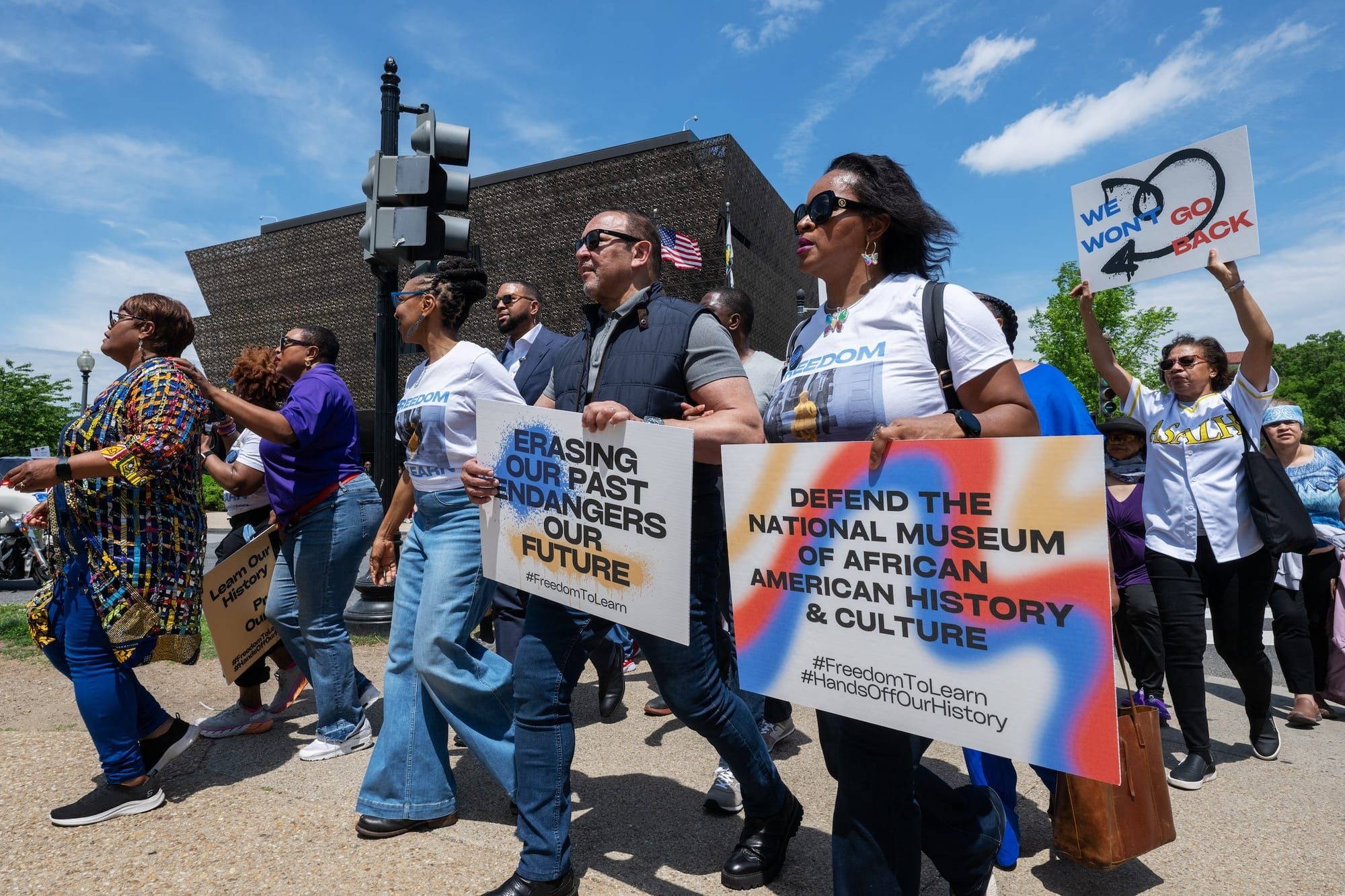
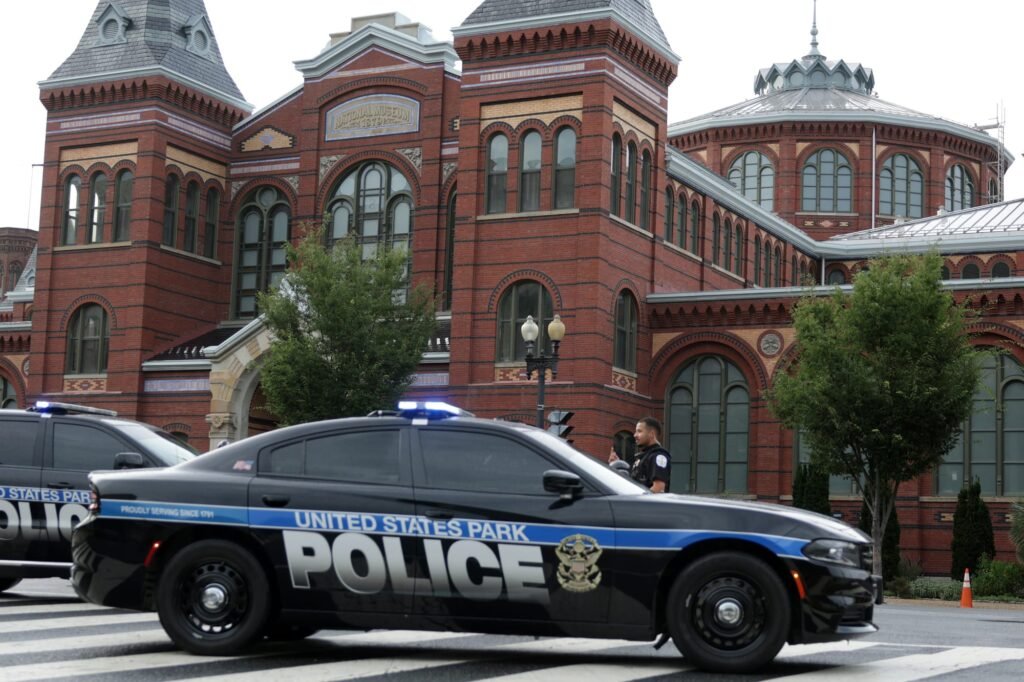
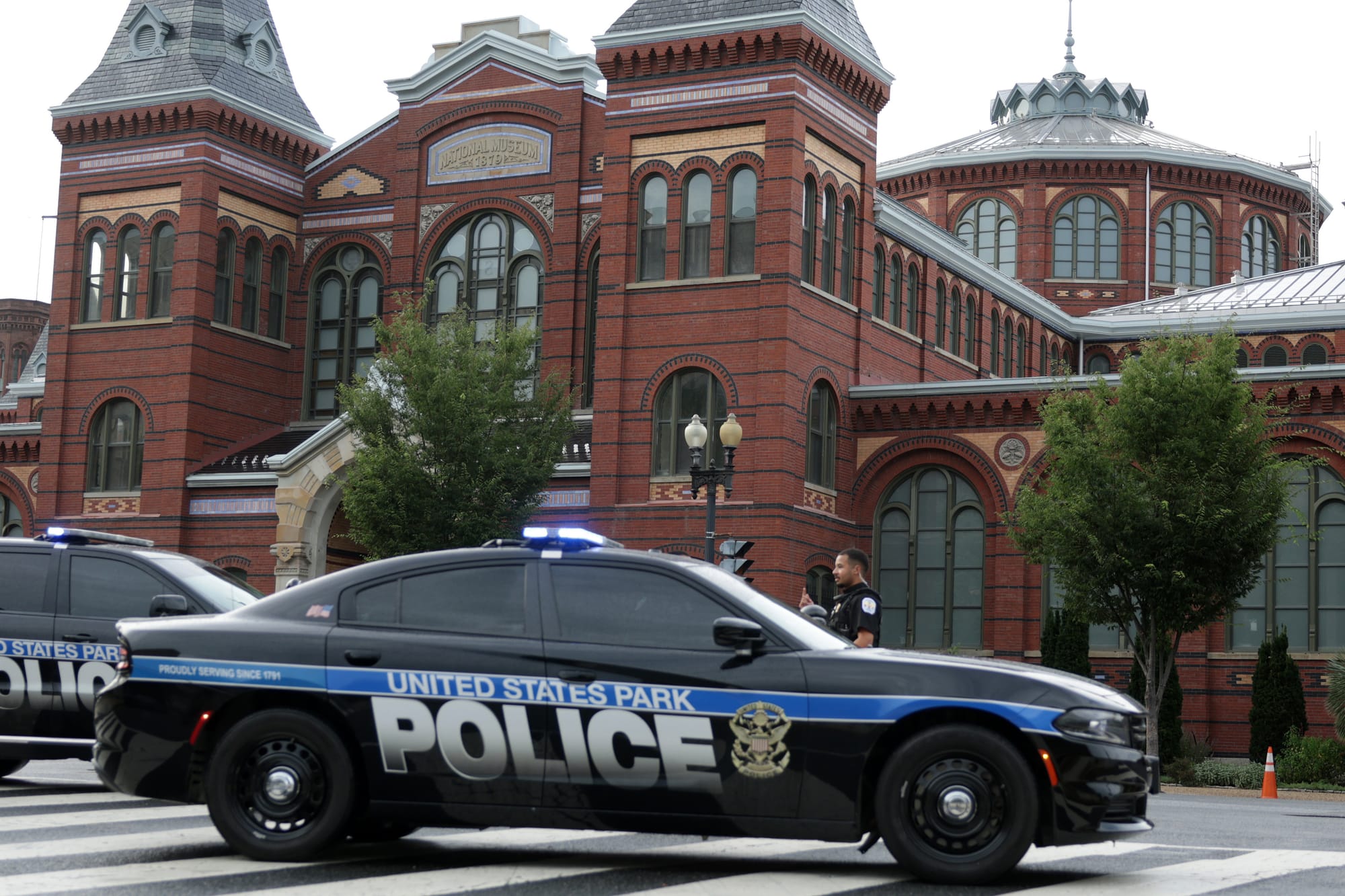
Last Friday, however, the Culture Wars escalated in an ominous fashion when the Trump administration issued an executive order with the loaded title “Restoring Trust in the Smithsonian Institution.” The Secretary of the Interior, the Director of the Office of Management and Budget, the Administrator of General Services, and the Assistant to the President for Domestic Policy, it decreed, are now charged with installing “temporary signage along the [National Park Service]-maintained sidewalks and walkways used by the public to access the [National Museum of American History],” informing visitors of what the Executive Order terms “Ideological Capture.”
During past Culture Wars imbroglios, Senators Jesse Helms and Strom Thurmond may have peacocked in faux-outrage over the National Endowment of the Arts-funded work of Andres Serrano or Robert Mapplethorpe, but no other president has seen fit to vandalize taxpayer-funded museums with a billboard telling people not to go inside, while directing them to more politically “palatable” — which is to say extreme right-wing — revisions of the historical record. On one hand, Trump’s flaccid outburst of rage at Secretary Lonnie G. Bunch III, who has admirably maintained the institution’s impartiality and non-partisanship even under relentless executive attack, signals a kind of impotence and desperation. On the other hand, the move is just one out of countless similar directives that have successfully stripped language about slavery, racism, or discrimination from American monuments and National Parks that have continued nearly unabated for the past two years.
Clearly the Trump administration — no doubt encouraged by creepy and sniveling weirdos within the White House like Stephen Miller, along with other officially sanctioned crooks, grifters, conmen, and charlatans — would be delighted to strip the Smithsonian of references to America’s histories of not just slavery, genocide, militarism, and imperialism, but indeed of the attendant accomplishments of Black, Latino, Indigenous, and LGBTQ+ Americans. They may yet be successful in that regard, but as of now this signage is more of an indication of the administration’s future plans than its current success.

But where this escalation differs in substance and not just degree from past Culture Wars conflicts is that Trump and the Make America Great Again movement have violated the kind of détente that defined past controversies. With apologies to former President Barack Obama and his idealistic claim that there is no blue America or red America, only the United States of America, this is clearly a time of marked division more severe than at any time since the Civil War.
In the past, certain elite cultural institutions — the Kennedy Center, the Smithsonian — were perhaps understood as “liberal,” even while they certainly raised money from corporate interests that are hardly leftist. But even as conservatives spurned, mocked, disliked, and even threatened to defund institutions like the Smithsonian, they have never evidenced as much desire for a hostile takeover as Trump does. Trump didn’t invent the libel of Public Broadcasting Service (PBS) watchers or philharmonic ticket buyers as being out-of-touch elitists, but he’s the most significantly reactionary politician to embody such beliefs — though he ironically seems to desire the cultural status which they confer. Creature of Manhattan that he is, Trump has long yearned for the imprimatur that can only be granted by those very institutions.
No doubt a reactionary critic of my argument would claim that if there was any such détente, it was violated long ago by the left, when homophobic bakers were “forced” to make cakes for gay weddings or when conservatives were “compelled” to wear masks during a pandemic that has taken 1.2 million American lives. This is precisely the argument that the “anti-woke” make — that the cultural politics of the left are such that Trumpian fascism had no choice but to manifest and to “correct” the nation’s course. But such a claim is at best a category error; at worst, bad-faith trash. Nothing stops a baker from privately harboring homophobic beliefs, or even expressing homophobic beliefs, but these private opinions are separate from their function in the public sphere, just as I can’t refuse to teach a student whom I politically disagree with.
No — the liberal corollary to Trump’s sign outside of the Smithsonian would be massive “In This House We Believe” signs posted in front of all evangelical mega-churches, Joe Rogan legally compelled to perform land acknowledgements before each podcast, or the Heritage Foundation being forced to exhibit a marker explaining that supply-side economics is a pseudoscience. But my fantasy is limited to my imagination, whereas Trump’s draconian state-sanctioned graffiti in front of one of the nation’s great museums is unfortunately very real. Most importantly, the Smithsonian is public in a manner that Rogan’s podcast isn’t. In The Structural Transformation of the Public Sphere (1962), German philosopher Jürgen Habermas defined the titular concept as the sphere where “private people come together as a public” — which is ideally what happens at a place like the Smithsonian.
Another criticism of my argument could be that the Smithsonian’s exhibitions are already politicized — just structured by a politics that I happen to hold, and that Trump is simply amending that. But again, such a claim doesn’t stand up to scrutiny. When Trump posted a year ago that the “Smithsonian is OUT OF CONTROL” in part because of exhibitions concerned with “how bad Slavery was” (author’s note: all legitimate historians consider slavery to have been bad), he is not attacking politicized museums — he is attempting to politicize them. The space of a public museum, particularly a national museum, is a cultural public sphere, and in part that means the input of people like Secretary Bunch, who are actual experts. This is not administration by fiat — that’s what Trump does — but rather the open and rigorous, careful and meticulous process of academic discourse, which also includes disagreement.
The job of a museum like the Smithsonian — as opposed to that of one like the Creation Museum — is to enact that sober and scholarly process, as best as can be done, and not just to please a regime. The Smithsonian has to serve such a purpose, even with controversy — not just in spite of the fact that it’s partially federally funded, but for that very reason. It must be an exemplary manifestation of the public sphere that belongs not to the president or to donors but to the American people. Even if a majority of Americans opposed the Smithsonian (though in actuality a majority of respondents hold a positive view of the institution), its responsibility is to mount the exact sorts of exhibitions that so enrage Trump because they reflect best academic practice, or to put it more bluntly, because they tell the truth. Admitting that costs us nothing, but refusing to do so in the name of political decorum could eventually cost us everything.





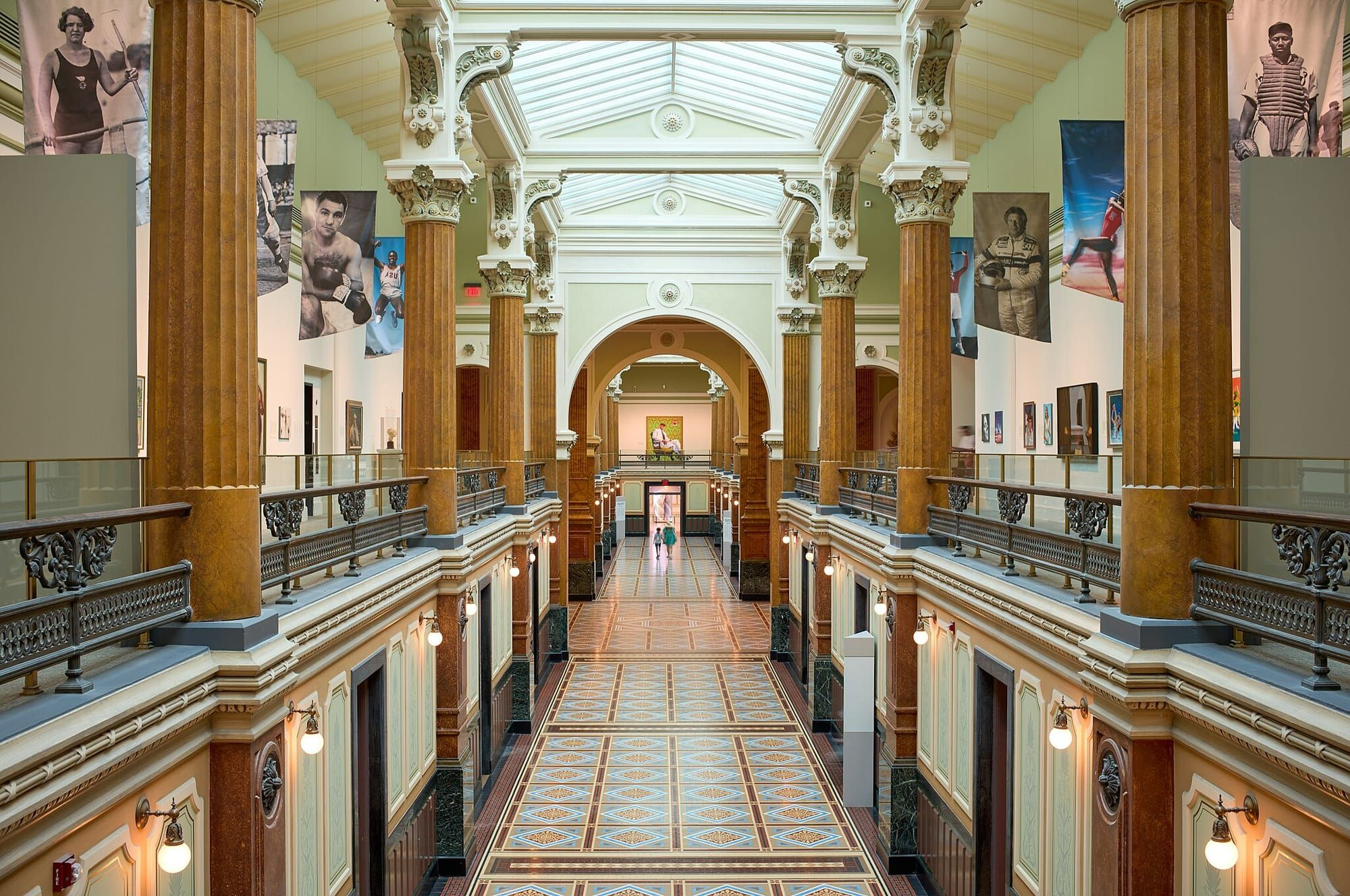
?ref=hyperallergic.com#/media/File:The_Great_Hall,_National_Portrait_Gallery_(2024)-L1005570.jpg)