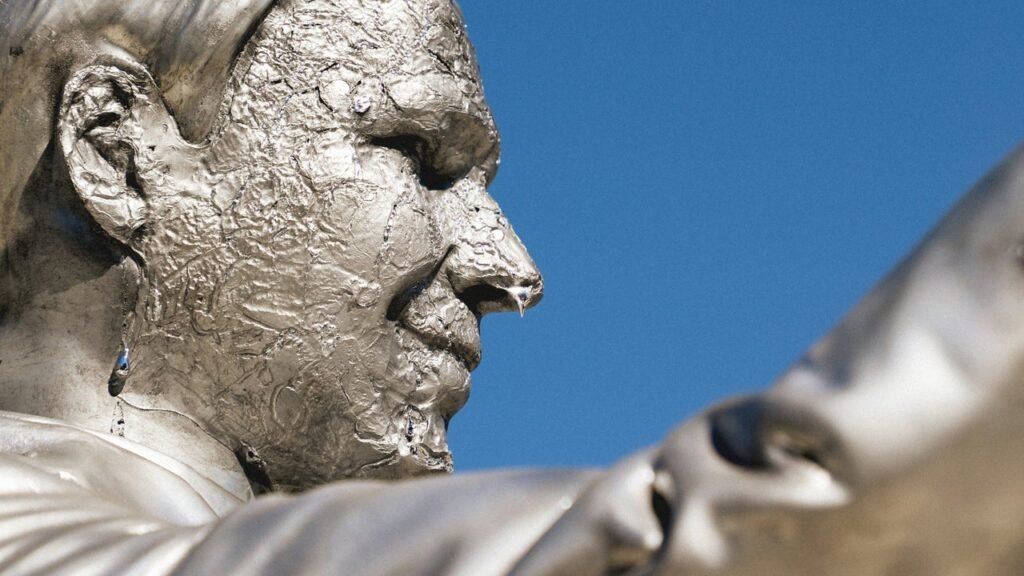
The face of a silver-colored statue of Florida’s Republican Governor Ron DeSantis lasted only about 30 minutes in the Florida sun before it melted away to reveal a skeleton underneath.
The 6-foot-tall statue called “Denial” was unveiled on October 13 at the Prime Meridian Plaza in Tallahassee, Florida. It’s a work of protest art commissioned by the climate advocacy group 350Action and produced by Uncommon Creative Studio ahead of the midterms, and it’s meant to draw a connection between climate change and voting.
And it works—thanks to an element called gallium that melts at 85.6 degrees Fahrenheit.
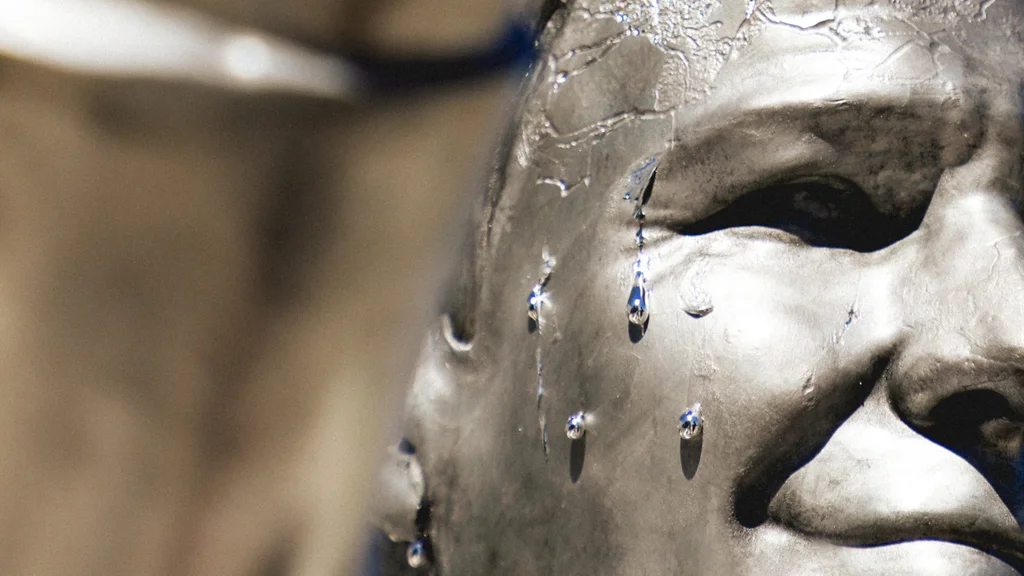
The temperature at the unveiling last week was “comfortably over gallium’s 85.6 degrees Fahrenheit melting point in the middle of October, which tells you something on its own,” Sam Shepherd, chief creative officer at Uncommon Creative Studio, tells Fast Company. Before long, the statue’s face began melting in drops that rolled down like beads of sweat.
The statue was made first in a 3D-scanned and -printed version to get the details right, and then constructed in New York by SFDS, a fabricator that spent time developing the melting effect by testing it under different conditions, temperatures, and sunlight exposure.
350Action chose to focus on DeSantis because of his record on climate, and a 2024 bill he signed into law that removed references to climate change from state law, prohibited on- and offshore wind energy, and cut clean renewable energy grant programs.
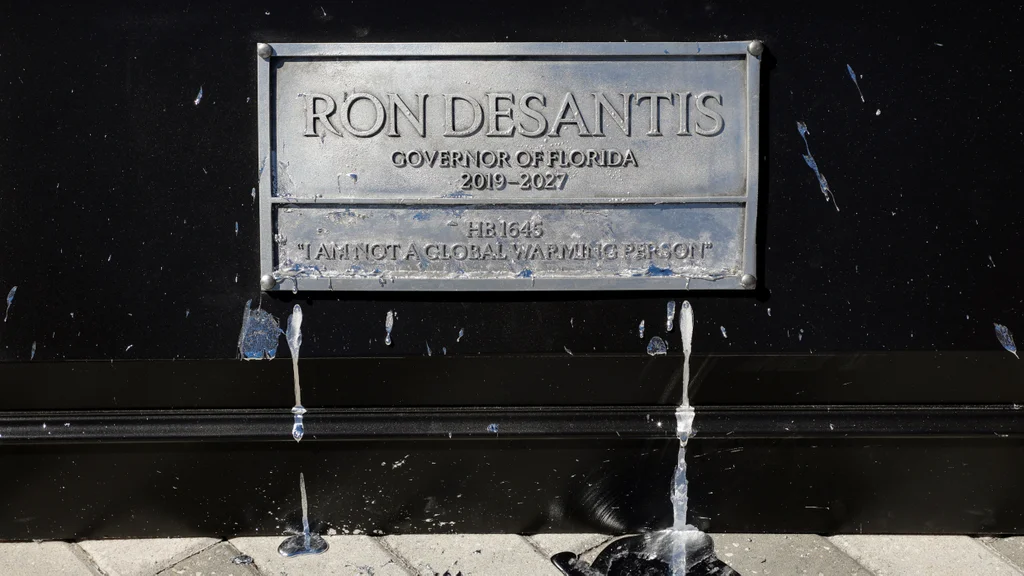
DeSantis, who was elected Florida’s governor in 2018, is term-limited and not running for reelection this year. His time in office saw the state turn from a competitive battleground to a solidly Republican state, and environmental groups have criticized his record, like Sierra Club’s Florida chapter, which said his bill killing climate change references appeased large corporations and fossil fuel companies.
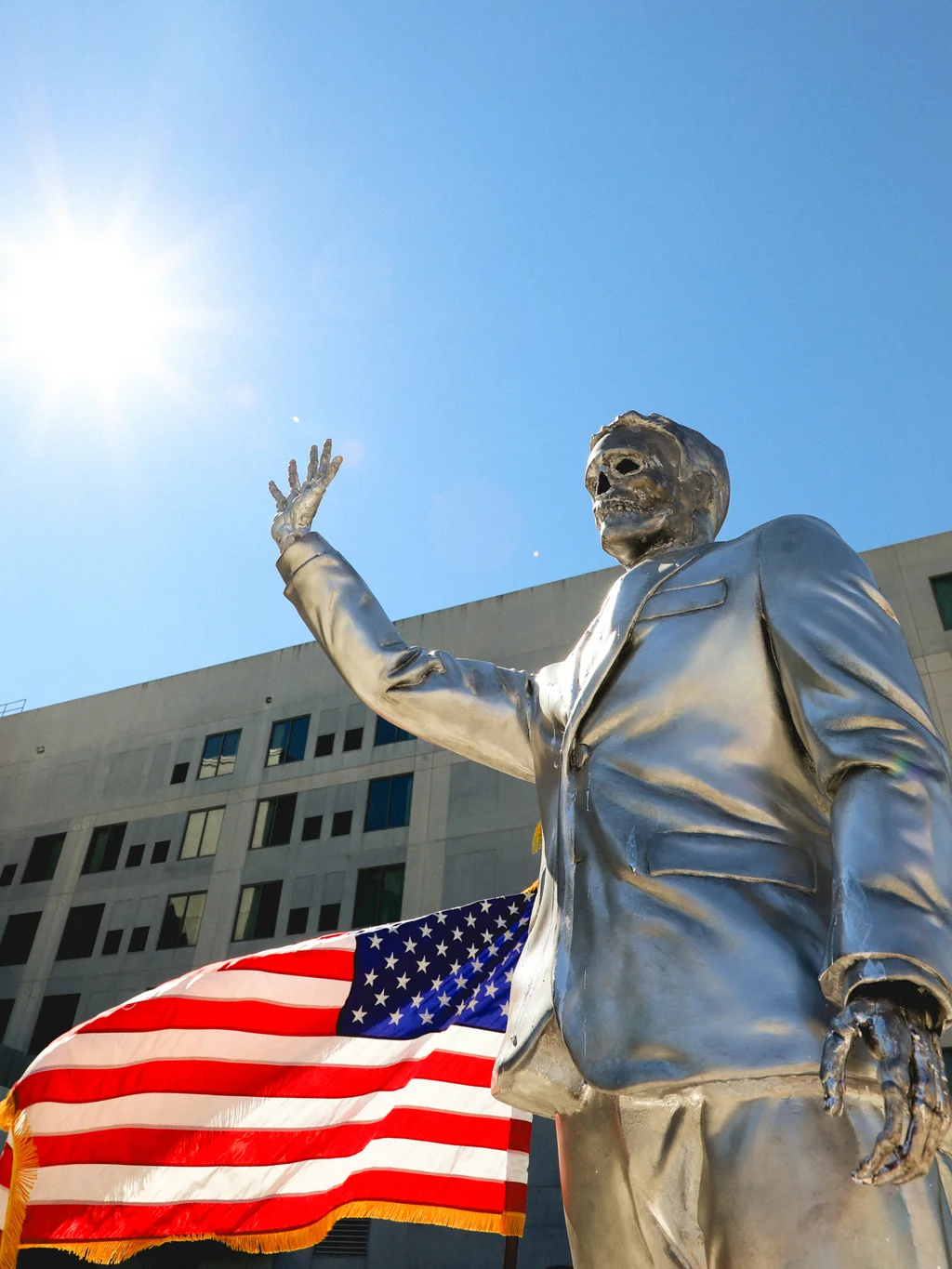
“Denial” is made in a metal “that can’t survive the heat DeSantis spent years denying,” according to 350Action’s website for the statue, which encourages voters to sign up to learn where candidates stand on climate and get updates and ways to get involved.
“Polls consistently show that most Americans want climate action, but a lot of those people don’t turn out to vote, or they don’t connect how they vote with floods, storms, and heat they’re living through,” Candice Fortin, 350Action campaign manager, says. She hopes the statue will move people to action and “deny climate deniers at the ballot box” by voting.