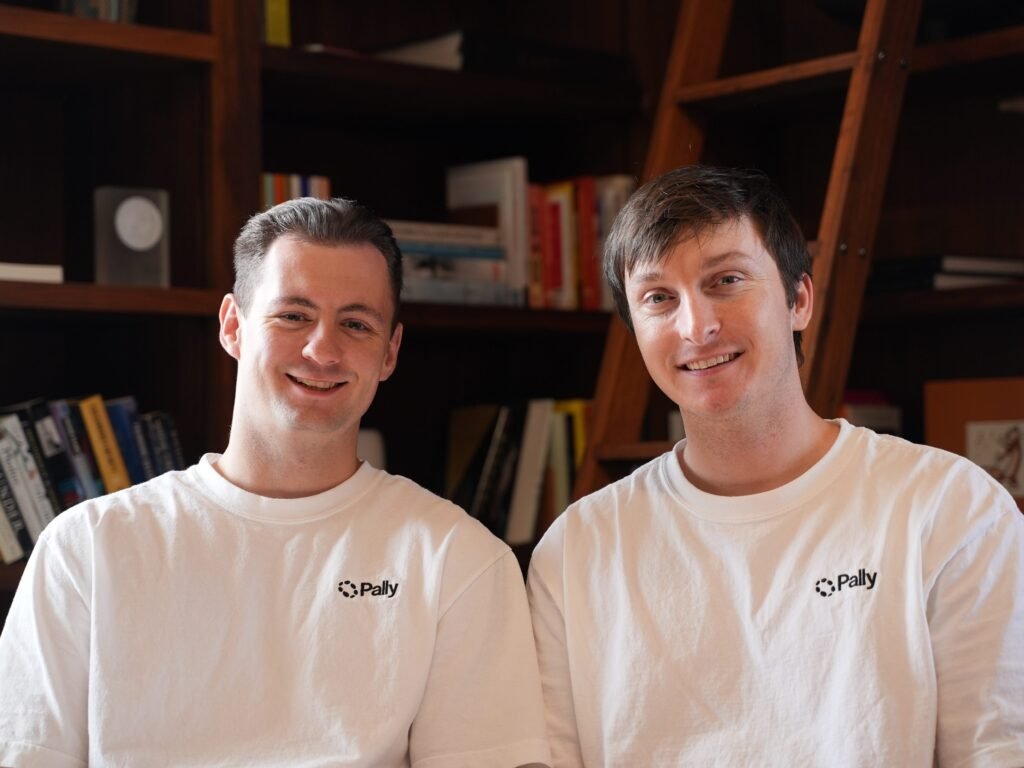
Courtesy of Pally
- Pally is an AI personal assistant that lives directly in your text messages.
- The startup has raised $5.2 million and launched its current product in June.
- Personal assistants are a buzzy category in the broader consumer AI umbrella — and it’s heating up.
It’s hard to be a good texter these days.
Between the default texting services and inboxes galore — WhatsApp, Instagram, email, you name it — messages are bound to fall through the cracks.
Pally, a Y-Combinator startup that launched in 2025, thinks it can help people manage their texts and tasks with an AI-powered personal assistant.
“Relationships are the single most important thing in our lives,” Pally cofounder Haz Hubble told Business Insider. “We want to use technology to be better at managing those relationships, rather than having technology come in and replace these relationships.”
The startup has raised $5.2 million since wrapping up its YC stint last summer, Business Insider can exclusively reveal. Pally was valued at $30 million, according to the company. The funding was led by Cyber Fund and Y Combinator and included other venture capital firms such as Pioneer Fund, Founders Inc, and 468 Capital, as well as angel investors.
Pally is competing in a crowded market for AI assistants. According to YC’s website, the incubator has backed over 140 startups in this category. Pally is betting on text messaging as the way to reach users and launched its latest iteration in June.
“You should go where your users are,” Hubble said. “Put as little amount of friction between your product or the ‘wow’ moment and your user discovering it as possible.”
Starting out is simple: Text the number for Pally.
Then, an AI-generated response will appear, introducing itself as Pally. The exchange is first in all lowercase, a decision on Pally’s end because it “feels more human,” Hubble said. Pally will adapt to the person’s own style, though. If they’re using Gen Z slang or shorthand, Pally will mirror that.
Pally
Pally can sync with several platforms, from email servers like Gmail and Outlook to third-party apps like Slack, the AI notetaker Granola, and Notion. Users, however, need to authorize access and can do so via the links the Pally assistant sends. To connect to Gmail, for instance, Pally uses a tool called Composio to connect the accounts. For iMessage, Pally has a separate desktop app for Macs that syncs messages.
Users also get a dashboard login on Pally’s website, where they can manage access to those accounts, assign Pally tasks, manually edit contacts, or see what Pally has saved about them. Pally encrypts the information as it travels between destinations, Hubble said. The startup doesn’t sell or train models on the data, either, he added.
After giving Pally access, it can book flights, maintain inboxes, respond to messages, and book restaurant reservations, Hubble said.
Under the hood, Pally uses AI platforms such as Anthropic’s Claude and OpenAI’s ChatGPT, and open-source models like Kimi K3 and GLM 5.2.
As a company, Pally has outsourced its engineering tasks to Claude Code, too, spending about $20,000 a month on Fable, one of Anthropic’s coding models. Hubble compared the model to a “staff level engineer” working 24/7.
While Pally had previously hired staff and part-time interns, it trimmed its team to just Hubble and his cofounder, Wyatt Lansford.
With its funding, Pally plans to focus on growth and marketing, including hiring another team member, since the work requires a “human touch,” Hubble said.
The AI assistant wars
Pally is one of many startups building tools to bring AI to the masses with consumer-facing products.
There are wearables, like Friend AI, pitching hardware as an AI companion that guides real people through life.
Then there’s the deluge of AI personal assistants.
Town AI, for instance, raised a $55 million Series A this year from firms like A16z and Forerunner. Poke, meanwhile, another assistant that lives in text messages, was recently acquired by AI agent company Cognition. Others are building more social versions of AI personal assistants, like Series, which is building a professional networking tool that lives in text messages.
Startups like Pally are battling it out among themselves and against the bigger players. There are various assistant tools coming from larger companies like Microsoft, Meta, OpenAI, and Anthropic.
Hubble believes that as a smaller, consumer-focused company, Pally can provide a more personalized experience for users.
The AI assistant business runs primarily on users’ willingness to pay. Pally has a free version and a “pro” tier that costs about $25 a month, which lets users sync more apps. Its higher tier, at $200 a month, provides an assistant with its own email address and phone number.
“People are ready to spend money on this when they never were four years ago,” Hubble said.