Security officers at some of the most prominent tech companies in Silicon Valley have been poised to walk off the job after voting to authorize a strike earlier this month. The workers have been in talks with major security contractors like Securitas and Allied Universal for months as they seek to reach a new contract agreement.
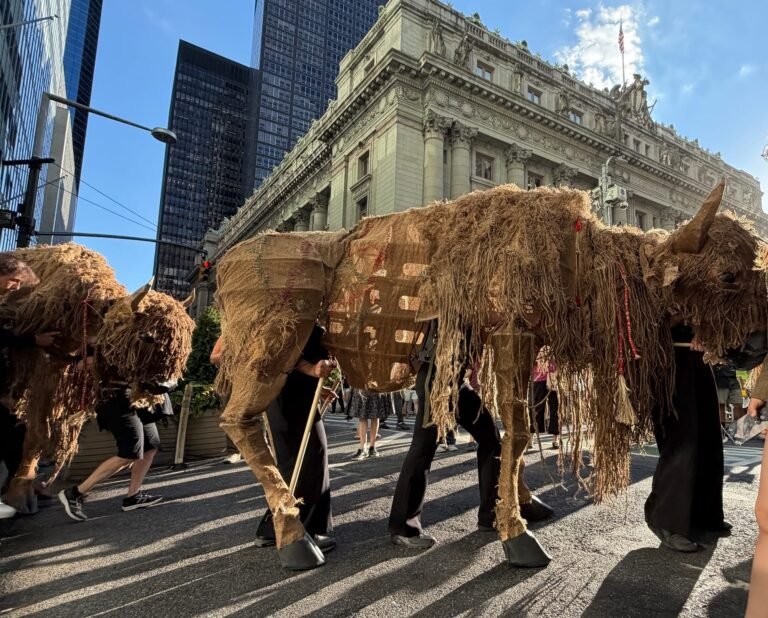
Now 14,000 security officers represented by SEIU-United Service Workers West are striking across California as contract negotiations have stalled. The union members took to the streets in San Francisco and Los Angeles at 4:30 a.m. local time on Friday to push for meaningful wage increases and better benefits.
The SEIU-USWW campaign has highlighted the gulf between hourly pay for security workers and the deep coffers of the tech giants who use their services. While the workers are technically employed by third-party contractors, the union has said they provide building security for companies like OpenAI, Anthropic, Salesforce, Google, Amazon, Microsoft, Meta, Nvidia, Cisco, and Netflix; they also serve plenty of other employers, from hospitals to retailers.
According to the union, some of the security contractors have proposed a mere $0.65 raise in hourly pay in the next two years; Allied Universal, the largest security firm in the world, reportedly offered a wage increase of just $0.25 an hour in 2027, with no raises for the following three years. SEIU-USWW president David Huerta previously described this proposal as “shameful, wrong, and deeply, deeply disrespectful.”
In a statement, an Allied Universal spokesperson said: “We have made substantial progress in negotiations as part of our commitment to finding common ground. We value the ongoing dialogue, have approached discussions with flexibility and a willingness to work collaboratively toward solutions, and remain focused on reaching a fair and mutually beneficial agreement.” (Securitas was not immediately available for comment.)
These workers have become even more critical as companies like OpenAI and Anthropic have faced security threats amid mounting public distrust in AI. A few weeks ago, Business Insider reported that Anthropic had instructed its employees to work from home, in case their security officers decided to go on strike. “Clearly, Anthropic understands how indispensable security workers are, even if the companies bargaining with them don’t,” Huerta told KQED recently.
In the meantime, however, median pay for security workers in California remains around $20 an hour, according to an analysis by the UC Berkeley Labor Center. While median pay for security officers is higher in the Bay Area—closer to $24 an hour—that’s still significantly lower than the median wage for all workers in the region, which crosses $42 an hour. In Los Angeles, median pay for security workers is actually under $20, but that’s still noticeably lower than the median wage for all workers, which is over $27. According to the UC Berkeley analysis, over 44% of all security officers in the state would qualify as low-wage workers, but in the Bay Area, over two-thirds of security workers are classified as low-wage.
The SEIU-USWW members who have gone on strike today are aiming for hourly pay of $30, along with more affordable healthcare coverage, expanded retirement benefits, and robust training. Contract workers who provide ancillary services to tech companies have previously walked off the job, often ramping up public pressure on those employers to negotiate more favorable terms with third-party contractors.
In its recent demonstrations, the union has pointed out that as the cost of living continues to rise precipitously in cities like San Francisco, security workers may eventually have no choice but to leave if their pay doesn’t improve—to the detriment of the many companies that have come to rely on their labor.