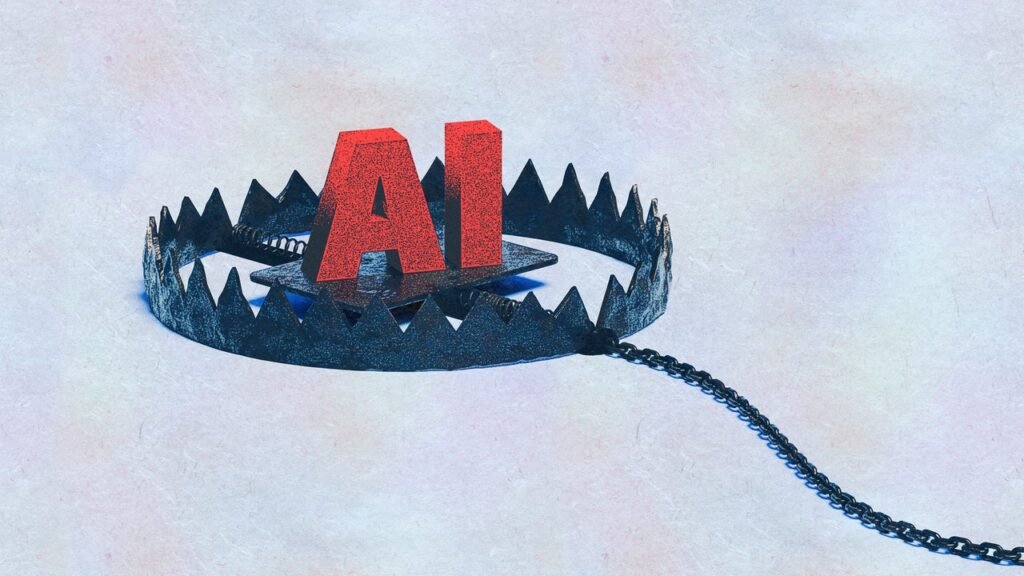
The past few weeks have seen a host of AI model and tool releases, and—although it might sound cliché at this point—it’s fair to say the abilities of AI today make what was available even six months ago seem like toys. During the same period, the AI industry has faced growing backlash over concerns about how it will affect the environment, destroy creativity and critical thinking, or even self-organize in ways that could be destructive to, well, all of humanity.
For a while, there was an expectation (more of a hope, really) that once AI got really powerful and useful, the public would warm up to it. For the past few years, the industry has been simultaneously shipping better products while spreading panic over its potential negative consequences. What the industry really needed, the argument goes, is a killer use case—something that would bring about the mass adoption the AI economy depends on.
With the recent release of GPT-6 Astra, OpenAI is making the case that computer use is that use case. Quite simply, computer use is when the AI takes control of your machine and operates your apps, just as you would. In the Astra release video, a person sits alone in a room and commands Astra verbally, watching it execute on tasks that typically require deep expertise in the software. The implication is obvious: you, the knowledge worker, no longer need to operate software—AI is good enough to do it for you. Isn’t that great?
The response: not so much. A big highlight of the ad was Astra using Blender, an open-source 3D creation suite. Within 48 hours, the Blender and game-developer communities turned on the ad, with commenters telling OpenAI to “stay tf away from human-made art” and warning that the model might enable widespread piracy, where anyone could feed a model a clip, a wiki page and a screenshot and get back a near-identical playable clone. The artist behind the Blender 5.2 Puma splash screen said she felt disgust seeing community work in an OpenAI promo.
Mind you, this is the exact community the ad was supposed to impress. The reaction lays bare an inconvenient truth: the progress in AI and the sentiment toward it are inversely related. Simply, the better AI gets, the more objections grow in intensity and frequency. A lot of people have said over the past year that this is a messaging failure on the part of AI leaders, but my read is that this is a structural problem. A better demo is a clearer answer to the question they think people are asking: “What can AI do for me?” But the clearer the answer gets, the worse it lands. If that’s right, there is no use case waiting out there that reverses the trend. That has implications for any industry adopting AI, especially ones where trust is critical, like the media.
Knowing more and liking it less
Polling data underscores the problem. A Bentley-Gallup survey published in July 2026 showed sentiment toward AI does not get better the more educated people are about it. The data revealed that 70% of respondents said they were somewhat or extremely knowledgeable about AI, up from 64% in 2024. But over roughly the same period, the people who believe AI will do “more harm than good” went from 31% to 39%. The poll relied on self-reported familiarity, not tested knowledge, but the direction is unambiguous.
Smart businesses are reading the room. iHeartMedia made “Guaranteed Human” a core brand promise across all its stations in December 2025 and led with it at the CES conference earlier this year. Apple TV put “This show was made by humans” in the Pluribus credits. The Tyee, an independent Canadian news magazine, adopted a no-AI journalism policy. This is arguably better evidence of the backlash since it’s a market signal, not a poll. As generative content becomes so good that audiences can no longer tell what’s AI, the immediate response was to make not using it a differentiator.
At this point, the progress-pushback relationship is almost like a fundamental force, and I believe it’s why the AI industry is having such a difficult time in the data center debate. Some of the specific complaints hold up better than others. The grid math is real: data centers drove roughly 40% of U.S. electricity demand growth in 2025, and retail bills rose about 6.9%. But the water math is frequently overstated, at least locally. El Paso Water estimates Meta’s facility there draws about 400,000 gallons a day, under half a percent of a system that moves 110 million.
But sorting the accurate complaints from the inflated ones would not end the fight, because the fight was never really about either number. No one gets a vote over an OpenAI or Anthropic model release. They do get a vote about zoning laws and substations. A recent NBC News poll found 69% oppose a data center being built near them, 70% are more worried than excited about AI, and 44% trust neither party to handle it. Whatever this issue is, it’s not partisan.
The tools actually work now
The interesting thing is: the labs are right—the tools really are useful. In the past few weeks, I’ve been able to automate almost all of my podcast production and promotion with AI tools. Instead of hand-editing the podcast in Premiere, Claude drives the editor provided by the recording service in the cloud, then spins up its own virtual machine to complete it. Scheduling when it goes live, sharing to social channels, and keeping the guests informed, and all the other “lever pulling” are trivial once the AI has access to the right connectors.
This isn’t just creating convenience—it’s saving me money: AI is now doing the work I used to pay someone to do. Disclosure is a more complex choice: the AI label is now a liability, and since the use case is almost entirely about automation, is it even necessary? No one discloses the audio editor they use.
And this leads to the dilemma newsroom and media leaders face. AI is at a point where it can automate and enhance processes and workflows on a grand scale. But much of newsroom adoption up until now assumed a neutral audience when it comes to AI. That no longer exists.
Two studies published this year in Digital Journalism get at what audiences actually respond to. Jessica Zier and Nicholas Diakopoulos interviewed readers about AI disclosure and found they say they want labels, then treat one as a warning when they see it. “I probably need to fact-check this and try and find another article,” one participant said. A separate team led by Sebastián Valenzuela ran a conjoint experiment in Chile, asking participants to choose between outlets with different AI policies across seven dimensions. Human oversight was the single most influential factor in credibility. Readers showed no preference at all about AI used for routine tasks, but they trusted outlets that automated both routine and nuanced work less than outlets that banned AI writing outright.
All this points to a hazy policy, but a clear underpinning philosophy: what readers really want is accountability, not necessarily disclosures. I wrote about this with respect to bylines on AI-assisted articles, and it’s the backbone of a broader approach to making clear who is standing behind a given piece of work.
In the case of my podcast, that’s clear. Another recent case cuts the other way, but makes the same point. Cleveland.com reporter Kaitlin Durbin’s byline appeared on an Express Desk story she says she never wrote or reviewed, while she was on her honeymoon. Editor Chris Quinn called it a miscommunication and corrected it within hours. The easy read is “AI bad,” but the context complicates it. Cleveland.com’s Express Desk exists so reporters spend less time typing and more time reporting, and Quinn has argued publicly that AI is the future of newsrooms rather than the end of them. The error wasn’t that AI assisted the story, but that the name attached to it belonged to someone who hadn’t touched it and couldn’t answer for it.
That’s what people want, and it’s worth treating as doctrine in a world where the backlash to AI is loud but the potential of the tools is now palpable. The public’s skepticism was never about the precise nature of how tools are adopted. It’s about who is answerable, and whether the audience can find them.
Accountability over labels
None of this makes the backlash go away, and newsroom leaders should stop planning as if the right policy will. The real change is that the cost of adoption went up, and nobody was rerunning the numbers. Eighteen months ago, automating a workflow was a decision about efficiency. Today it’s also a decision about trust, made in front of an audience that has already made up its mind and is looking for tells. Accountability isn’t insurance against that. But it is the one thing that keeps the audience engaging and arguing with your work instead of writing it off, and that’s the bet every newsroom is now making, mostly without admitting it is a bet at all.