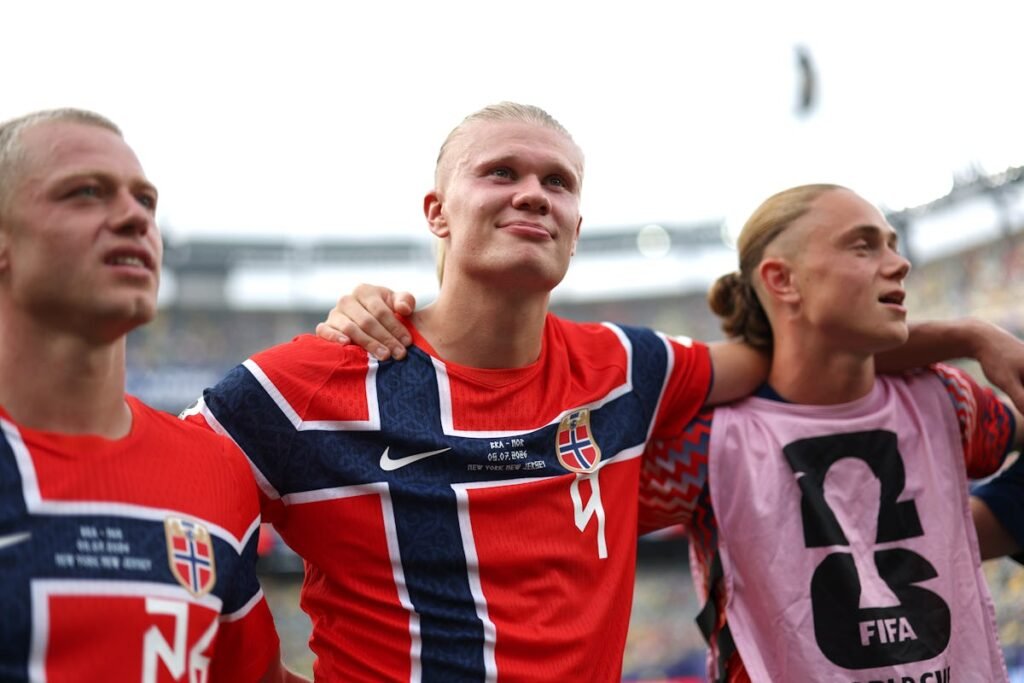
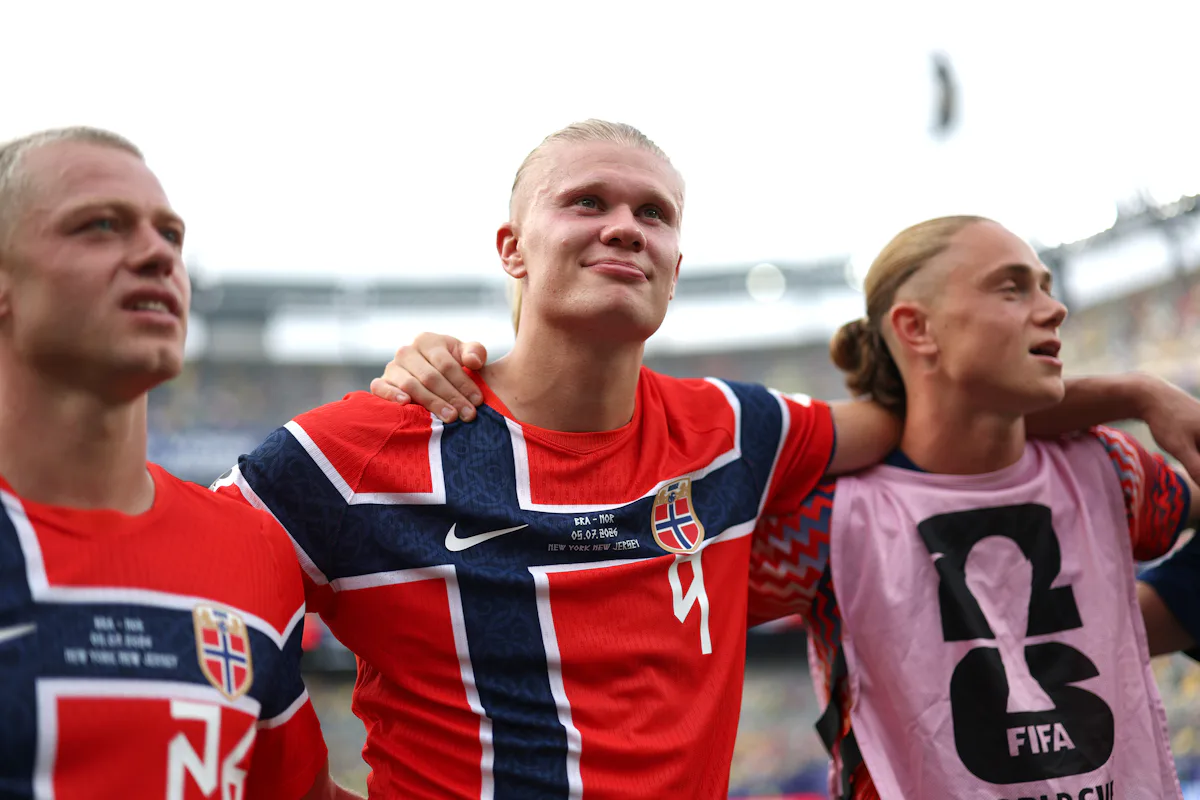
During the 2026 World Cup, the global audience all fell in love with one player in particular: Erling Braut Haaland. While the Norwegian footballer is known for his size, speed, and ability to make impossible goals, that’s not why women all over the internet found themselves fawning over him. No, the clips of him being pushed into our feeds were all the times he helped his opponent up off the pitch, did something silly on the field, or handed his sweaty towel to a staff member and shook their hand instead of tossing it at their feet. So, how do you instill good sportsmanship in your child, especially in a society where half the time, it’s the parents screaming on the sidelines ruining the whole game? (You know they’re not worried about sportsmanship…)
In a world where youth sports feel more serious than ever, despite the fact that only 2% of youth athletes actually even receive a scholarship, how can we make a bunch of just-happy-to-be-here, goober-like players like our new favorite Viking? Because that’s the energy that makes us want to get everyone to practice on time.
What does Norway do differently?
Just like wondering how you can make sure your kid is kind, inclusive, or a good friend, wondering how to raise a good sport is just part of parenting. You want your child to be the one who helps an opponent up off the field and thanks the person who brings out water bottles during halftime.
The reason this attitude likely shows up in videos of Haaland and the Norwegian national team is their culture’s stance on youth sports, says Madison Gates, vice president of marketing at i9 Sports, which provides community-based youth sports leagues nationwide. As Scary Mommy reported during the Olympics, Norway follows a document called Children’s Rights in Sports, a model which declares that youth sports should focus on the joy of playing, allowing kids to opt out of competing or playing in games at all. They don’t even keep score until the kids reach age 13.
“I love that Norway was on this international stage [showing] just how far they came with having that foundation. It doesn’t need to be travel leagues and spending thousands of dollars every weekend and playing five days a week. It’s really around having the kids build the foundation of who they are on the field but off the field, which is your sportsmanship piece of picking up your teammate off the field or saying good job to your teammates,” Gates says.
How do you instill good sportsmanship in your kid?
For starters, if you want to raise a Haaland, look for leagues that emulate Norway’s approach. That means steering clear of ultra-competitive leagues and opting for ones that include everyone (as in, there are no tryouts) and prioritize values like enthusiasm and teamwork, Gates says. Leagues that give out sportsmanship awards, not just trophies for winning, are a green flag.
In your parenting, that looks like talking up the things you want to see more of from your kid. On that car ride home from the game, you shouldn’t be coaching, Gates says; you should be parenting.
“You’re just saying, ‘I love seeing you play. I love watching you play. I love that you have fun. I love seeing you be a good teammate.’ It’s really your job to make sure that they had fun and learned something like, ‘All right, well, you made this mistake, but what did you learn? What was the most exciting part of the game or your practice today?’ A lot of it isn’t, ‘I won.’ A lot of kids come back and say, ‘Oh, I made a great pass,’ or, ‘Susie was nice to me.’”
Of course, celebrate when your kid scores a goal! But celebrate just as much, if not more, when they check on the other team’s injured player or show appreciation to the team’s volunteers and support staff.
All kids will have their struggles, whether it’s learning to lose with grace or be humble while winning, Gates says. What matters is that, as parents, we let the coaches worry about skills and strategies while we, as parents, promote sports as being fun and a way to connect with and learn from others, she says. Sportsmanship comes pretty naturally after that.