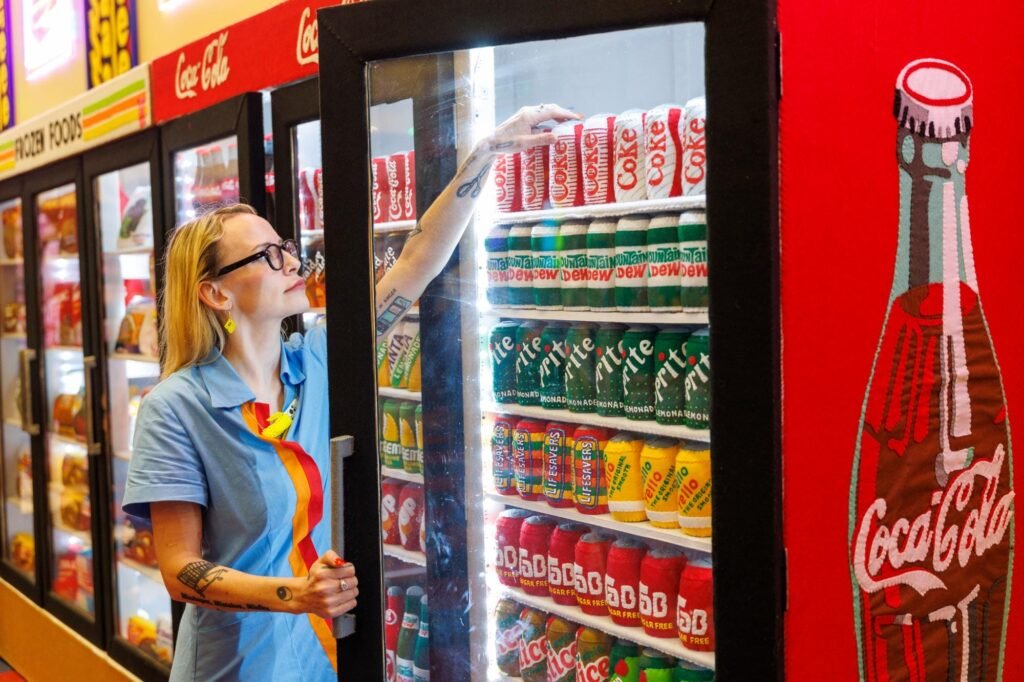

Bentonville is a small town in Northwest Arkansas that has, over time, become synonymous with massive retail operations and corporate ecosystems. The bustling hub is ingrained with the legacy of Walton’s, a small nickel and dime convenience store that opened on Bentonville’s downtown square in 1950 to serve its surrounding community. The shop quickly found success, and owner Sam Walton opened another store nearby that would evolve into the largest retailer in the world: Walmart.
During this time and throughout the ’60s, a post-war boom overtook the burgeoning commercial landscape of the United States. The suburban American Dream became a catalyst for retailers to adapt to an evolving social fabric that aimed to serve families hunting for necessities at an affordable price, and in a pinch. As a result, various amenities were introduced to convenience stores and chains, including the emergence of self-serve gasoline pumps.

The 1980s and ’90s, however, ushered in a new frontier of American commerce rooted in modernization. Supermarkets began to resemble the eptiome of a “one-stop-shop,” significantly transcending previous notions of convenience. In just one trip to the store, busy parents had the ability to pick out groceries for the week, restock housekeeping supplies, fill prescriptions, and feed their families lunch at the food court—all while waiting for their vacation photos to develop via rapid film processing. Securing a quick and easy premade dinner was possible thanks to the popular frozen food aisle, and as a cherry on top, VHS movies were available for purchase to pair with the titular “TV dinner.”
U.K.-based artist Lucy Sparrow refers to this moment as “the beginning of convenience,” which doubles as the title of her newest large-scale installation and first museum exhibition in the United States. The Beginning of Convenience at The Momentary calls to the nostalgia of regional chain stores, retro packaging aesthetics, and a time when life was, as the artist described at the show’s opening, “becoming more about enjoyment and less about toil.”
For many, modern grocery stores can be imposing, and Sparrow’s monumental assemblage conjures a similar feeling of being carried away. The immensity of The Beginning of Convenience, however, invokes feelings of joy and comfort, rather than a newfangled sensory overload. Stocked to the brim with more than 20,000 handmade objects, an expansive collection of soft, felt artworks take over a 4,000-square-foot gallery space, creating an immersive experience for visitors—or, more fittingly—shoppers.
Much of the magic comes from the painstaking details that work together in molding an all-out sensory experience. For instance, as viewers weave through the aisles, music in the style of old-school supermarket beats hums in the background. The music however, is occasionally interrupted with amusing, familiar intercom announcements in a fuzzy tone, calling the parents or guardians of a lost young girl named Lucy to make their way to the photo department.

At the opening earlier this month, the artist was dressed for the occasion wearing a light blue, collared button-down shirtdress with vertical stripes running down the middle. Sparrow and her team shared that the custom garment was inspired by original Walmart uniforms from the company’s archives, extending a subtle nod to the fitting location of the exhibition.
Sparrow wields a remarkable ability to craft welcoming spaces for quite literally anyone. Each of the artist’s renowned installations over the years are the brainchild of her own imaginative world, and a sense of vulnerability comes with our invitation into it. “Lucy’s work is quirky yet subversive,” says an exhibition statement. “Her soft and colorful felt creations charm and disarm visitors, while her detailed research practice and incisive observations inspire strong feelings of nostalgia, community, and conversations around shared history.”
This deeply humane feeling is refreshing within the context of American consumerism and growing corporatism. Especially as of late, the simple task of grocery shopping has become an increasingly divisive experience, and for many Americans, trips to the store are a looming reminder of shrinking household budgets and soaring prices, making it nearly impossible to associate ordinary retail environments with anything but exhaustion or stress.
The presence of joy and childlike wonder in The Beginning of Convenience offers a significant subversion. Injecting this feeling into a visceral environment allows each viewer to shift their focus to enjoyment, the marvels of retail innovation, and the nostalgia that comes with it.

Evoking the emotional power of soft toys, felt as a material inspires feelings of warmth and security. While walking through Sparrow’s produce and meat department, this impression seems nearly impossible to ignore as netted bags of oranges, piles of juicy grapefruits, and fresh cuts of pork chop look up at you with shy smiles.
Because of this, it seems easy to tap into an imaginative world where many of Sparrow’s plush products unmistakably possess individual souls. Perhaps the Georgia peaches have a more bubbly personality than their spiky pineapple neighbors, and, conceivably, the beef steaks across the aisle may be tough on the outside but tender at heart. Somehow anything seems possible in a world that melds the energetic spirit of commercialism with the with the slow, mindful creation of the same objects through cutting, stuffing, sewing, and embellishing.
Upon exiting the supermarket experience, viewers encounter even more felt versions of common items within grocery store vestibules: vending machines dispensing your choice of Coke or Pepsi products, a photobooth, a coin-operated mechanical car ride, and an electronic ATM, which, at the time, was reaching its ubiquity.
Turning a corner into the separate area, visitors are met with a massive floor-to-ceiling installation of more than 3,000 stuffed bananas. The sight is a recreation of the artist’s “Banana Room,” a comforting place in her studio to relax and “be surrounded by happiness,” she says. Sparrow received her first plush banana when she was nine years old as a present from her father, and later received a larger version who was named Sebastian. Sebastian’s presence throughout the show and as a mascot for the artist’s practice is further proof of the unfaltering childlike wonder imbued within every corner of Sparrow’s practice.

Across from the Banana Room sits a replica of the “Felt Cave.” The space—previously an ambulance station that was converted into Sparrow’s studio—offers more insight into Sparrow’s artistic process and the teamwork that goes into creating thousands of objects, one at a time. Sparrow is supported by five full-time assistants, four cats, freelancers, and, of course, Sebastian.
Along with a faux window displaying the exact view from the studio—overlooking two colorful cars frequently parked outside, including a hot pink Jeep sporting a “F3LT U” license plate—The Felt Cave is filled with thousands more surprises. As the exhibition label notes, there is “an ‘HR Department’ of bespectacled bananas, a canary yellow cuckoo clock, and ‘dab dabs’—abstract paintings created from dabbing the excess off the tip of a paint bottle.”
The Beginning of Convenience is on view through July 11, 2027.


Do stories and artists like this matter to you? Become a Colossal Member today and support independent arts publishing for as little as $7 per month. The article Lucy Sparrow Invokes ’90s Supermarket Nostalgia in ‘The Beginning of Convenience’ appeared first on Colossal.